Swedish researchers can now apply for computing time on LUMI through NAISS, with applications due in October 2026 for a 12-month allocation period beginning in January 2027.
The European supercomputing initiative has recognised outstanding researchers and papers at its annual gathering, honouring projects that tackle climate resilience, subsurface imaging and multilingual AI.
Orion, a century-old Finnish pharmaceutical company, is leveraging Europe's LUMI supercomputer to speed up molecular simulations in cancer and pain research, marking a deepening partnership between industry and high-performance computing infrastructure.
A new partnership between Europe and seven Latin American countries will pool high-performance computing resources and expertise in artificial intelligence, addressing regional capacity gaps and strengthening ties through the EU-LAC Digital Alliance.
The Access Resource Committee, formally established with 91 members in August 2026, held its first Bureau meeting to oversee scientific evaluation of proposals for Europe's supercomputing infrastructure.
Intel has inked a memorandum with Egypt's Ministry of Communications and Information Technology to scale up AI literacy across the country, committing to train a million citizens each year over three years in foundational AI concepts and responsible technology use.
Tallinn-based Creem, which provides billing and monetisation infrastructure for companies built around small engineering teams and AI agents, has closed a €5 million seed round led by Polish venture fund Inovo VC.
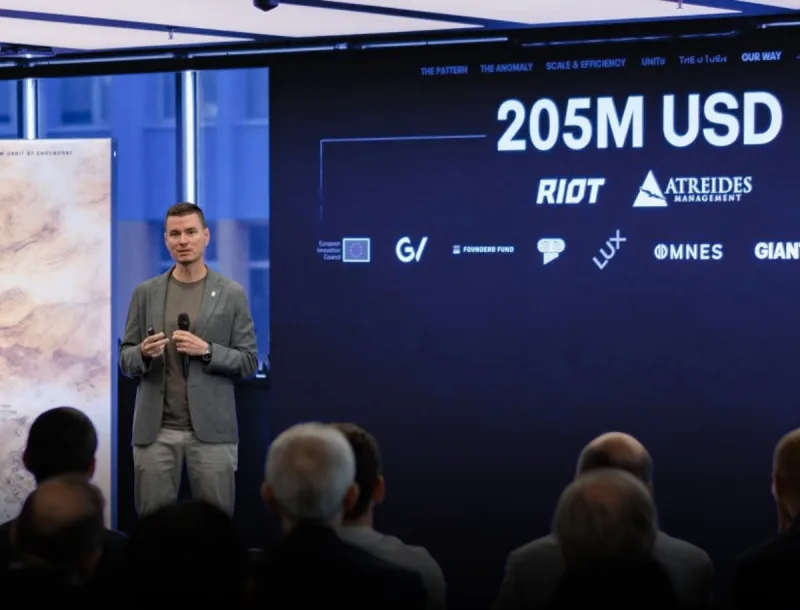
The Sofia-based spacetech firm has secured $205 million in funding to scale production of modular orbital hardware and drive down the cost of space data to roughly €0.92 per gigabyte.
Teams at the e-Governance Academy continue EU-backed cybersecurity projects in Ukraine despite constant Russian attacks, air raid alerts lasting up to 20 hours daily, and the psychological toll of living in an active war zone.
The digital identity firm has consolidated fragmented eIDAS certifications across five bodies into a single Conformity Assessment Body partnership, simplifying oversight after a string of acquisitions.
A new white paper co-authored by Estonia's former government CTO outlines how states must adapt their cybersecurity strategy as AI makes cyberattacks faster, cheaper and more accessible to non-state actors.