Europe's supercomputing initiative has activated a new governance structure to manage allocation of computing resources across the continent. On 25 August 2026, the EuroHPC JU Executive Director formally appointed 91 members to the Access Resource Committee (ARC), a body tasked with evaluating scientific merit in all requests for time on the EuroHPC infrastructure. These appointees will serve two-year terms, with the possibility of renewal for a second term.
The ARC comprises independent experts drawn from academia, industry and the public sector, operating in their personal capacity rather than as representatives of their employers or member states. Their mandate encompasses reviewing access proposals, helping shape the scope of future access calls, assigning reviewers to applications, ranking submissions and ultimately determining how computing time gets distributed across EuroHPC's supercomputing, artificial intelligence and quantum infrastructure.
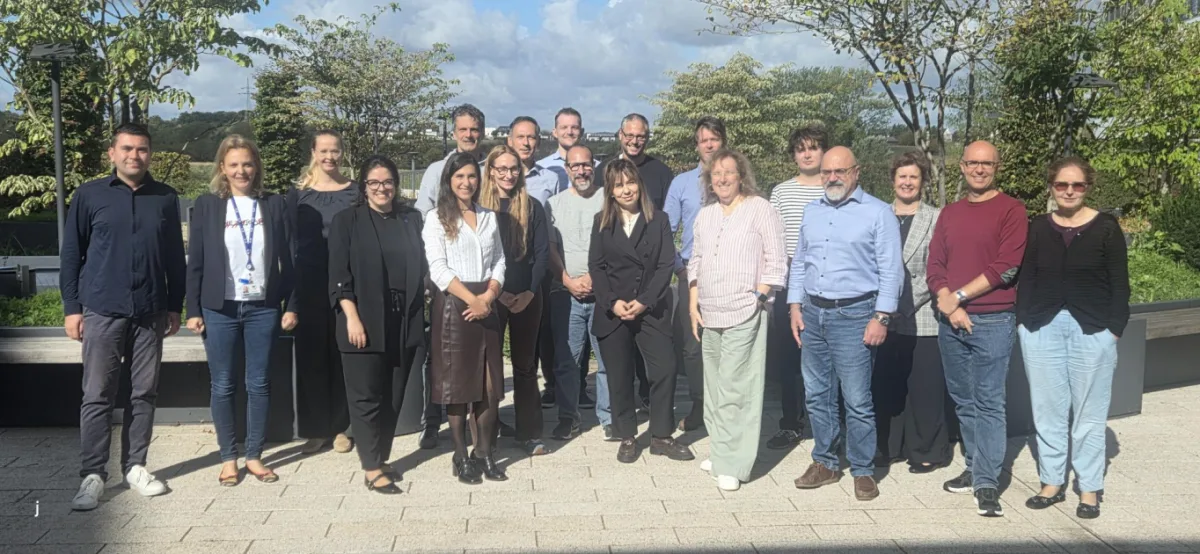
Supporting the broader committee's work, a smaller ARC Bureau has been formed with up to 22 representatives spanning active scientific domains plus industry and public sector specialists. This Bureau coordinates the ARC's internal operations, maintains direct contact with EuroHPC JU leadership, engages with user communities and tracks emerging research priorities and flagship initiatives relevant to the programme.
During its inaugural gathering, the ARC Bureau adopted formal Rules of Procedure to govern its functioning. Luigi Del Debbio chairs the committee, with Marc Baaden serving as Vice-Chair.
Bureau composition and advisory network
The ARC's remit spans multiple scientific and application domains, reflecting the diversity of EuroHPC's user base and strategic objectives. The appointed Bureau members represent the following sectors:
- Biochemistry, Bioinformatics and Life Sciences, Physiology and Medicine: Anália Garcia Lourenço and Edouard Oyallon
- Chemical Sciences and Materials, Solid State Physics: Carmen Domene Nunez and Stefano Vanni
- Computational Physics: Universe Sciences, Fundamental Constituents of Matter: Carlo Adamo and Maria Veronica Ganduglia-Pirovano
- Earth System Sciences and Environmental Studies: Isabel Campos Plasencia and Luciano Rezzolla
- Engineering, Mathematics and Computer Science: Maria Gonçalves Ageitos and Daniel Klocke
- Additional representatives: Erin Carson, Tobias Weinzierl, Victor Milman, Angeliki Vlachostergiou, Mariell Juhlin, Ilja Rausch, Torsten Asselmeyer-Maluga and Karla Henriette Loida
The ARC operates alongside other advisory structures within the EuroHPC ecosystem, including the Infrastructure Advisory Group (INFRAG), the Research and Innovation Advisory Group (RIAG), the Quantum Technologies Advisory Committee (QTAG) and the EuroHPC User Forum with its Coordination Group.
EuroHPC's infrastructure and mission
The EuroHPC Joint Undertaking, established as a legal and funding entity in 2018, coordinates efforts between the European Union and participating countries to position Europe as a global leader in supercomputing, artificial intelligence and quantum technologies. The initiative has already deployed 12 supercomputers distributed across the continent and is implementing 19 AI Factories supplemented by 13 AI Factory Antennas, which provide free tailored assistance to small and medium-sized enterprises and startups. A European Quantum Computing infrastructure is also being rolled out, combining various European quantum technologies with existing supercomputing systems.
Scientists and organisations across Europe—whether from academia, industry or the public sector—can access EuroHPC infrastructure through competitive calls, enabling research and application development with industrial, scientific and societal value for the continent.