Archangel Lightworks has validated its TERRA-M optical ground station, a portable device roughly one metre tall that can transmit data to satellites in orbit with minimal infrastructure requirements.
The market for private wireless networks spans dozens of player types—from telcos to hyperscalers to satellite operators—yet the economics often fail to justify the complexity, particularly when spectrum control shifts away from operators.
Nearly a quarter of European mobile operators have now launched or are testing direct-to-device satellite services, signalling confidence in the technology's role in future networks—though T-Mobile's experience suggests real-world demand remains limited.
The network solutions provider is rolling out voice, messaging and digital infrastructure services across Rwanda as part of a broader continental expansion strategy.
Masood M Sharif Mahmood will assume leadership of the digital services group on 1 April, replacing Hatem Dowidar after six years at the helm. The transition comes as e& reports a 33.6% surge in net profit to €3.321 billion for 2025.
Telecommunications operators are racing to deploy agentic AI and autonomous network capabilities to compete with Big Tech's agility, though a new report suggests a measured, scenario-focused approach may prove more realistic than sweeping end-to-end automation.
The European Emergency Number Association is pushing back against network shutdowns, citing evidence that 4G and 5G emergency calling systems remain unreliable across much of the continent.
The Spanish operator has activated 10 edge computing locations and plans to add 7 more in 2026, positioning itself as a pioneer in distributed European technology infrastructure.
A year after launching in Greece, the Wealthyhood investing app has attracted 35,000 users whose profile challenges traditional assumptions about who invests: they are typically 34 years old, start with €100, and mostly buy exchange-traded funds.
A power failure at Google's London data centre disrupted services for Lloyds, HSBC and Revolut on 20 October, triggering fresh scrutiny from financial regulators over the resilience risks of relying on a handful of major cloud providers.
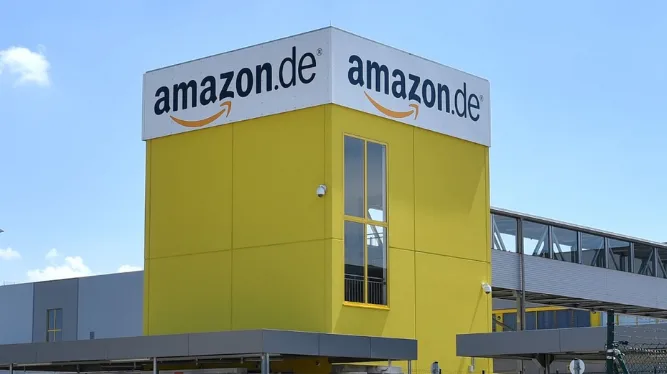
The e-commerce and cloud giant plans a major investment push in Germany next year, building on over a century of spending since 2010 and targeting cloud infrastructure, logistics, satellite connectivity and entertainment services.