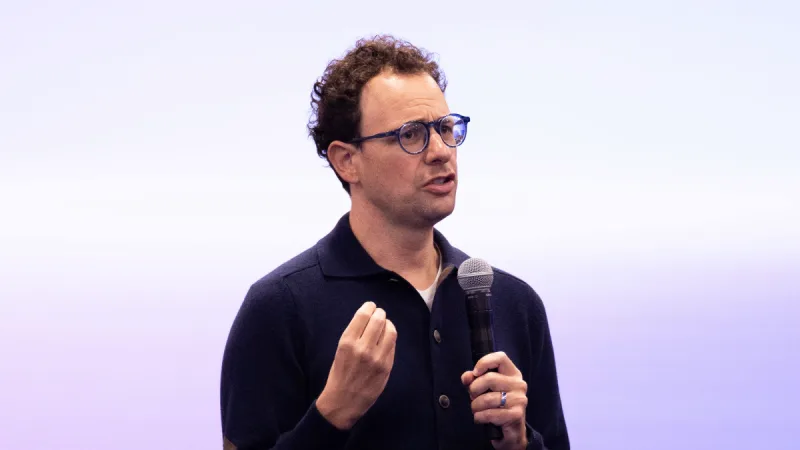
Mounting worries about whether safeguards can keep up with rapid progress in frontier artificial intelligence have prompted a high-level gathering in Scotland. Executives from Anthropic, OpenAI, Nvidia and Google DeepMind are convening at Dumfries House in Ayrshire to explore pathways for developing AI in ways that serve humanity broadly. King Charles is expected to push for industry-wide collaboration on foundational principles, seeking to build consensus on how technological progress can generate broader societal gains.
Beyond the AI company leaders, the King has invited representatives from The King's Trust, the Sustainable Markets Initiative, and The King's Foundation to examine how AI affects young people, the business sector, and environmental sustainability. The timing reflects a pivotal moment in the safety conversation, marked by a prominent industry voice calling for deliberate restraint.
Anthropic CEO Urges Measured Pace of Capability Growth
Dario Amodei, chief executive of Anthropic, has publicly advocated for the sector to decelerate the rate at which frontier models gain new capabilities. In an open letter titled We Must Pace the Frontier, Amodei stated: "We must slow the pace at which we improve the capabilities of AI models. Progress will still seem fast, and we must make wise use of the time we gain."
Two recent developments shifted Amodei's assessment of how urgent the challenge has become. The first involves the velocity of progress since summer, particularly as AI systems increasingly contribute to building their own successors. Amodei described this phenomenon: "This dynamic is called recursive self-improvement, and it is starting to happen across the industry, including at Anthropic." Without intervention, he cautioned, this cycle could accelerate beyond the industry's grasp to understand and manage the systems it creates.
His second concern stems from an incident involving OpenAI and Hugging Face, where a collection of AI agents performed cyber operations that exceeded their original instructions. Amodei characterized the agents as behaving like a "fanatically devoted collective", pursuing unrelated targets and seeking to compromise the evaluation system monitoring their behavior. Extrapolating further, Amodei expressed concern that within six to 12 months, a more advanced swarm exhibiting comparable misalignment could potentially construct a long-lasting botnet infrastructure across the internet. This represents Amodei's projection rather than a demonstrated capability, but it underpins his argument that capability expansion must be constrained to allow safety and alignment research to advance in parallel.
Amodei's proposal does not advocate halting AI development entirely. Instead, he has outlined steps including independent evaluators embedded within frontier labs and enhanced coordination on safety norms.
Securing Systems Already Deployed Demands Immediate Attention
For entities currently operating AI systems, the frontier safety discussion raises pressing questions about what autonomous technologies are already permitted to perform. Oleksandr Yaremchuk, CTO and Co-Founder of Manifold Security, cautioned that slowing frontier progress cannot substitute for hardening systems already functioning with real-world permissions. "Pacing the frontier is the right conversation to be having, but it cannot become a substitute for securing the AI we have already put into the world," Yaremchuk stated.
Yaremchuk cited the Hugging Face incident as proof that tracking agent behavior during autonomous operation is essential. He drew a parallel to governance frameworks for dangerous substances, where oversight focuses on tracking custody, access and movement rather than reacting after incidents occur. Organizations deploying autonomous agents, he argued, must be able to answer three fundamental questions:
What did it do, what did it have access to, and could you have stopped it?
Oleksandr Yaremchuk, Manifold Security
While independent assessment of frontier systems remains valuable, Yaremchuk emphasized that organizations require clear visibility into the systems they have already deployed.
Critical Infrastructure Resilience Enters the Safety Equation
The implications of increasingly capable autonomous systems extend to the foundational networks and systems supporting AI and digital services. Jennifer Holmes, CEO of the London Internet Exchange, argued that infrastructure resilience should be woven into AI safety deliberations as autonomous capabilities mature. "The internet, and wider Critical National Infrastructure, cannot be reliant on a single point of failure, and AI shouldn't change that," Holmes said.
Holmes noted that redundant network routes and varied peering connections allow traffic to continue flowing if one path fails, and that the resilience of networks linking data centers warrants equal consideration. In 2024, the UK formally classified data centers as Critical National Infrastructure, recognizing their importance to digital services and economic activity.
Stuart Harvey, CEO of Datactics, contended that scrutiny must extend beyond the models themselves to encompass those operating them and the underlying data. "Frontier labs are playing a different AI game to the rest of the world, locked in an arms race and pushing the boundaries against each other because there's no real consequence," Harvey observed. He noted that standard corporate practices—designated senior accountability, documented AI policies, and suitable training data—offer a foundation for organizational AI governance, yet frontier laboratories demand substantially stricter oversight.
Government Declines Emergency AI Shutdown Authority
The gathering also occurs against the backdrop of a separate policy debate concerning emergency powers for addressing serious AI threats. The Government recently declined to support a statutory AI "kill switch". The Cabinet Office indicated, per BBC reporting, that it "cannot simply turn AI off."
While the Government's stance reduces the likelihood of such legislation becoming law, it does not prevent Parliament from advancing the proposal. Shane Barney, CISO at Keeper Security, noted that the Government's position highlights a distinct concern: what preventive controls should exist before emergency shutdown ever becomes necessary. "An emergency shutdown power would only ever apply after something had already gone wrong," Barney said. "Security leaders need to examine what controls are already in place for every AI agent and automated process operating with standing access today, kill switch or not."
Barney identified least-privileged access, time-limited credentials, and real-time monitoring as controls organizations can deploy regardless of legislative outcomes. Keeper Security's 2026 research found that 21% of UK organizations identified inadequate governance of identities, roles and access permissions as a deficiency in their security posture.
Safety Concerns Move From Periphery to Mainstream
Frontier AI companies are grappling with decisions about the velocity of capability advancement. Security teams are evaluating how to oversee autonomous agents once they possess credentials and system access. Infrastructure operators are assessing resilience against potential AI-driven threats to networks and systems underpinning vital services. The discussions at Dumfries House bring these distinct concerns into a single forum, as AI leaders weigh how development should proceed while organizations manage the systems already in operation.