The arrival of ChatGPT in late 2022 immediately raised concerns about its potential disruption to K-12 education. The technology could complete assignments with minimal input, and young people possessed the digital skills to adopt it faster than their instructors could manage.
The New York City Department of Education moved quickly to address the perceived risk, restricting ChatGPT access across district infrastructure in January 2023, shortly after Los Angeles Unified School District had done the same in December 2022. Other major systems including Seattle, Baltimore, and Oakland followed with comparable prohibitions.
Those initial bans proved short-lived. By May 2023, then-NYC Chancellor David Banks signalled openness to ChatGPT's possibilities, and in August that year LAUSD Superintendent Alberto Carvalho indicated his district was exploring less restrictive approaches.
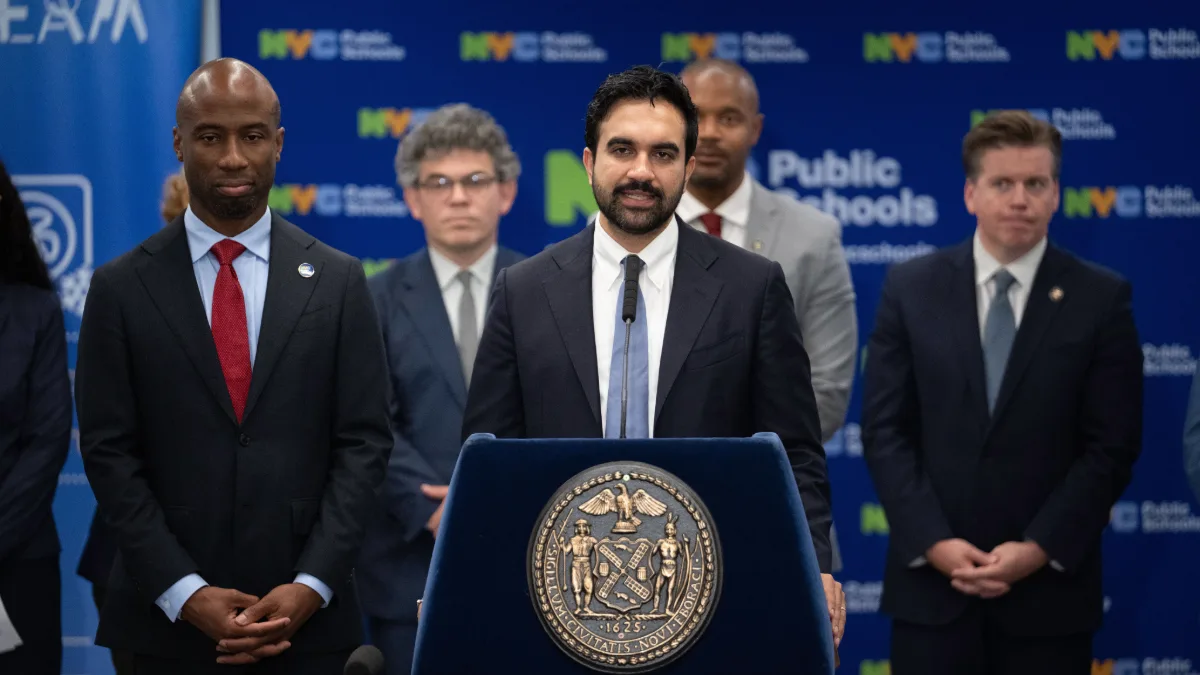
As the 2026-27 academic year approaches, however, both districts are reversing direction with more aggressive limitations than most peers employ. This week, New York prohibited student-facing AI tools in elementary and middle school classrooms while permitting a curated selection for high school use.
The current policy represents a substantial tightening from guidelines NYC proposed in March. That earlier framework employed a traffic light system for assessing AI risks, with most student applications assigned to the yellow category, leaving implementation decisions to individual teachers. Following substantial pushback, Chancellor Kamar Samuels acknowledged the draft "missed the mark," and the district halted both the policy and software acquisitions.
On the same day, LAUSD announced a one-year moratorium on generative AI across its devices for approximately 378,000 students—a decision that surprised even district leadership. While the district had previously restricted screen time during summer, it had not established specific AI guidelines.
Advocacy groups celebrate the shift
Organized coalitions of parents, educators, and students in both cities have championed this week's moves toward stricter oversight.
At the Los Angeles committee meeting where the moratorium was unveiled, advocates from Schools Beyond Screens revised their remarks on the spot. "We are asking our local institut — no, we're thanking our local institution," said Sandra Martinez Roe, according to LAist. "Thank you, LAUSD for setting an example and knowing that your obligation is to do so."
The AI Moratorium Coalition in New York, a coalition of educators, students, and parents established last fall, characterized the partial freeze as "a step in the right direction." The group has advocated for a comprehensive classroom AI moratorium over the past two years.
Kyle DeAngelis, a third grade teacher in Harlem and AIM Coalition member through a rank-and-file teachers' caucus, told Tech Policy Press: "We have been overall very pleased with the steps that the mayor and the chancellor have taken around AI in schools with this new policy."
The coalition remains focused on additional improvements, including concerns about planned AI pilot programs in certain schools, insufficient restrictions on staff use, and the absence of evaluation standards for tools. They are pushing for a comprehensive policy developed through inclusive engagement with parents, educators, and students.
Martina Meijer, a fourth grade teacher and fellow UFT caucus member, emphasized the need for stronger protections at the secondary level. "What we know about AI chatbots, what we know about teen mental health crises, what we know about the tendency of even adults to lean on these chatbots as a form of free therapy makes it really dangerous to ignore the needs of teenagers at this time," she told Tech Policy Press. "I would just underscore that it's really important that this policy also include high school students because they are extremely vulnerable."
Significance and implications
The fact that the nation's two largest public school systems are implementing such constraints—even if temporary and partial in New York's case—stands out given that most districts have historically avoided outright prohibitions on AI.
The developments reflect broader grassroots resistance to artificial intelligence that extends beyond education, appearing in opposition to data center expansion and in workplace sentiment surveys.
Both districts now have twelve months to establish permanent frameworks for AI in education. Attempts to ease restrictions similar to the earlier ChatGPT reversals will likely encounter organized resistance.
DeAngelis reflected on the momentum behind these efforts: "Over the last year, one of the things that has honestly really surprised me is just how quickly this particular movement has taken off. It's reflective of what parents and teachers are seeing in their schools."