A jury in Santa Fe, New Mexico, concluded on Friday that Meta deliberately misrepresented its public statements regarding the Cambridge Analytica data privacy breach and its approach to managing hate speech, violence and misinformation. The panel determined that 26 of 29 claims made by Facebook and its leadership contained willful deception, with nine specifically relating to how the company responded to the Cambridge Analytica incident.
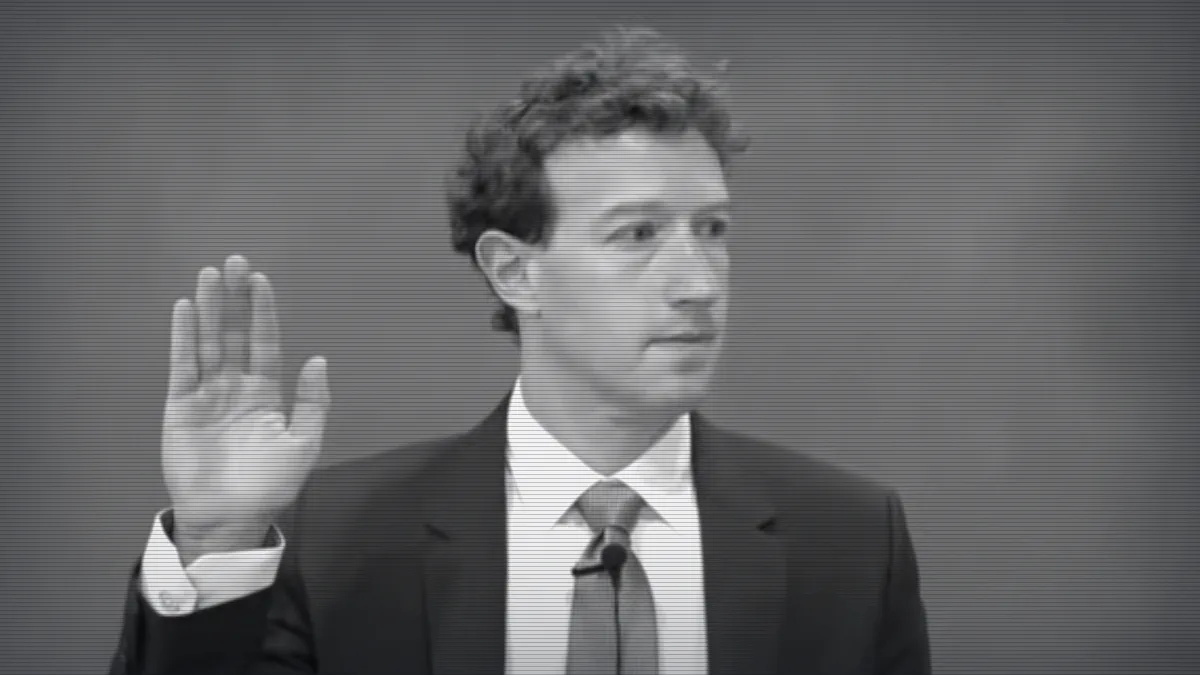
Mark Zuckerberg, Meta's founder and chief executive, and Sheryl Sandberg, the company's former chief operating officer, both submitted to depositions before the trial commenced on September 8. During proceedings, state attorney Randi McGinn presented video recordings of these depositions to jurors. McGinn's questioning of Zuckerberg concentrated on content moderation practices, particularly the company's "cross-check" mechanism that provided special treatment to prominent figures including politicians and celebrities. Her examination of Sandberg focused on the company's communications surrounding privacy, the developer investigation the company pledged to undertake following Cambridge Analytica, and its management of hate speech and false information.
The verdict form required the jury to calculate violations using two distinct metrics. For 11 statements distributed through major news organizations, jurors assigned 2.1 million violations to each statement. For 15 statements released via company channels—encompassing its newsroom, posts by executives on Facebook, earnings call remarks and a developer conference—jurors assigned 1,386,648 violations to each, producing a combined total of 43,899,720 violations. According to the Santa Fe New Mexican, the larger number approximates New Mexico's total population, while the smaller figure represents an estimate of the state's Facebook user base in 2020.
This case diverged from the state's earlier child safety litigation against Meta regarding penalty determination. In that prior case, the jury set penalties at the $5,000 maximum per violation. In the current matter, the jury established liability and calculated the violation count, but State District Judge Francis Mathew will decide the financial penalty, according to Source New Mexico. In the child safety case, District Judge Bryan Biedscheid's judgment on August 6 upheld the jury's $375 million penalty for 75,000 violations and mandated that Meta contribute an additional $567 million to a fund designed to remedy harm to the state's young people.
We disagree with the verdict and will continue to defend ourselves against efforts to distort our record. Meta's platforms are forums for free expression. We have a First Amendment right to manage those platforms in a way we believe best serves the interests of our community. This means prioritizing free speech, protecting our users' information and giving them control over their data.
Meta spokesperson Alex Burgos, in an email to The Associated Press
The outcome carries implications for other state attorneys general, the majority of whom released Meta from additional Cambridge Analytica liability claims in exchange for approximately $459 million. This release was embedded within Meta's $17 billion child safety settlement finalized in August. New Mexico declined participation in that agreement.
The ruling has drawn attention from legal experts monitoring platform regulation. "Florida Attorney General James Uthmeier accused the other AGs of settling for peanuts," noted Daphne Keller, director of platform regulation at the Stanford Program in Law, Science & Technology. "New Mexico's stunning jury ruling suggests he may be right."