Nelson González Sánchez, co-author of a Human Rights Watch report released in August titled "'I Thought I'd Never See My Mom Again': Recruitment and Use of Children by Colombian Armed Groups," discovered something alarming while scrolling through his social feeds: Facebook was suggesting he befriend members of the National Liberation Army (ELN), one of Colombia's longest-running armed groups.
The profile displayed the group's insignia alongside photos and videos showing armed fighters conducting military exercises in mountainous terrain. Over the following months, both Facebook and TikTok continued to surface dozens of additional profiles and posts connected to various armed organizations. González Sánchez's year-long investigation into how armed groups enlist children in Colombia—a practice affecting more than 1,500 minors over the past five years—revealed a troubling pattern: social media has become the primary recruitment channel.
Through interviews with hundreds of recruited children, government representatives, and other sources, González Sánchez heard a consistent message. "We use social media to reach them. That's how I first got in touch with them," a 17-year-old boy told him, describing how he was recruited by a breakaway faction of the demobilized Revolutionary Armed Forces of Colombia (FARC) operating in Catatumbo, near Colombia's border with Venezuela.
Algorithms as Recruitment Tools
When González Sánchez began engaging with this material, the platforms' recommendation systems responded predictably: his feeds flooded with armed group accounts and friend suggestions. Within five minutes of TikTok browsing, he encountered multiple job postings inviting viewers to join armed organizations. For children in Colombia's poorest regions, such content carries considerable appeal.
The accounts González Sánchez reviewed displayed images of cash bundles, motorcycles, luxury pickup trucks, and children wearing armed group insignia while posing with weapons. Narcocorridos—songs celebrating cartel culture and drug trafficking lifestyles—typically accompanied these videos, often with emoji captions.
The Emoji Code
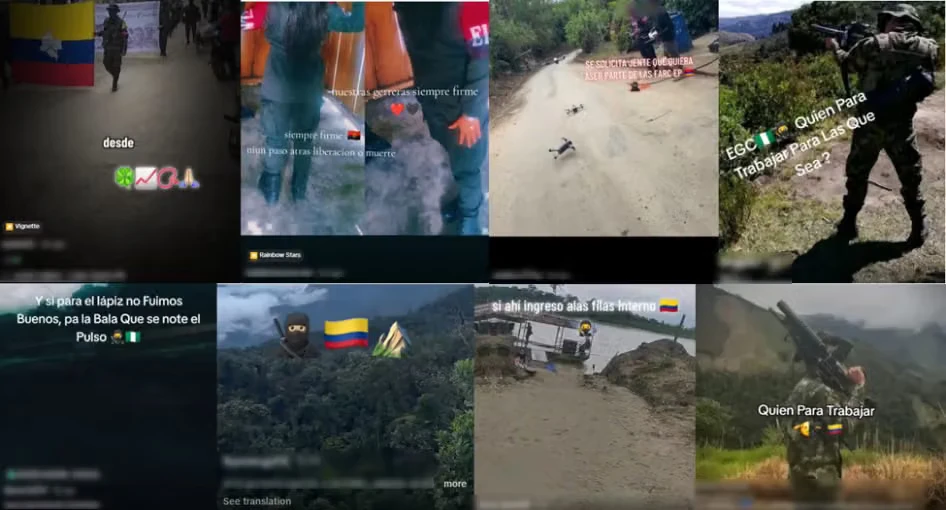
Armed groups have developed an emoji-based system apparently designed to circumvent platform moderation. A clover symbol represents coca cultivation; paired with money and phone emojis, it signals employment in cocaine production. The Colombian and Armenian flag emojis reference the FARC, while the Angolan flag alongside black and red hearts denote the ELN. Nina emojis indicate armed group membership.
Using these coded signals, González Sánchez discovered dozens of recruitment posts stating "There are openings in the ranks" and "Wanted: people to work for the FARC," with instructions to send direct messages to interested parties. Such explicit recruitment content remained visible for months, sometimes accumulating thousands of interactions and hundreds of comments from people expressing interest in joining.
The Reality Behind the Glamour
The 17-year-old who fell for the FARC dissidents' social media presentation learned the truth upon joining: "the reality in the group is very harsh, very different from what they portray on social media." Children are frequently relocated to distant regions, severing ties to family and community and making departure nearly impossible. Many face indoctrination, combat deployment, and abuse, including sexual violence.
Platform Response and Ongoing Problems
González Sánchez reported dozens of accounts to Meta (Facebook) and ByteDance (TikTok), and both companies removed the flagged content. Each platform stated that their community standards prohibit violent organizations and individuals. Yet enforcement remains inadequate. Similar recruitment content continues appearing on both services.
Armed groups in Colombia have traditionally exploited poverty, social marginalization, domestic abuse, and educational barriers to attract children. Digital platforms have now become spaces where these organizations cultivate aspirations, normalize violence, and identify susceptible youth. Research suggests that social media drives nearly half of all child recruitment in the country.
What Needs to Change
Addressing this crisis requires placing platform regulation that safeguards children's rights at the forefront of policy discussions. Social media companies must strengthen their capacity to identify and remove armed group content while preventing algorithms from promoting or recommending such material.
A notification on a child's phone should never be an armed group extending an invitation to join their ranks in the Colombian mountains.