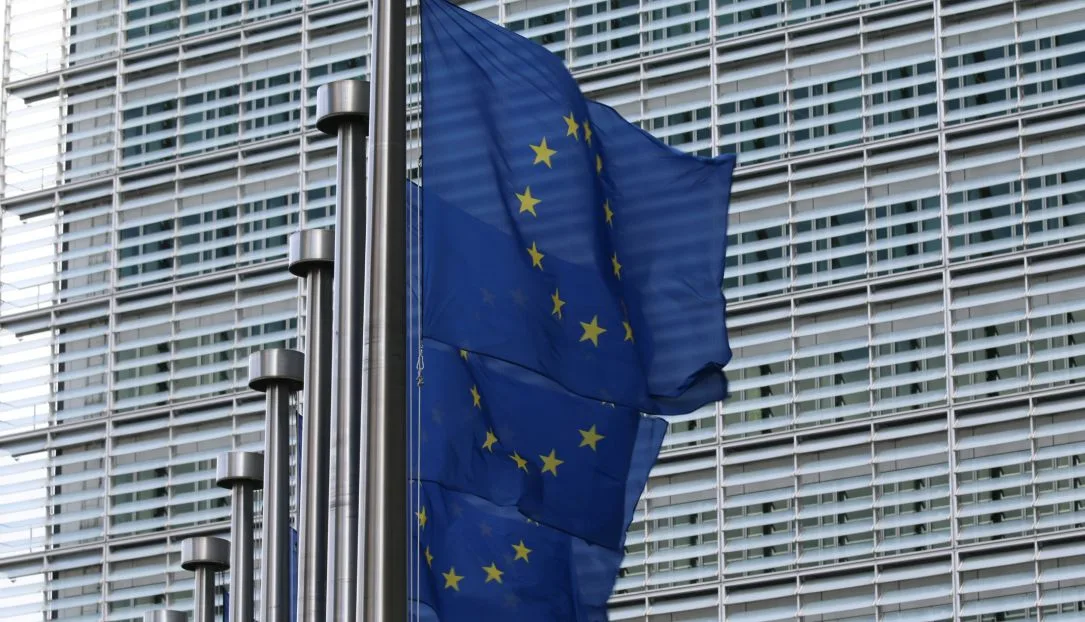
On Thursday, the European Commission presented a comprehensive blueprint for legislation that would prohibit children under 13 from creating social media accounts and require platforms to redesign their services with minors' safety in mind. The initiative reflects a global trend, with nations including Australia, Spain, France, China, Turkey and the UK either enacting comparable restrictions or signalling their intention to do so as concerns mount about technology's impact on young people.
The proposed EU KIDS Act would establish a continent-wide minimum age threshold of 15 for opening social media accounts. Younger children aged 13 to 15 could gain access only through what the Commission calls "mini accounts"—restricted profiles created and managed by parents. These accounts would face strict controls, including limited social connections and a one-hour daily screen time cap. Children under 13 would be entirely excluded from social media, though they could use parent-controlled tools to access child-friendly video content on adult devices.
The proposal requires platforms to demonstrate that their services meet safety and age-appropriateness standards from the ground up. Commission President Ursula von der Leyen remarked in a speech previewing the measure: "Today, our children are engaging with the most sophisticated technologies ever created. Technology that was never created with their wellbeing in mind."
Safe by design
The KIDS Act would apply to social media, online games, video-sharing services and AI chatbots used by anyone under 18. Platforms would face a ban on what the Commission terms "addictive features and profiling-based recommender feeds dragging minors into 'rabbit holes' of harmful content."
Prohibited design elements include:
- Infinite scrolling without breaks, reward mechanisms and notifications sent during sleep hours
- Unsolicited contact from unknown users
- AI companions and chatbots that simulate relationships in ways that foster emotional dependency (these must be disabled by default)
- Geolocation, microphone and camera access on minor profiles (blocked by default)
Minors' accounts would default to private status. Platforms must provide straightforward tools for blocking and muting other users, along with recommendation systems that young people can modify or reset themselves.
Age verification would rely on an EU app launched in April that preserves privacy by avoiding storage of identity documents or biometric information. Platforms must deploy this tool when users register and estimate ages for existing accounts using account creation dates, payment card details and similar indicators.
Enforcement plans — and challenges
The Commission plans to require major platforms to submit compliance plans to both the EC and independent auditors tasked with evaluating child protection measures. The EC will review audit findings and demand remedial action where gaps emerge. The agency noted that the Digital Services Act and the Artificial Intelligence Act already contain provisions that provide a foundation for these requirements.
Suspected violations would trigger accelerated investigations concluding within 90 days. Companies found non-compliant face fines of up to 6% of global annual revenue, and must also fund regulatory oversight through fees.
However, enforcing age restrictions has proven difficult in practice. Research commissioned by the Australian government revealed that 61% of children aged 12 to 15 in Australia continue accessing major platforms despite the country's ban. In response, Australia's Parliament passed legislation in September that doubled maximum penalties to AU$99 million (approximately $68 million) and expanded investigative powers for the eSafety Commissioner.
Joe Jones, director of research and insights at the IAPP, cautioned that "The technological state of the art, including with VPNs and age assurance technologies and the extent to which privacy issues are engaged due to the collection of data, will pose complications for lawmakers and, eventually, those implementing, overseeing and enforcing the law."
Fierce backlash
Technology industry representatives and digital rights campaigners have rapidly condemned the proposal. Mitchell Rutledge, technology and security policy manager at CCIA Europe, criticized the lack of technical detail, stating: "The Commission is kicking those critical decisions down the road to future implementing and delegated acts. Europeans are essentially being asked to trust a system before anyone knows how it's actually going to be built."
Privacy advocates argue the plan poses risks to all Europeans, not just children. Simeon de Brouwer, policy advisor at European Digital Rights (EDRi), the continent's largest digital rights network, contended: "If the EU really wants to protect children, it should make platforms prove that they are safe, not make children and everyone else prove that they are old enough to exercise their fundamental rights online."
De Brouwer highlighted that mandatory age verification for all new social media users would require adults to submit identity documents and smartphones. The EU age verification app and digital ID wallets both depend on mobile devices. He warned the requirement would disproportionately harm marginalized populations lacking formal identification and would restrict children's rights, noting that climate activist Greta Thunberg could not have launched her global campaign without unrestricted online access.
The Commission cited polling data in its announcement, citing a Special Eurobarometer survey on the Digital Decade 2026 showing that 92% of Europeans rank stronger child online safety protections as a "top policy priority."