An international consortium anchored by Karlsruhe Institute of Technology (KIT) has secured a place among finalists for the ACM Gordon Bell Prize for Climate Modelling 2026, a leading recognition in supercomputing research. The effort brings together specialists from Jülich Supercomputing Centre (JSC), NVIDIA and CSC – IT Center for Science, and centres on a novel approach to atmospheric prediction using the LUMI supercomputer.
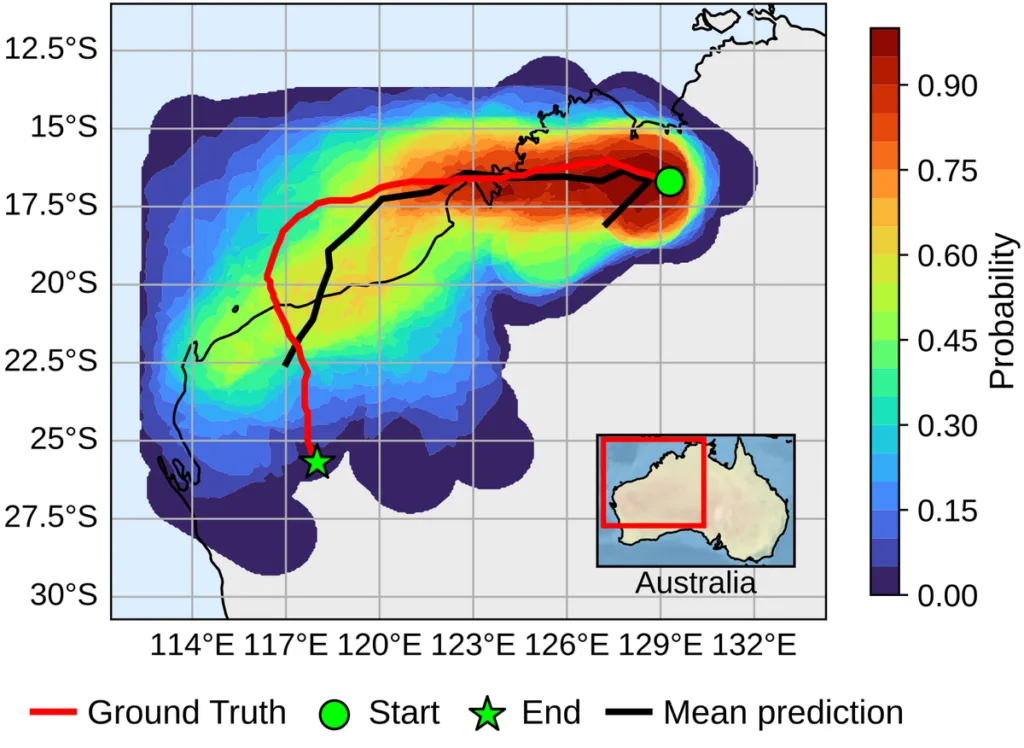
The research introduces BEAST (Bayesian Exascale Atmospheric Swin Transformer), an AI system built to forecast atmospheric conditions at fine spatial detail across the globe while also measuring how confident those predictions should be. Such uncertainty quantification proves crucial when predicting extreme events including tropical cyclones, heat waves and severe cold periods. The model drew on four decades of atmospheric observations and operates at roughly 30-kilometre resolution worldwide.
A key innovation underpinning the work is a novel four-dimensional parallelisation approach that permits large Bayesian models to train effectively across contemporary supercomputing infrastructure. Bayesian frameworks offer insight into forecast uncertainty but demand substantially higher computational investment than standard AI techniques. The new strategy allows these workloads to spread across thousands of GPUs without sacrificing efficiency.
The researchers demonstrated their method across two major European supercomputing facilities. Testing on JUPITER yielded 3.96 exaflops of mixed-precision throughput using 20,480 NVIDIA GH200 GPUs paired with a model containing 2.4 billion parameters. On LUMI, the training run achieved 463.23 petaflops using 4,096 AMD MI250X GPUs. These figures underscore how the approach can unlock the full capability of next-generation HPC systems.
CSC specialists played a central role in optimising and expanding the application across LUMI's infrastructure, where the team attained 92% strong-scaling efficiency spanning 1,024 nodes. The accomplishment demonstrates LUMI's capacity to host sophisticated AI research at scale while pushing forward the boundaries of meteorological and climate science.
Beyond raw computational metrics, BEAST generates weather forecasts with quality matching established probabilistic AI systems and traditional numerical weather prediction models. The system can also produce extensive forecast ensembles multiple times quicker than comparable AI forecasting tools, enabling faster and more thorough evaluation of uncertainty and severe weather hazards.
The ACM Gordon Bell Prize for Climate Modelling honours high-performance computing applications that drive progress in climate science and tackle worldwide climate concerns. This nomination underscores the significance of European world-class supercomputers like LUMI and JUPITER in enabling next-generation AI methods for atmospheric and climate investigation.
It's been great to be involved in cutting-edge AI research using LUMI, running large-scale training experiments and working together with an excellent team. And of course, we're very excited about the Gordon Bell nomination
Anni Moisala, CSC
The winners of the Gordon Bell Prize will be revealed at the SC26 conference held in Chicago in November 2026.