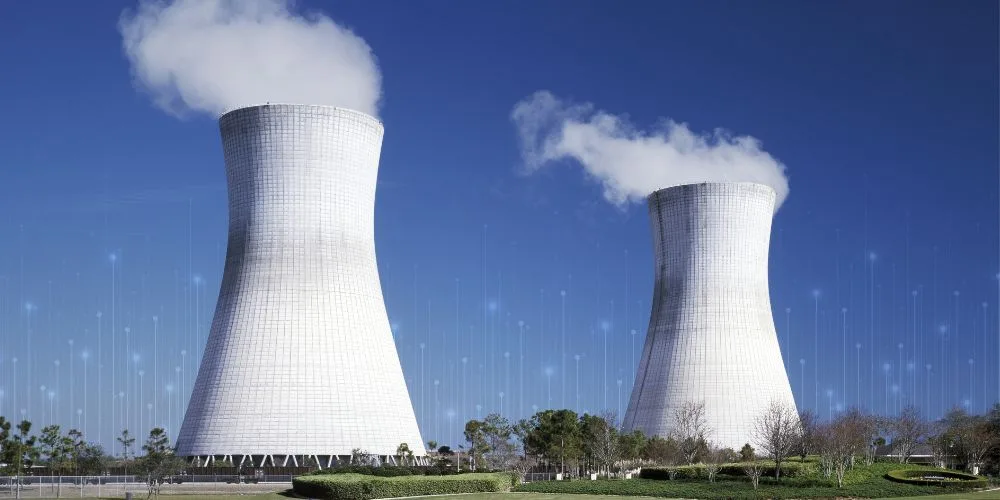
Drax, Brookfield and infrastructure firm Radiant have joined forces to construct an AI data centre at Drax's North Yorkshire power station, potentially unlocking more than £20 billion ($26.9 billion) in total investment. The three-way partnership, unveiled on 3 November, envisions eventual computing capacity exceeding 1GW, beginning with an initial 100MW phase scheduled to go live in the first quarter of 2028. Brookfield's initial investment for the first phase could reach £2.5 billion ($3.3 billion), with capital flowing through its AI infrastructure venture with Qatar's Qai.
The site benefits from Drax Power Station's substantial existing assets: roughly 4GW of grid connection and 2.6GW of active generation output. The first phase will source electricity directly from the National Grid, though later growth phases may tap power produced on-site.
Drax Power Station Provides Existing Infrastructure
Operating for more than 50 years in North Yorkshire, Drax Power Station currently relies on biomass fuel—wood pellets—to generate electricity. The facility runs four 645MW biomass units, delivering approximately 2.6GW of installed capacity and producing roughly 14TWh of renewable power annually, enough to serve approximately five million households.
Drax characterises its biomass supply as sustainably sourced, though the environmental footprint of biomass generation remains debated, particularly concerning full lifecycle emissions and pellet sourcing practices.
The data centre proposal would add a new function to the power station estate, which spans over 1,000 acres and already contains substantial electrical systems and cooling infrastructure. Proximity to the UK's fibre backbone adds to the location's appeal for data centre operations.
Adapting an existing industrial site could reduce the need for entirely new construction compared with greenfield development, though the actual benefit depends on the data centre's technical specifications and the modifications required.
Drax Group Chief Executive Will Gardiner remarked that the partnership could secure the power station's long-term viability while driving fresh investment into northern England. "Drax Power Station is one of the few UK sites that can provide large-scale reliable power directly to data centre customers by utilising existing and underutilised generation capacity," Gardiner stated.
First Phase Will Draw Electricity From the Grid
The project will unfold in phases, with electricity supply arrangements shifting as the facility grows.
Phase one targets 100MW of computing capacity, drawing grid-supplied power through the power station's existing infrastructure. Radiant will oversee design and commercial operations, including customer acquisition, while Drax manages land, power integration and planning matters.
A second phase aims to add 500MW between 2028 and 2031, potentially using Drax's own generation to feed the data centre through a behind-the-meter setup.
Ambitions extend beyond 2031 toward the 1GW-plus target, though these later stages remain aspirational rather than approved.
The first phase still requires planning consent, regulatory clearances, network approvals, commercial contracts and a final investment decision. The partners must also lock in a committed customer before moving forward. Public consultation is scheduled to begin in November 2026, with a planning application in preparation.
Power Availability Could Influence UK Locations
London and the South East have historically dominated UK data centre investment due to established connectivity and proximity to major corporate users. Yet electricity availability is emerging as a critical factor for expansion-minded developers.
Microsoft previously pulled out of Nscale's proposed £2 billion ($2.6 billion) AI data centre project in Essex over power supply concerns, highlighting the sector's growing energy constraints.
The Drax proposal offers an alternative model: positioning a computing facility at an established power generation site. While the initial phase relies on grid electricity, the partners intend to explore direct power arrangements as capacity scales.
The initiative aligns with UK Government efforts to accelerate domestic AI infrastructure investment. The recently launched Data Centre Covenant seeks to remove barriers related to electricity access and planning for strategically significant projects. The partners indicated their initial assessment suggests the Drax proposal meets the Covenant's criteria, though this does not constitute formal approval.
The Government's AI infrastructure priorities also featured in the UK Budget 2026, which positioned digital infrastructure as central to economic expansion.
The Yorkshire scheme indicates that existing energy facilities may become increasingly appealing for future AI investment, especially where land and electrical infrastructure advantages reduce the need for entirely new construction.
Community Benefits and Environmental Questions Remain
Drax and its partners contend the development could safeguard current employment at the power station and generate additional jobs across Yorkshire. The companies plan to establish a voluntary community benefits fund, shaped through local consultation and distinct from standard planning requirements.
The announcement did not disclose the fund's size or provide specific employment projections for the data centre.
Environmental dimensions will carry weight in assessing the project's broader impact. Drax's biomass operations have drawn criticism regarding emissions and sustainability claims. Should the data centre eventually draw power directly from the power station, questions would arise about the environmental cost of electricity powering AI systems.
The partners have not yet finalised the facility's design, operational model or environmental performance profile.
The scheme could exemplify how legacy energy infrastructure can meet the UK's growing AI computing demands while channelling substantial capital to a region outside London's traditional data centre footprint. Whether those gains translate into functioning capacity hinges on securing approvals, customers and electricity arrangements, plus demonstrating tangible benefits to neighbouring communities.