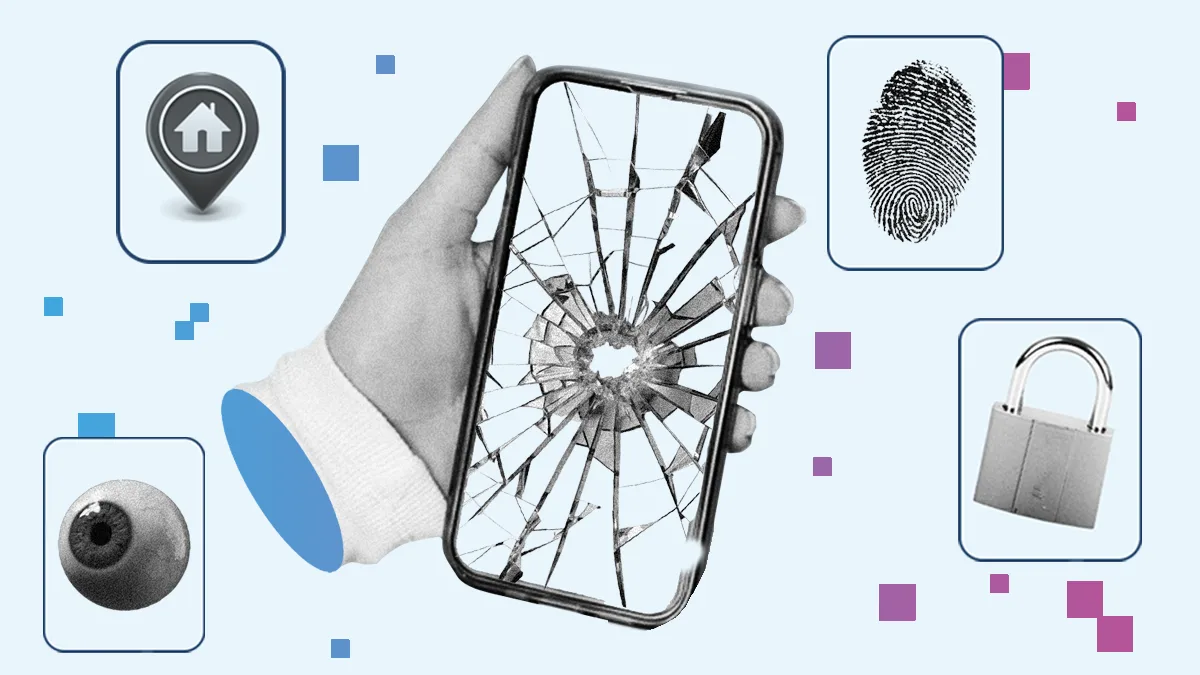
A decade ago, the Court of Justice of the European Union (CJEU) found that wholesale collection of internet traffic and location data violates the EU Charter of Fundamental Rights. Going forward, any harmonised EU framework governing data retention must adhere to the court's legal reasoning and safeguard the rights to privacy, data protection and freedom of expression.
What is "data retention" for law enforcement?
Data retention refers to rules requiring internet service providers to preserve metadata about their customers for periods longer than operationally necessary—beyond what billing, network upkeep or security demands—specifically to make it available later to police and spy agencies.
What is metadata?
Metadata comprises information produced during the transmission of content over electronic communications systems and networks. It encompasses the phone numbers of callers and recipients, call duration and timing, internet session length, browsing history, and the geographic position of mobile handsets. From a technical standpoint, metadata serves no function after transmission concludes.
Yet metadata paints an intimate picture of daily life.
- Continuous tracking of location data exposes someone's home address, temporary residences, political and faith-based leanings (through attendance at rallies or places of worship), medical status (clinic visits), sexual identity (visits to LGBTQ+ establishments), and confidential matters (meetings with lawyers).
- Metadata documents the network of relationships—both personal and professional—that a person maintains.
- Browsing activity and online service use reveal deep insights into what someone cares about and how they think.
Why this matters
- Metadata often tells a more complete story than the actual words in a message, particularly because it is structured in ways that enable automated analysis. Authorities can construct detailed profiles and sort populations into categories using metadata alone.
- The CJEU correctly observed that mass data retention creates the sensation of perpetual observation. This discourages civic participation, as people self-censor to evade being watched.
- Although individual data requests may target specific suspects, blanket retention presumes everyone guilty until proven innocent. Surveillance divorced from reasonable cause contradicts the presumption of innocence, a cornerstone of democracy.
- Stockpiling personal data on this scale creates security risks. Hackers and other bad actors can steal the information and weaponise it for fraud, extortion or worse.
- Data retention erodes the ability to remain anonymous online. For many—journalists investigating corruption, sources exposing wrongdoing, abuse survivors, dissidents, asylum seekers, victims of state persecution, creative professionals, and rights campaigners—anonymity is essential to safety and sometimes survival. It underpins core freedoms including speech and access to information.
Examples of harms caused by indiscriminate data retention
- In 2022, hackers breached AT&T and obtained call and text logs belonging to more than 100 million customers across a half-year window.
- During 2024, Ireland's police oversight body, the Garda Síochána Ombudsman Commission, examined journalists' call records to identify their sources while investigating the police itself, despite the journalists facing no criminal charges.
- A 2013 incident saw Poland's Central Anti-Corruption Bureau (CBA) gain access to a journalist's phone bills to trace the origin of a story about intelligence service misconduct. The journalist challenged the action in court and won; the CBA later issued a formal apology.
- Germany's Berlin Data Protection Authority found that the majority of cell tower dumps (requests for all device connections to a specific antenna during a set timeframe) carried out by German law enforcement between 2009 and 2011, when retention was mandated, broke the law. Police treated the technique as routine despite its invasive character and routinely bypassed legal safeguards. Data retention made this misuse possible.
What should EU law say about it?
- Uphold fundamental rights: Any EU legislation on digital communications or law enforcement data access should reaffirm the duty to keep communications—including metadata—confidential as the baseline rule.
- Preclude mass surveillance: Any departures from this rule must be set out in law and read narrowly, aligned with how the CJEU has interpreted the current e-Privacy Directive. The court has held that the Charter bars general and indiscriminate retention of traffic and location data, even in the name of fighting serious offences.
- Allow only targeted data retention for law enforcement: With adequate funding and expedited processes, rapid freeze orders could preserve only the data genuinely required for a particular case, provided they follow all relevant EU and domestic procedural protections, including advance approval from a judge.