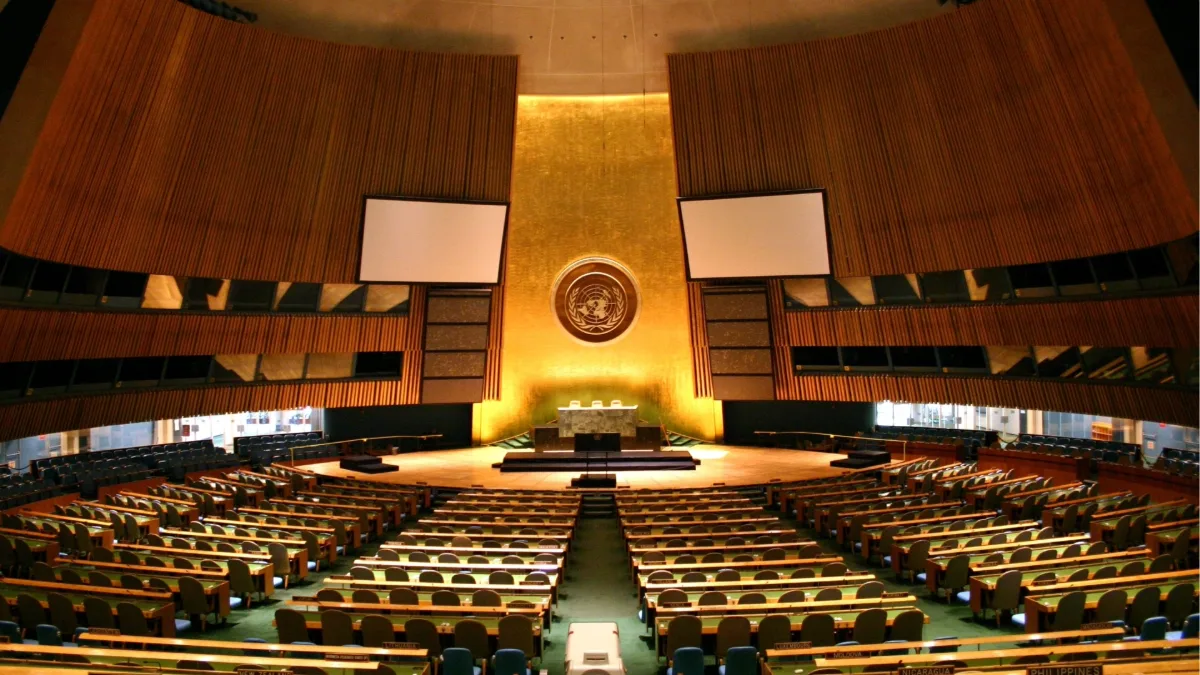
The UN General Assembly on September 22, 2024 approved the Pact for the Future, which encompassed the Global Digital Compact (GDC). This agreement established two major mechanisms: a multidisciplinary Independent International Scientific Panel on Artificial Intelligence and a Global Dialogue on AI Governance.
The GDC's stated vision—a digital ecosystem that is inclusive, fair, safe, and sustainable—sounds promising on paper. However, the document provides no specific safeguards to guarantee that either the Scientific Panel or the Global Dialogue will genuinely incorporate diverse perspectives. Absent binding rules for representation and participation, these bodies may fall short of their stated objectives.
Understanding how UN resolutions take shape reveals the problem. Though Member States formally negotiate these texts, the process typically restricts input from civil society, communities on the margins, and independent researchers. Diplomats working in private sessions drive much of the drafting. While facilitators may request feedback or accept written comments, no mandatory mechanisms ensure that varied viewpoints actually shape the final agreement.
This institutional design ill-suits a challenge as complex and fast-moving as artificial intelligence. When the process lacks inclusion, the product rarely achieves it. Constructing global AI governance through mechanisms that reflect only a narrow band of experiences and concerns risks embedding injustice into future systems.
Language as a First Barrier
Nearly three billion people worldwide cannot communicate in any of the UN's six official languages. If they cannot participate in national consultations or worldwide meetings, how can their circumstances shape the policies made on their behalf? Designing equitable AI becomes impossible when entire linguistic and cultural groups sit outside the room.
This challenge exists not in theory but in practice within UN institutions themselves. During the launch of the UN80 initiative, the Secretary-General stressed that the organization must grow more nimble, open, and reachable. Yet informal UN discussions and negotiations regularly proceed without translation capacity, effectively excluding many Member States and civil society organizations unable to work in the six official UN languages.
Rather than depending solely on expensive human translators—or forcing participants to manage without support—the UN could deploy AI-based translation systems to close these gaps instantaneously, especially in informal consultations where budgets are tight. Training these tools on country-specific language datasets would allow nations to strengthen their diplomatic reach while ensuring their own languages and cultural frameworks inform AI algorithm development.
Such a strategy would cut expenses, boost productivity, and expand access, permitting diplomats, negotiators, and other participants from all language communities to take part fully without bearing translation costs. Equally vital, it would grant countries control over their linguistic data and their voice in shaping worldwide governance.
Data Imbalance and Hidden Exclusion
Language represents just one form of exclusion. Another, less obvious yet equally significant, resides within the data itself.
A handful of large multinational tech firms dominate AI development, most based in the Global North. Yet their systems draw heavily on information sourced from the Global South. The disparity is stark: the Global South supplies the foundational material for cutting-edge AI but has no say in how those tools are created, refined, and used.
Take an AI system tracking health patterns in African-American women in the United States. Omitting the broader health situations of African and Caribbean populations would be both myopic and risky. Health results depend on genetics, nutrition, surroundings, historical factors, and economic circumstances. When data lacks worldwide scope, the resulting systems become skewed, incomplete, and potentially damaging.
These dangers have moved beyond speculation. Discriminatory hiring algorithms, flawed healthcare tools, and biased criminal justice systems demonstrate how AI reinforces existing disparities. These technologies are not objective—they embody the values, presumptions, and gaps in understanding of those who built them.
A Blueprint for Genuine Inclusion
As the world community shapes AI governance architecture, it must sidestep the exclusionary patterns that created the current crisis. This demands moving past conventional diplomatic habits that favor speed and agreement over fairness and voice. Building inclusive and responsible AI demands that inclusion be central from the start, not added later.
The Global Dialogue on AI Governance could adopt a layered, blended framework guaranteeing representation, responsibility, and openness from the beginning:
- An open Global Advisory Group, drawn from marginalized populations, Indigenous nations, linguistic communities, young people, persons with disabilities, and experts from the Global South—selected through transparent, public procedures managed by regional and thematic bodies. This body would have formal authority to shape agendas, green-light consultation approaches, and assess draft materials.
- All discussions—in-person or remote—would happen in languages beyond the UN's six official ones, using AI for real-time translation into any language to guarantee full and genuine participation.
- The Dialogue would embrace a transparent, ongoing model, releasing draft proposals for public input and requiring Member States to publicly detail how they have dealt with such feedback. This would prevent the Dialogue from replicating standard closed, government-only procedures and instead create a genuinely open forum reflecting varied experiences and ways of knowing.
Inclusion must determine who joins the Scientific Panel, how the Global Dialogue operates, and how knowledge, skills, and personal experience are honored across cultural and professional lines. It requires that the Global South, Indigenous peoples, linguistic minorities, persons with disabilities, and youth not merely attend but lead the way. It requires treating translation, accessibility, and digital competency not as extras but as vital to legitimacy. It means grasping that diversity is not a compliance measure—it is the foundation of legitimacy, strength, and fairness.
The moment is critical. The governance systems established today will determine the moral standards, technical paths, and human impacts of AI across the coming decades. Neglecting to embed intentional inclusion now risks constructing systems that deepen current disparities and benefit a select few over the rest.
The era of token gestures has ended. The requirement now is courageous, values-driven action—action rooted in fairness, openness, and voice in worldwide AI governance.
Source: Tech Policy Press