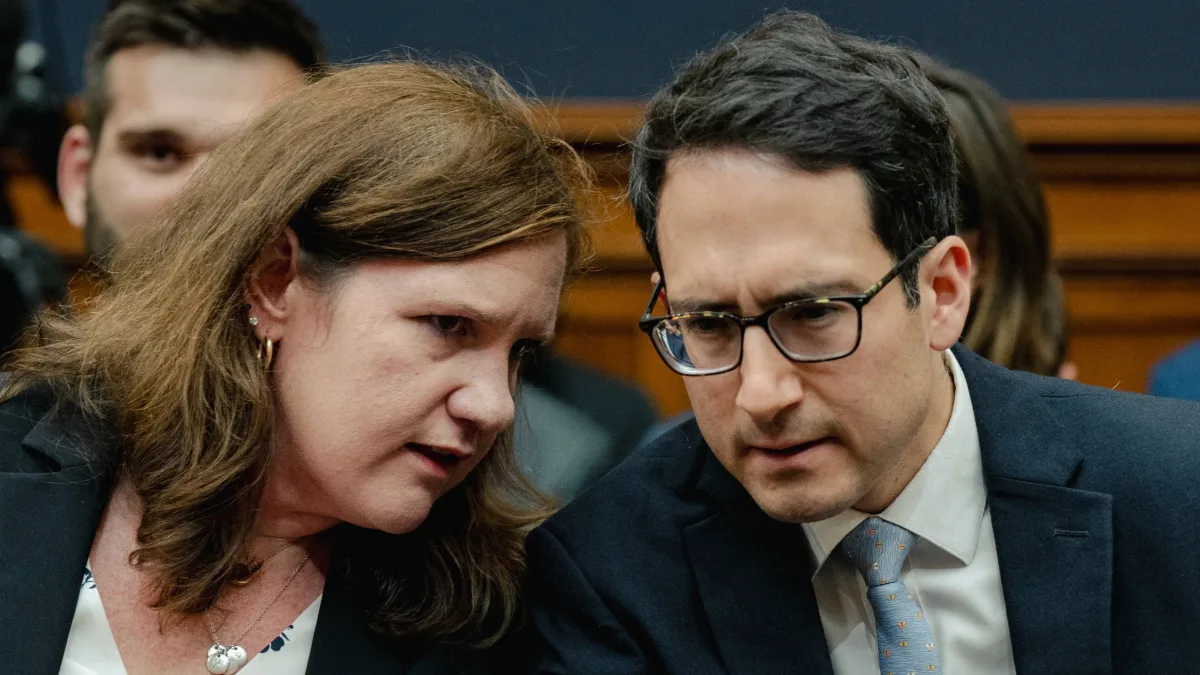
March brought seismic shifts to America's technology policy landscape, dominated by President Donald Trump's decision to dismiss Alvaro Bedoya and Rebecca Kelly Slaughter, both Democratic commissioners at the Federal Trade Commission. The removals represent a direct challenge to the agency's traditional independence from executive control. Both commissioners have contested the firings as unlawful under Humphrey's Executor v. FTC (1935), a Supreme Court precedent that bars presidents from removing FTC commissioners without cause. The administration provided no stated justification, leaving the FTC with only two Republican members: Chairman Andrew Ferguson and Commissioner Melissa Holyoak.
Simultaneously, the administration eliminated the 18F office, a cadre of in-house technologists who advised federal agencies, and terminated over 70 employees at the Commerce Department's National Institute of Standards and Technology (NIST). These cuts cast doubt on NIST's continued involvement in artificial intelligence governance and cybersecurity initiatives, including its AI Safety Institute.
The FTC commissioner removals triggered swift backlash from Democratic lawmakers. Sen. Amy Klobuchar (D-MN), who oversees the agency on the Senate Commerce Committee, stated that "President Trump's dismissal of Commissioners Slaughter and Bedoya is not only illegal but also hurts consumers." A coalition of Democratic senators sent a letter asserting the action "contradicts long standing Supreme Court precedent, undermines Congress's constitutional authority to create bipartisan, independent commissions, and upends more than 110 years of work at the FTC to protect consumers from deceptive practices and monopoly power." Chairman Ferguson, by contrast, defended the move as "necessary to ensure democratic accountability for our government."
Legal scholars remain divided on whether courts will intervene. Some observers note that the Supreme Court's 2020 decision in Seila Law v. Consumer Financial Protection Bureau could provide grounds for reversing the century-old Humphrey's Executor precedent. Trump has reportedly selected Mark Meador for the vacant Republican seat, pending Senate confirmation.
AI Policy Takes Shape Amid Competing Visions
The White House solicited public input for its forthcoming AI Action Plan, framing the initiative as a vehicle for "securing and advancing American AI dominance." Lynne Parker, Principal Deputy Director of the Office of Science and Technology Policy, characterized the plan as "the first step in securing and advancing American AI dominance." The comment period, which closed on March 15, drew over 8,000 submissions from industry, civil society, and other stakeholders.
Technology companies advocated for federal preemption of state regulations, government adoption of AI systems, copyright protections for training data, and increased infrastructure investment. OpenAI called for federal action to relieve companies from "a growing patchwork of regulations" imposed by individual states. Google urged the government to "lead by example" in deploying AI. Meta, OpenAI, and Microsoft jointly defended their use of copyrighted material, arguing it was permissible "because the information was transformed in the process of training their models and was not being used to replicate the intellectual property of rights holders." Anthropic requested federal support for reducing "permitting burdens for new energy and center construction" and allocation of funds toward "strategic infrastructure projects."
Civil society organizations emphasized risk mitigation, workforce development, and preservation of NIST's role. The Center for Data Innovation, Center for New American Security, and Center for Security and Emerging Technology (CSET) proposed establishing a national database to "track AI failures, identify systemic weaknesses, and coordinate risk mitigation." CSET also urged increased funding for "technical apprenticeships and community college programs." The Center for Democracy and Technology (CDT) advocated for open-source models to "retain their central position in the American AI ecosystem" and called on NIST to continue developing standards for AI risk mitigation and rights protection. The Center for AI and Digital Policy requested full funding for NIST's AI Safety Institute.
The final AI Action Plan is expected by July 2025, though it remains unclear which proposals will be adopted.
Congressional and Agency Actions
Executive Branch Developments
- The FTC removed over 300 posts from its business guidance blog that had been published during the Biden administration, including consumer protection guidance on AI and privacy litigation records spanning four years.
- The FCC established a new national security council dedicated to countering cyber threats to US telecommunications infrastructure, with particular focus on the People's Republic of China and the Chinese Communist Party.
- President Trump signed an executive order establishing a "Strategic Bitcoin Reserve and a US Digital Asset Stockpile," followed by a White House cryptocurrency summit convening industry leaders.
- The Commerce Department's National Institute of Standards and Technology announced a new generative AI platform providing staff access to large language models from Anthropic and Meta.
Congressional Progress
The Senate Commerce Committee advanced nominations for Mark Meador as Federal Trade Commissioner and Michael Kratsios as Director of the Office of Science and Technology Policy. Additionally, 36 members of Congress sent a letter to Meta regarding the company's advertising policies for items adaptable into firearm silencers and suppressors.
Several bills advanced through committee consideration:
- Emerging Innovative Border Technologies Act (H.R. 993), introduced by Rep. J. Luis Correa (D-CA), passed the House and moved to the Senate Committee on Homeland Security and Governmental Affairs.
- Understanding Cybersecurity of Mobile Networks Act (H.R. 1709), introduced by Rep. Greg Landsman (D-OH), advanced through the House Committee on Energy and Commerce.
- NTIA Policy and Cybersecurity Coordination Act (H.R. 1766), introduced by Rep. Jay Obernolte (D-CA), would establish an Office of Policy Development and Cybersecurity and advanced through the House Committee on Energy and Commerce.
- Informing Consumers about Smart Devices Act (S. 28), introduced by Sen. Ted Cruz (R-TX), advanced through the Senate Committee on Commerce, Science, and Transportation.
- PLAN for Broadband Act (S. 323), introduced by Sen. Roger Wicker (R-MS), advanced through the Committee on Commerce, Science, and Transportation.
- ADS for Mental Health Services Act (S. 414), introduced by Sen. Dan Sullivan (R-AK), advanced through the Committee on Commerce, Science, and Transportation.
- Romance Scam Prevention Act (S. 841), introduced by Sen. Marsha Blackburn (R-TN), would require online dating service providers to notify members of fraud bans and advanced through the Senate Committee on Commerce, Science, and Transportation.
New bills introduced in March included measures on AI-enabled financial crime defense (H.R. 2152, Rep. Zachary Nunn, R-IA), establishing a National Artificial Intelligence Research Resource (H.R. 2385, Rep. Jay Obernolte, R-CA), requiring AI review of agency regulations (S. 1110, Sen. Jon Husted, R-OH), a Consumer Safety Technology Act (H.R. 1770, Rep. Darren Soto, D-FL) directing pilot programs for AI and blockchain study, restrictions on compensation for child exploitation information (S. 962, Sen. James Lankford, R-OK), and the Digital Integrity in Democracy Act (S. 840, Sen. Peter Welch, D-VT) targeting false election information on social media platforms.
Industry and Civil Society
Multiple industry advocacy groups wrote to Commerce Secretary Howard Lutnick expressing support for NIST and its AI and cybersecurity missions following the personnel cuts. A Meta whistleblower alleged the company had developed censorship tools and considered sharing user data with Beijing between 2014 and 2017 to access the Chinese market. Google's public policy team released a legislative proposal for children's online safety, criticizing Utah's App Store Accountability Act as "concerning legislation" and proposing instead a five-part framework featuring "privacy-preserving age signal shared only with consent, appropriate safety measures within apps, responsible use of age signals, no ads personalization to minors, and centralized parental controls."
One hundred eighteen researchers signed a letter to policymakers affirming "the scientific consensus that artificial intelligence (AI) can exacerbate bias and discrimination in society, and that governments need to enact appropriate guardrails and governance in order to identify and mitigate these harms." The Center for Democracy and Technology (CDT) and the American Association of People with Disabilities (AAPD) published a report examining AI's impact on disabled individuals and recommending their inclusion in "creation, deployment, and auditing of these technologies and of the policies that govern them."
Judicial Developments
The Department of Justice filed a revised proposed final judgment in its antitrust case against Google, removing a requirement that the company divest acquired AI firms, including its 14 percent stake in Anthropic. The revision instead mandates that Google notify the government before completing future AI acquisitions. In a separate matter, US District Court Judge Beth L. Freeman for the Northern District of California granted a second preliminary injunction motion in NetChoice v. Bonta, blocking enforcement of California's Age-Appropriate Design Code Act (AB-2273), which NetChoice challenged as unconstitutional.
Source: Tech Policy Press