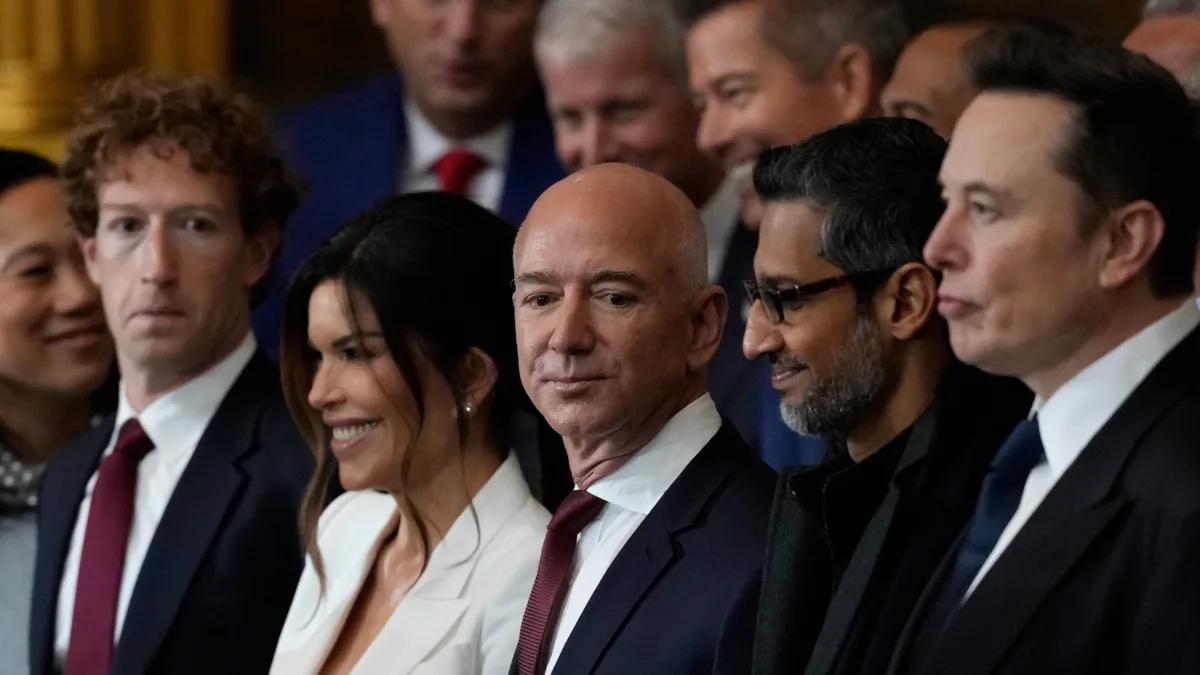
Tech Policy Press is inviting submissions for a special series examining the political and democratic implications of concentrated technological power among the world's wealthiest figures. The deadline for pitches is Friday, April 25th, at Noon Eastern Time, with rolling review of submissions.
The outlet frames the challenge as one of unprecedented scope: a small group of individuals now command influence across artificial intelligence, social media, telecommunications, surveillance systems, space ventures, and renewable energy. Their capacity to reshape regulatory environments, political discourse, and societal norms globally raises fundamental questions about how democracies can protect public interests when confronted with actors wielding vast wealth, technological control, and legal resources that often place them beyond traditional accountability mechanisms.
The series will explore how democracies—particularly those experiencing institutional strain—can establish frameworks ensuring that the ambitions and actions of such individuals remain aligned with democratic values and elected government authority. Contributors are asked to consider what safeguards exist, which ones prove insufficient, and what new mechanisms might be required.
Key Areas for Exploration
Defining the Problem
- What distinguishes wealth and influence concentration among tech billionaires as a novel democratic challenge compared to earlier periods of elite dominance?
- How do current multinational technology corporations and their regulatory frameworks reveal broader patterns of unchecked private power over politics and society?
- What historical precedents and responses to concentrated power offer lessons for today?
Political Influence and Regulation
- Through what mechanisms—lobbying, campaign contributions, legal action, corporate decisions, public messaging—do tech billionaires shape politics, and what impact do these activities have on regulatory efforts in AI, social media, telecommunications, surveillance, and space?
- What insights emerge from studying their interactions with governments, regulators, and publics?
Democratic Safeguards
- Which existing legal, regulatory, political, or societal tools can counterbalance the influence of individuals with nearly unlimited resources?
- Do current safeguards suffice, or must democracies develop new accountability and oversight mechanisms?
- What consequences might follow if democracies fail to contain such influence—for civil rights, labor protections, access to essential services?
Technology and Public Accountability
- Given the power tech billionaires exercise over systems affecting political and economic rights, should new frameworks govern how private actors discharge public functions and provide default technological services?
- How adequately do constitutional protections, administrative law, and sectoral regulations hold such power accountable?
- Can societies ensure technologies developed under billionaire leadership serve public benefit rather than private or ideological ends?
- What role should public accountability play in directing AI, space exploration, autonomous systems, and other transformative technologies?
Legal and Ethical Challenges
- How do tech billionaires and their companies employ courts, media campaigns, lobbying, and control of communication platforms to silence opposition, obstruct regulation, and exert undue influence on democratic processes, and what long-term consequences follow for open societies?
- What ethical frameworks should guide responses to power dynamics rooted in extreme wealth and technological dominance?
- How do corporate governance structures enable billionaires to bypass shareholder democracy and collective decision-making, concentrating power in individual hands? Which legal and regulatory environments facilitate such arrangements?
Global Implications
- How should international bodies and governments regulate cross-border ventures by tech billionaires?
- What collaborative approaches might promote global equity, security, and fairness against private technological dominance?
- What geopolitical and economic trends might emerge from unchecked billionaire influence combined with rising right-wing populism in the coming decades?
- How does the US government support American tech companies in securing favorable regulatory treatment abroad? How have foreign policy efforts advanced Big Tech lobbying on data transfer, protection, localization, intermediary liability, and taxation globally?
- What insights can Global Majority nations—with longer experience managing relationships between corporate and political elites—offer to Global North counterparts? How does the tech billionaire challenge differ from earlier threats to democracy stemming from inequality?
Who Can Contribute
Tech Policy Press welcomes essays, research, reporting, data projects, and other work from its volunteer community of researchers, policymakers, journalists, technologists, and interdisciplinary thinkers. Contributions should illuminate connections between individual and corporate wealth, technological power, and democratic governance while offering concrete insights or recommendations.
Submission Guidelines
- Submit a 300-word synopsis of your thesis and planned coverage. Synopses may accompany an outline or draft but must appear at the top of your submission.
- Include biographical information and disclose any conflicts of interest.
- Submit drafts as Google documents where possible. Follow the outlet's contribution guidelines. Use hyperlinks instead of footnotes.
- Send all submissions to contributions@techpolicy.press.
While this represents a core focus area for Tech Policy Press that will extend beyond this particular call, the outlet will review submissions on a rolling basis and prefers to receive them by Friday, April 25th, at Noon Eastern Time.
Source: Tech Policy Press