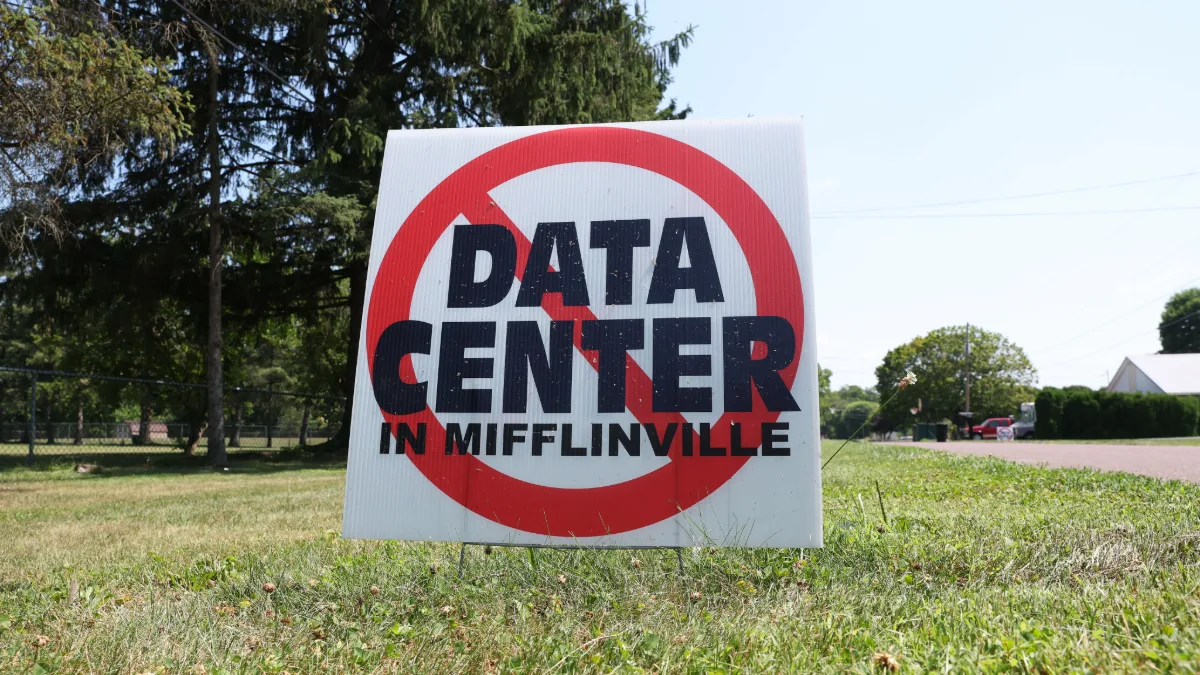
Community opposition to data center projects has moved from local disputes into the national spotlight over the past twelve months. Environmental concerns and quality-of-life impacts, combined with growing skepticism toward artificial intelligence, have galvanized activists and caught the attention of lawmakers. State legislators in particular have responded to this momentum with a flood of new proposals.
A review of over 300 data center bills from previous years, published in Tech Policy Press, showed legislators attempting to balance economic development with emerging concerns about industry externalities. The landscape has shifted dramatically since then. The Halt the Harm Network, an environmental justice organization, has tracked nearly 400 new bills introduced over the past 12 months across statehouses and Congress. This legislative surge reflects a fundamental change in how policymakers view data center expansion.
What has changed?
The most striking change is the collapse of pro-development sentiment. In the 2026 legislatures, only about 54 of 473 new bills (11%) sought to introduce or expand incentives for data center projects. This contrasts sharply with earlier legislative sessions, where roughly 32% of bills (98 of 308) pursued incentive strategies. Many of the newer incentive proposals focus on mitigation—such as encouraging nuclear power sources to avoid straining existing grids or financing waste heat recovery systems to reduce environmental damage. Nearly 90% of recent bills (approximately 420) address problems created by data centers or express reduced enthusiasm for them as community assets.
Several concerns absent from earlier legislative efforts now dominate the debate:
- Restrictions or prohibitions on non-disclosure agreements between data center developers and government bodies, either as a general transparency measure or to support specific data collection requirements.
- Decommissioning risks and project abandonment, addressed through bills requiring financial assurance for site restoration or directing utilities to account for these risks in contracts.
- Proposed moratoria at state or federal levels, including one passed by Maine's legislature (later vetoed by the governor), alongside guidance for local governments implementing county or municipality-level pauses.
- Expansion of local zoning authority to regulate data centers, with state lawmakers providing resources such as model ordinances to support municipal regulation.
- Promotion of alternative power sources, particularly modular nuclear reactors, geothermal energy, and other renewables, alongside requirements that data centers supply portions of their own power—increasingly from clean sources and in growing percentages over time—to avoid burdening public grids.
What is actually becoming law?
A modest share of introduced bills have been enacted, though they span the full range of regulatory concerns. As of the end of July 2026, the 2026 legislatures had passed 47 bills or adopted resolutions. Of these, 16 imposed new data center regulations and 9 curtailed existing incentives. Twelve additional laws included data collection, study directives, or reporting requirements. Only two new laws increased incentives, both enacted in April of the previous year, underscoring the dramatic policy shift.
What about Congress?
Federal action has lagged significantly behind state-level efforts. Congress has struggled to pass data center legislation, and its approach appears more cautious. Of 43 data center bills introduced in the current Congress, only 14 proposed new regulations.
The federal focus differs markedly from state priorities. At least thirteen proposed congressional laws directly referenced artificial intelligence in their titles, whether supportive or critical. State legislators, by contrast, have concentrated on the practical impacts of data centers as physical infrastructure, regardless of their intended use. The AI backlash has motivated prominent left-populist lawmakers: Sen. Bernie Sanders (I-Vt.) and Rep. Alexandra Ocasio-Cortez (D-N.Y.) introduced the Artificial Intelligence Data Center Moratorium Act in both chambers. This proposal ranks among the country's most stringent, requiring comprehensive AI safety laws and broad labor protections before lifting the moratorium, along with measures to protect local communities.
Opposition to AI as a final product motivates some local data center opponents, yet this concern remains almost entirely absent from state-level legislation.
Congressional Republicans, apparently closer to the pro-AI, pro-data center White House, have shown less enthusiasm than their state counterparts for addressing data center harms. One exception involves regulations ensuring data centers cover power generation and grid costs, protecting other utility customers from rate increases. This approach received backing through the Trump White House's voluntary Ratepayer Protection Pledge, providing political cover for national Republicans supporting limited data center constraints.
The political momentum has clearly shifted against data center expansion. Yet with leading AI laboratories depending on expanding computing capacity to justify valuations and major tech firms racing to keep pace, studies, modest regulations, and reduced tax breaks may prove insufficient to slow development. Tech executives including Mark Zuckerberg and OpenAI leadership have recognized the need for stronger community engagement to advance projects. However, grassroots opposition continues to intensify, and activists remain committed to keeping lawmakers focused on data center risks.
Source: Tech Policy Press