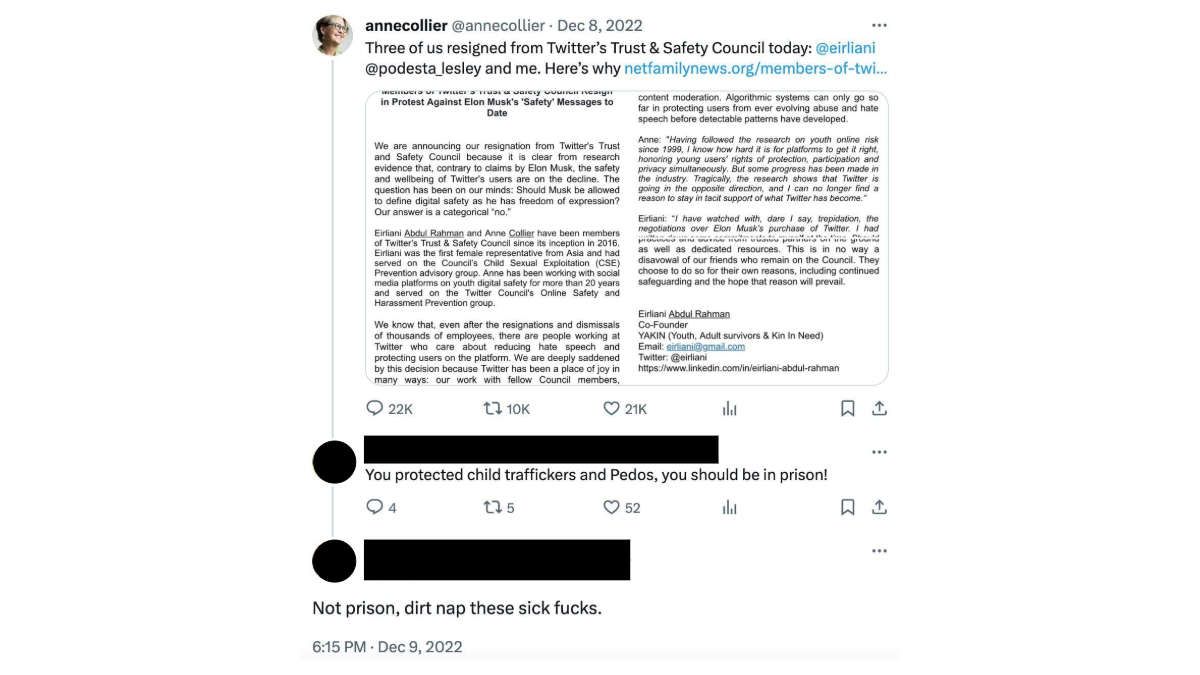
Twenty-four months ago, we stepped down from our positions on Twitter's Trust and Safety Council following the publication of research documenting a dramatic surge in hateful language targeting Black Americans, Jewish people, and gay men after Elon Musk acquired the company and eliminated thousands of engineering and content moderation roles. We witnessed firsthand his aggressive cost-cutting methodology.
Today, Musk is deploying that same "cut aggressively, address problems later" strategy across the federal government. Following his Twitter acquisition, he has reportedly taken residence in Capitol offices. The Department of Government Efficiency under his leadership—now integrated into the United States Digital Service and rebranded the United States DOGE Service through Executive Order—is recruiting personnel while amplifying the reach of Silicon Valley interests. As the department launches operations, significant changes are occurring, including Musk's pressure on the Office of Personnel Management, which recently presented a controversial severance package to civil servants.
The decision to name the department after Dogecoin, a cryptocurrency born as satire, indicates Musk treats this role as entertainment. We are deeply concerned that his management of federal agencies, public employees, and citizens will mirror his conduct toward Twitter staff, advisers, and users two years prior. Government exists to supply essential services and oversee commercial activity. A billionaire with a history of erratic behavior poses serious risks to the nation's wellbeing.
The dissolution of Twitter's Trust and Safety Council
We examine X/Twitter's trajectory because Musk has consistently described his platform as a "public town square." That characterization was accurate until late 2022. The platform functioned as a social broadcasting network valued by elected officials, entertainers, news professionals, academics, and countless others. It served multiple functions—from expressing opinions to sharing professional work. On Twitter, individuals gained visibility regardless of their follower count. This capacity held profound significance for democratic participation and freedom of speech. The platform proved instrumental during the Arab Spring of 2011 and the Black Lives Matter demonstrations in Ferguson, Missouri.
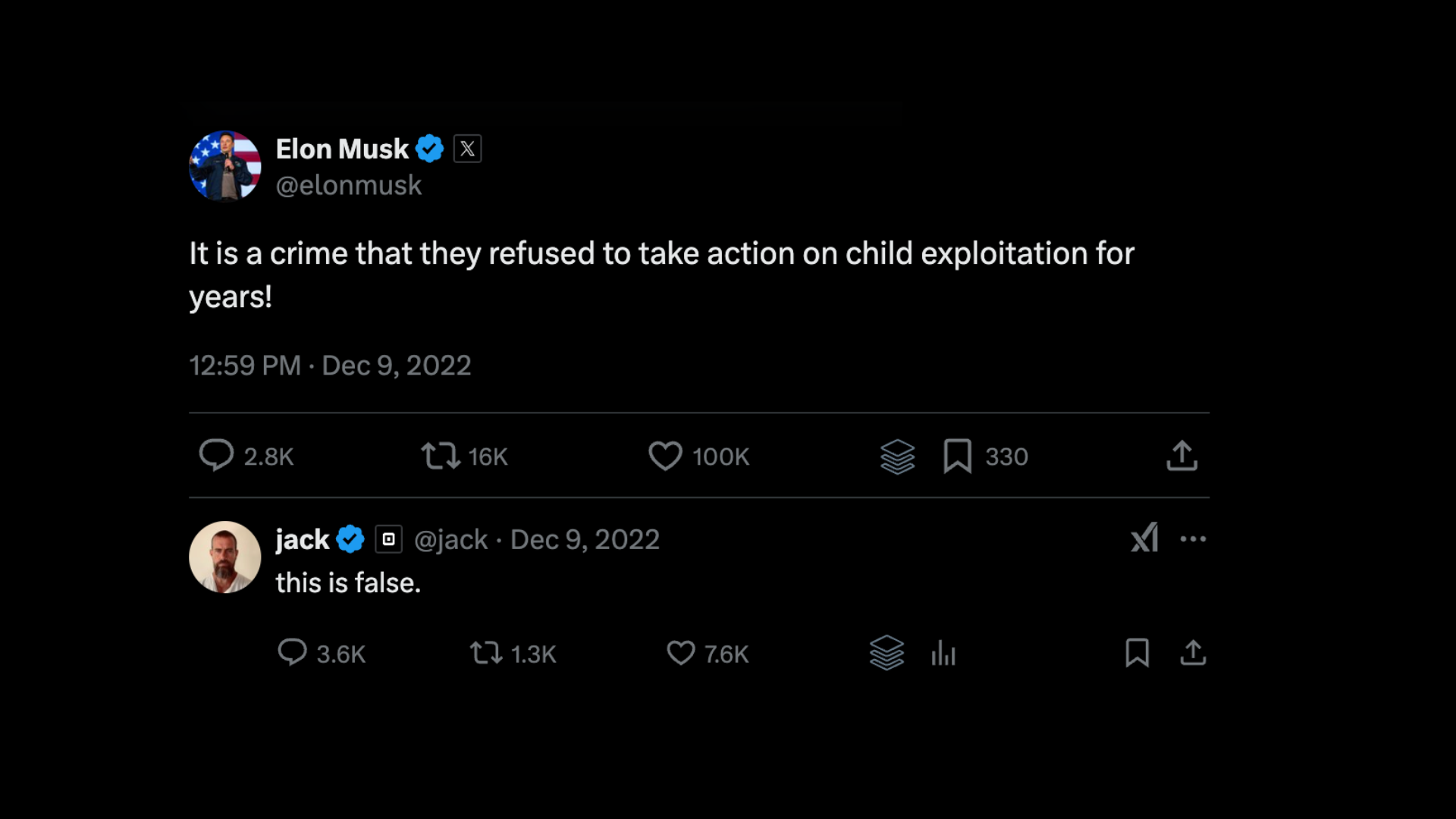
Following our December 8, 2022, departure from Twitter's Council, our resignation announcement gained traction when Musk intervened. He replied to a message from right-wing personality Mike Cernovich that mentioned our names. Musk's response was dismissive: "It is a crime that they refused to take action on child exploitation for years!" In reality, we served as unpaid consultants to Twitter, advising on strategies to combat child sexual abuse material and related dangers. Although former CEO Jack Dorsey publicly supported us in response, the damage was irreversible. By amplifying Cernovich's false claim to approximately 120 million followers, Musk triggered a wave of harassment directed at us, including Lesley Podesta, who left alongside us. The resulting barrage included lethal threats. At peak intensity, we received 4,000 messages every 20 minutes. Within four days, Musk unilaterally eliminated the Council.
Musk's approach reflected ruthless "efficiency" calculations regarding Twitter. He terminated more than 80 percent of personnel within months following his purchase (later attempting to rehire some) without generating meaningful financial gains. The platform experienced a dramatic advertising revenue collapse, declining from $4.5 billion to $2.2 billion annually between 2022 and 2023, per the World Advertising Research Centre.
Today's X bears little resemblance to the earlier Twitter platform. Musk converted the "town square" into a personal megaphone for spreading false information. Throughout the subsequent two years, he replicated the Trust and Safety Council playbook repeatedly—promoting accounts disseminating falsehoods regarding the October 2023 Gaza conflict and amplifying anti-immigrant messaging during the August 2024 United Kingdom disturbances.
Blocking a government spending agreement
Within the United States, Musk released over 150 posts last month characterizing a spending proposal designed to prevent government closure as "criminal" and "one of the worst bills ever," while falsely asserting it included fresh Ukrainian assistance and $3 billion earmarked for a Washington stadium project. He pressured Republicans to reject the arrangement, threatening electoral consequences, posting, "any member of the House or Senate who votes for this outrageous spending bill deserves to be voted out in 2 years!" Based on X's data, these messages accumulated tens of millions of impressions. He concluded one message with "Vox Populi, Vox Dei," the Latin expression meaning "the voice of the people is the voice of God," implying that an unelected billionaire's positions somehow embody the American public's preferences.
We strongly oppose Musk's intervention in legislative matters and consider the imposition of technocratic preferences rooted in commercial gain on the broader population deeply troubling. This represents a continuation of Musk's pattern of leveraging his platform to shape public discourse, yet the consequences may prove substantially more severe than in 2022. A government closure would have resulted in unpaid leave and income loss for millions of public sector workers. The Congressional Budget Office calculated that a five-week shutdown between 2018 and 2019 inflicted $3 billion in economic damage.
Proposed DOGE budget reductions
Musk pledged to eliminate $2 trillion from the $6.7 trillion federal budget by July 4, 2026 (though recent indications suggest he has already abandoned this unrealistic commitment). Considerable discussion has examined the structural and procedural obstacles preventing meaningful adjustments to the nation's fiscal position, with current national debt exceeding $36 trillion. What implications would such reductions carry for ordinary Americans?
The specific targets for reductions remain uncertain, but Musk has identified preferred areas for reduction. These encompass the Internal Revenue Service, the Department of Education, the Federal Bureau of Investigation, and the Nuclear Regulatory Commission. Should Trump honor his commitment to preserve Social Security, Medicare, and military benefits, budget specialists have projected that remaining expenditures would require 62 percent reductions, jeopardizing assistance programs for food, home energy, housing, food quality oversight, and medical coverage for uninsured populations and economically disadvantaged communities.
In a collaborative article published in the Wall Street Journal, Musk and Vivek Ramaswamy (who departed DOGE immediately before Trump's inauguration following reported disagreements with Musk) outlined the department's direction and objectives, noting that "advanced technology" would facilitate their efforts—seemingly referencing artificial intelligence. Scholarship demonstrates that AI "has a disastrous track record in high-stakes governmental uses." Inadequately constructed frameworks will amplify existing harms. For instance, when machine learning or AI models rely on biased or discriminatory training information, those prejudices become embedded in the system, producing harmful consequences affecting individuals. We should dismiss claims that AI represents a solution to intricate policy questions.
Efficiency at what cost?
We must not depend on unelected technology executives positioned to profit from their governmental roles. We cannot assume Musk's conception of efficiency will safeguard public service delivery. Restructuring the sprawling federal apparatus constitutes a multifaceted undertaking, not a technological shortcut. Will efficiency genuinely serve the majority if it primarily benefits a privileged minority? In Musk's instance, we maintain it will not.
Source: Tech Policy Press