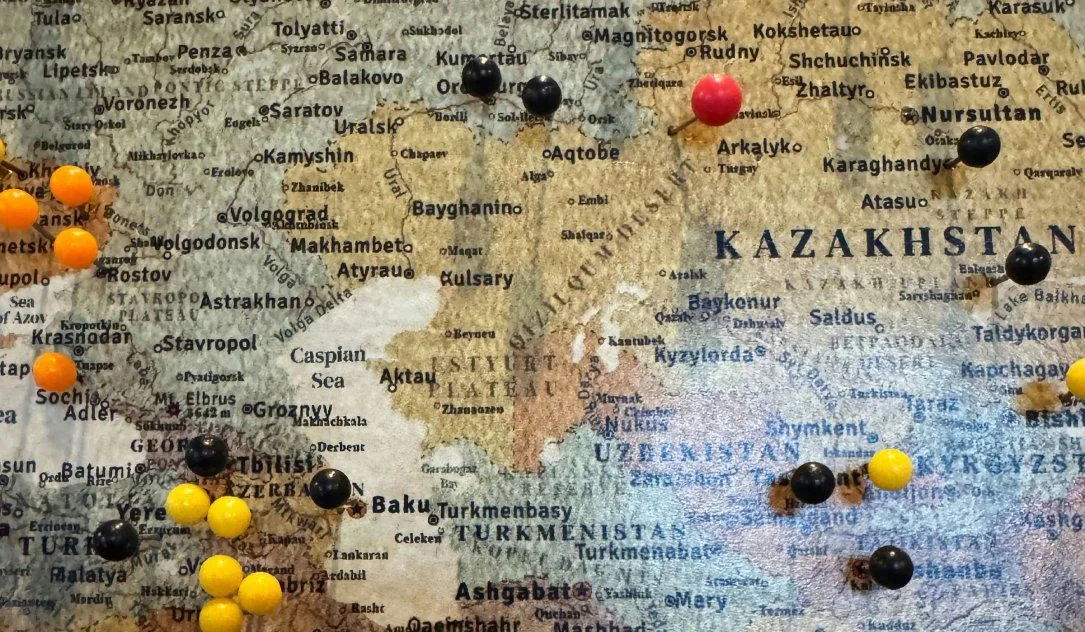
A cybersecurity investigation has revealed that hackers with suspected ties to Kazakhstan leveraged artificial intelligence to conduct espionage operations targeting Central Asian governments. CloudSEK, a Singapore-based security firm, made the discovery after locating an unsecured server operated by Silent Lynx, a group previously implicated in spying campaigns against Kyrgyzstan, Turkmenistan, Tajikistan, Armenia, Belarus and Russia.
The exposed server contained more than a dozen gigabytes of material, encompassing stolen government files, attack infrastructure and documentation detailing how operators deployed an AI agent to execute portions of their campaign. The group configured Hermes, an open-source AI agent designed to function as an offensive security specialist, relying primarily on AI models created by Chinese firm DeepSeek. Unlike standard chatbots, such agents possess the capability to execute commands, launch applications and perform operations on behalf of their operators.
The AI system assisted with initial network reconnaissance, gathering data and removing forensic evidence from compromised systems. Notably, it was also set up to perform certain potentially damaging operations without requiring manual authorization. The attacker communicated with the agent in Russian and connected it to a Telegram bot, enabling remote command issuance from a mobile device.
Government networks compromised
Tajikistan experienced one of the group's most consequential breaches, with attackers maintaining deep access to the nation's railway infrastructure spanning from mid-August through early October. Following their initial penetration, the threat actors obtained access to multiple servers, dumped credential databases and exfiltrated internal documents alongside operational records.
The intruders expanded their reach by leveraging a single railway worker's credentials to access Tajikistan's national electronic document management system, a platform through which government ministries and agencies share official communications. Utilizing automated extraction mechanisms, they obtained thousands of files, including documents routed through or handled by Tajikistan's Defense Ministry during 2026.
The compromised data encompassed correspondence from the National Guard, the State Committee for National Security and the State Investment Committee, alongside intelligence regarding more than 100 government bodies and their personnel. Researchers additionally identified evidence that the group had breached infrastructure supporting Uzbekistan's Smart Forestry initiative, a platform designed for forest resource monitoring and administration.
The discovered server also held malicious files masquerading as Turkmen government materials, including a railway ticket and a regional administrative report. These files were assembled and validated in October, indicating preparation for an additional phishing operation. CloudSEK did not confirm whether Turkmenistan ultimately fell victim to such attacks.
CloudSEK determined with medium confidence that Silent Lynx maintains connections to Kazakhstan, citing Russian-language operational communications and test connections routed through a residential internet service provider within the country. This assessment aligns with prior conclusions from other security researchers regarding the group's likely Kazakhstani base, though no evidence directly links the group to Kazakhstan's government.
Silent Lynx, also known as Cavalry Werewolf and YoroTrooper, has maintained operational activity since at least 2022, targeting government bodies, diplomatic missions and other entities throughout Central Asia, Russia and Europe. In October 2025, the group initiated a sustained cyberespionage effort against Russian government agencies and industrial organizations, deploying phishing messages disguised as Kyrgyz government correspondence.