Google has not made public the standards governing when its AI Overviews appear in search results, and researchers have identified substantial inconsistencies in how the system handles election-related queries. The tech giant shows markedly fewer AI Overviews when users search for information about elections compared to non-political topics, according to findings from AlgorithmWatch.
The patterns are stark in specific cases. Searches about polling data trigger no AI Overviews at all, whereas queries about political parties and individual candidates produce the summaries between 40 and 50 percent of the time. Geographic variation also emerged: searches about Saxony-Anhalt returned substantially fewer AI Overviews than equivalent queries about Berlin or Mecklenburg-Vorpommern.
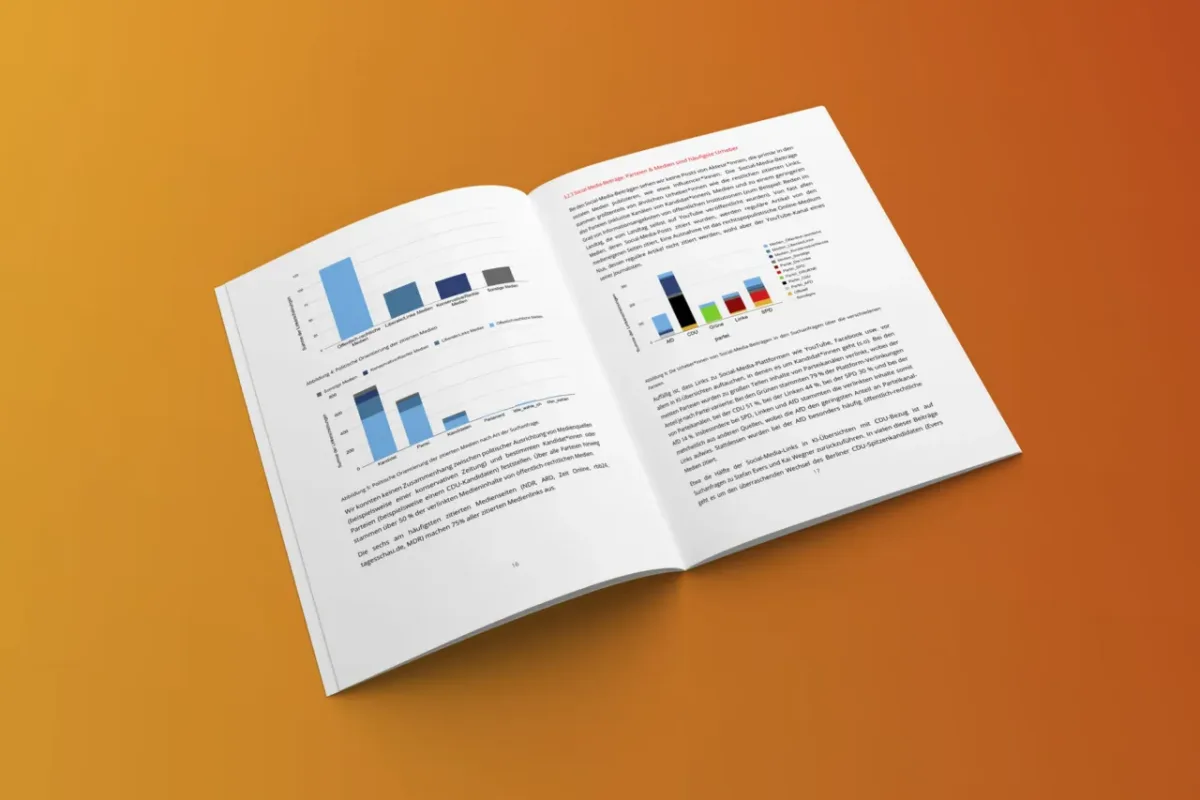
Source diversity within AI Overviews remains limited. Just ten platforms or outlets account for nearly half of all links that appear in these summaries. Google's own YouTube ranks as the most-cited source when users search for information about candidates—a finding that contradicts Google's public denials of favoring its own services.
Beyond YouTube and social media, the sources cited most frequently include public broadcasters, Wikipedia, government websites, and political party sites. While this mix suggests relative balance, the research notes that party websites appear alongside neutral sources without explanatory context to distinguish them.
Language choices in AI Overviews describing candidate positions often lack neutrality. Instead, the summaries frequently employ positive framing that mirrors how candidates and their parties describe themselves, rather than presenting information in objective terms.
Clara Helming, Senior Policy Manager at AlgorithmWatch and project lead for the study, emphasized the transparency gap: "Our findings suggest that Google makes deliberate choices behind the scenes about when to display an AI Overview about the elections, how the content is worded, and what sources are cited. But the company does not make these choices transparent. This is problematic because Google's product decisions influence key prerequisites for the formation of public opinion in a democracy: access to reliable information and diverse sources."
AlgorithmWatch conducted the investigation using access to Google's Search Researcher Result API, obtained through a request filed under Article 40, paragraph 12, of the Digital Services Act. The organization submitted 4,480 search queries related to state elections scheduled for September 2026 in Saxony-Anhalt, Mecklenburg-Vorpommern, and Berlin, then analyzed the resulting AI Overviews and their source material.