In recent months, the African Commission on Human and People's Rights (ACHPR) released a resolution voicing alarm over pervasive human rights breaches tied to electoral processes. The body urged African nations to abandon internet blackouts, safeguard the autonomy of election authorities, and combat false narratives by establishing effective oversight mechanisms and transparent legal rules. With eleven additional nations scheduled to conduct elections in 2026, the timing of this resolution proves crucial. Yet the resolution remains incomplete, addressing visible problems without identifying the underlying power arrangements and institutional failures that generate them.
Across Africa, governmental structures that functioned effectively during independence struggles and the early decades afterward have grown obsolete in today's networked world. The contraction of information space stems not from a lack of available content, but from the way authorities monopolize control over digital channels. While governments may claim legitimacy in protecting rights and serving the public, this authority demands scrutiny—particularly when the distinction between state administration and partisan advantage blurs.
Two elections from late 2024 and 2025 demonstrate these dynamics in action.
Ghana
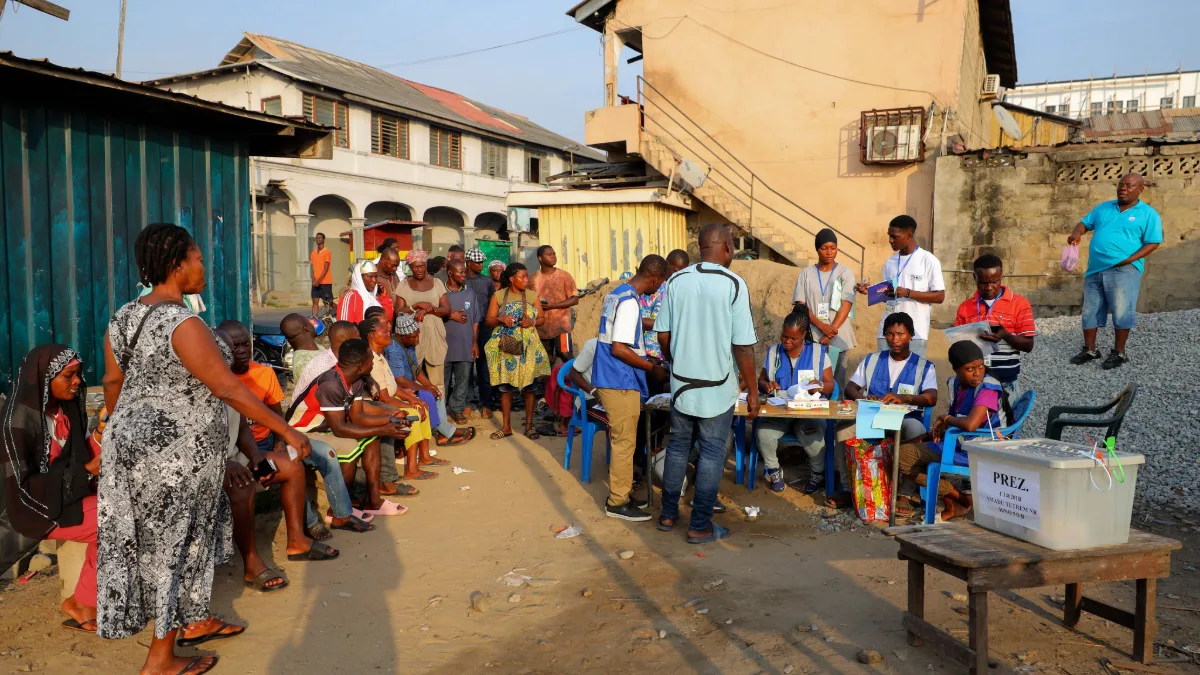
Ghana's December 2024 contest was tumultuous and fractious, with misinformation saturating platforms where the New Patriotic Party (NPP) and the National Democratic Congress (NDC) distributed altered photographs, false assertions, and challenges to the Electoral Commission's legitimacy. Artificial intelligence generated synthetic content endorsing candidates through fabricated testimonies. By conventional standards, the quality of available information had deteriorated, yet the digital sphere itself remained accessible.
The very openness that enabled false narratives to circulate also permitted them to be challenged. The rival parties engaged in continuous fact-checking—driven by competitive advantage rather than civic commitment. Not every falsehood received correction; the sheer quantity of deceptive material made exhaustive debunking impossible, so both political actors and independent verification groups concentrated on the most consequential claims, particularly those capable of shifting electoral outcomes or harming public figures.
Networks of organizations focused on information quality functioned because the state permitted data to flow freely. Fact-checkers could retrieve, examine, and circulate corrected information. Local radio stations broadcast accurate reporting in regional languages. Monitoring systems could identify problematic material and alert relevant bodies. The process had limitations—corrections typically spread more slowly than the original deceptions—but sufficient openness existed for meaningful intervention, and the scattered false claims did not undermine the election's integrity.
Ghana's experience teaches that organized coalitions do not resolve all problems, but rather that they require an information environment where data circulates freely. When information moves, even if contaminated, systems can self-correct in ways that closed systems cannot. This openness also enables broader citizen participation in electoral processes.
Tanzania
Tanzania possessed identical tools, comparable institutional arrangements, and equally committed stakeholder networks. Organizers trained more than five hundred community-based fact-checkers nationwide. Jamii Forums, a locally developed platform that sometimes surpassed Facebook in regional popularity, anchored a verification system grounded in community relationships. Before its shutdown, the platform demonstrated the same corrective mechanisms evident in Ghana, with political figures using it to rebut opponents, disclose damaging information, and challenge unfavorable narratives. The platform maintained a dispersed network of fact-checkers, including in isolated regions, enabling swift verification. It offered a space for unrestricted participation and distributed fact-checking capable of scrutinizing both governmental and political claims.
That capacity for scrutiny made it a target.
On October 29, 2025, authorities implemented a comprehensive internet blackout spanning six days, timed to the period when results would be declared and disputes would surface. In the lead-up, stakeholders assembled rapid-response teams to address information integrity concerns, with most coordination occurring through encrypted messaging services like WhatsApp. The total shutdown rendered these networks inoperative. Verification specialists lost contact with colleagues and audiences. The African commission subsequently highlighted Tanzania in its March 2026 resolution regarding human rights violations.
Weeks before the vote, the opposition leader was imprisoned and barred from campaigning until the final moments. Election day brought restrictions on news coverage of low voter participation, apparently communicated through informal governmental pressure. Journalists, despite training and readiness, chose silence over prosecution risk as intimidation spread.
Political figures controlled over ninety percent of media outlets, which promoted the governing party's messaging, and observers perceived the outcome as predetermined. Subsequent demonstrations encountered lethal responses. Unarmed protesters were shot. Some were pursued to residences and killed. CNN documented a pregnant woman fleeing plainclothes officers being shot. The blackout ensured invisibility—nothing could be recorded or transmitted in real time.
Digital rights concerns and offline governance structures are frequently treated as separate issues, but centralized, dominant power systems form the foundation enabling rights violations.
Tanzania operates under a dominant-party framework in which presidential and ruling-party authority is constitutionally expansive. Once the electoral body announces results, courts cannot review them—this constraint is embedded in the constitution.
Fragile rule of law meets digital public infrastructure
Competitive systems in nations marked by substantial social and economic stratification generate these patterns. When winning means absolute authority and losing means complete marginalization, the stakes become existential. Authorities deploy all available mechanisms, including infrastructure dominance, to preserve control. Restraining legal structures either do not exist or exist merely in text.
Ghana's comparative transparency was not predetermined but reflected institutional maturity that imposed some accountability on governmental information management. Competition remained within constitutional and democratic parameters, though broadcasters showed partisan leanings. Tanzania's blackout reflected a system where authorities could suppress information when facing pressure; competition had exceeded acceptable bounds, or the bounds were sufficiently broad to permit genuine contestation.
Comparing Ghana and Tanzania prompts reconsideration of democracy and inclusive governance in an era of digital innovation. Absent open and participatory institutions, resilience becomes a survival mechanism for civil society under authoritarian conditions, yet the governance models that served most African nations during liberation struggles have become impediments to contemporary democratic development and advancement. Verification work and information competency matter, but structural closure cannot be overcome through these measures alone.
The implications are intensifying.
African governments are gaining unprecedented capacity to monitor populations through digital public infrastructure. DPIs—encompassing digital identification systems, consolidated data repositories, and unified transaction platforms—are being promoted as fundamental public goods, comparable to transportation networks or power systems. International development organizations and technology vendors encourage African nations to incorporate DPIs into their infrastructure, touting advantages in operational efficiency, financial inclusion, and technological advancement.
The promised benefits are genuine. The hazards are equally real.
Ghana and Tanzania have not yet experienced documented misuse of DPI information, but the volume of data residing on government systems continues expanding—as does pressure on technology firms to surrender it upon request. Elsewhere across Africa, documented cases of governmental DPI and digital public goods (DPG) misuse exist. In Kenya, Safaricom's network allegedly facilitated tracking of activists during Gen Z demonstrations, with surveillance leveraging information collected during electricity token transactions.
Tanzania, Kenya, Uganda: the pattern is consistent. Authorities are computerizing social and economic transactions, consolidated archives are accumulating, and machine learning systems enable novel population analysis. This surveillance apparatus expands under rhetoric of progress and accessibility.
DPI infrastructure can advance collective welfare. However, it demands democratic protections absent in most African nations. Data safeguard agencies function in certain countries but operate without autonomy or enforcement authority. The fusion of authoritarian governance with expanding data systems creates acute danger. Regimes capable of severing information access during elections are simultaneously acquiring granular knowledge of residents—their locations, movements, earnings, and associations. Information flows become unidirectional. The state possesses complete visibility. Residents encounter only authorized content.
What can be done?
The ACHPR resolution appropriately calls for permitting opposition candidates to campaign, insulating electoral bodies from partisan pressure, and preventing internet interruptions during voting periods. However, these directives target the governments perpetrating violations and depend on voluntary adherence by states that have determined non-compliance carries minimal consequences.
Strengthening institutional capacity remains important. Organizations must sustain civic engagement, particularly during periods of political calm, enabling populations to grasp their relationship with authorities and comprehend the implications of advancing data collection and digitization. Essential information should be distributed in advance through radio, newspapers, and community structures that endure digital blackouts. Sustained capacity-building must encompass establishing cross-border accountability networks.
Yet institutional capacity is not the ultimate objective.
The fundamental aim is democratic restraint on unaccountable governmental authority regarding information. Democratic systems require constitutional provisions guaranteeing information access that executive action cannot revoke except when constrained by proportionality, legality, alignment with global human rights norms, and explicit democratic safeguards. African populations must pursue electoral frameworks permitting judicial challenge of outcomes, enabling public scrutiny of electoral processes. They must advocate for institutional arrangements distributing authority rather than concentrating it, preventing any single entity from controlling access.
This analysis derives from investigation undertaken by Research ICT Africa in collaboration with International Media Support and regional partners in Ghana and Tanzania.
Source: Tech Policy Press