Two high-level political meetings unfolding in Dublin over the coming days are poised to reshape how Europe tackles artificial intelligence and defense technology, even as the continent contends with mounting cyber and hybrid security incidents.
The European Political Community summit convenes on Thursday, bringing together Ukraine's Volodymyr Zelensky, NATO chief Mark Rutte, European Commission President Ursula von der Leyen, and leaders from EU member states, the United Kingdom and other European nations. Canada's Mark Carney attends as a guest, marking his second appearance at the informal forum established in 2022 following Russia's invasion of Ukraine. The gathering will emphasize security under the banner "Europe – strong, secure and connected," with discussions likely touching on the fallout from SpaceX throttling Ukraine's drones last month—a disruption that exposed civilians to Russian attacks and forced Ukraine and its allies to seek alternatives to Musk-controlled infrastructure. European satellite options remain limited, with a planned competitor to Starlink not expected before 2029.
On Friday, the Irish Government hosts an informal meeting of all 27 EU member state leaders, with artificial intelligence dominating the agenda. European Council President António Costa signaled in his invitation that this would mark the first "Leaders' level" discussion at the Council on "the opportunities presented by AI, as well as on its transformative effect on our economies and societies."
The program features presentations from Mistral AI's chief executive and Nobel laureate Geoffrey Hinton, who departed Google in 2023 to speak more openly about technological risks. Discussions will unfold in two phases: the first addressing European competitiveness and AI sovereignty, examining how the bloc can become a "leading and sovereign player" in the AI value chain; the second tackling AI's risks, safety and security, alongside Europe's role in international governance frameworks for advanced AI.
Competing Priorities in EU Tech Policy
The dual-track agenda reflects fundamental tensions within EU technology policymaking. European leaders worry deeply about the continent's inability to nurture homegrown AI firms capable of competing globally while remaining under European control. The Council has designated 2026 as the EU's "Year of Competitiveness," with Ireland's rotating presidency centering regulatory simplification—including the Digital Omnibus, which modifies the GDPR and AI Act in ways critics argue prioritize business interests over human rights protections. Ireland's own AI summit last month featured predominantly industry voices, with civil society organizations absent from the program.
Simultaneously, AI safety concerns are intensifying across the bloc, which spent the previous decade constructing regulatory frameworks to govern technology and technology firms. The EU also confronts escalating cyber and hybrid attacks, with Irish officials suspecting recent incidents within the country correlate with the Council presidency and this week's gatherings, raising fears of further disruptions.
Security Threats Escalate Ahead of Summits
Recent incidents underscore the security environment. Hackers compromised supermarket refrigeration systems across Europe, causing temperatures in in-store coolers to reach 50 degrees Celsius, affecting 13 SuperValu locations in Ireland. Ryanair, the country's largest airline, has endured a mounting barrage of hoax bomb threats that disrupted dozens of flights across Europe in the days preceding the summits. Irish schools received bomb threats the day before the Dublin meetings, prompting evacuations. Last Friday, national broadcaster RTÉ halted all live radio broadcasts for more than an hour and evacuated its Dublin headquarters following an emailed bomb threat, with commercial radio and a national newspaper also targeted. The government characterized the attacks as "a co-ordinated campaign of disruption."
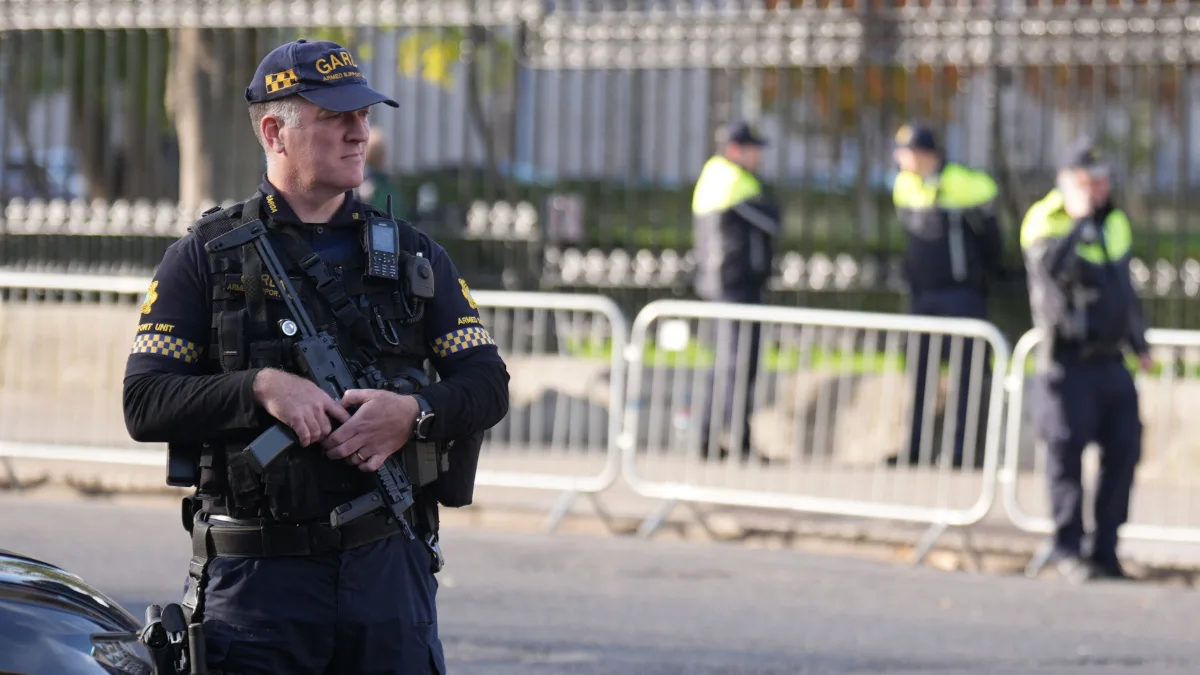
The incidents have intensified long-standing security concerns within Irish government circles. Police are executing the largest security operation in Irish state history, deploying approximately 5,000 Gardai—roughly one-third of the national force—with reinforcements arriving from Northern Ireland, Portugal and Latvia. Significant city disruptions are planned, including cordoned zones and a bridge closure lasting much of the week.
Regulatory Independence Under Scrutiny
Ireland faces renewed questions about the independence of institutions responsible for enforcing digital regulations. Last week, two UN Special Rapporteurs—Ana Brian Nougrères on the right to privacy and Margaret Satterthwaite on the independence of judges and lawyers—raised concerns about Irish regulators' autonomy as primary implementers of data protection rules within the EU. They flagged a "revolving door" between regulators and the industries they oversee, advocating for impartial selection panels to identify conflicts of interest before appointments. They also pointed to obstacles in pursuing legal action against technology companies.
These questions are unlikely to dominate discussions this week. For Irish officials, the immediate focus remains ensuring the city and its distinguished visitors navigate the coming days without incident.