A surge of bomb threats targeting educational institutions across Europe originated from a breached email account belonging to Taiwan's Da-Yeh University, authorities confirmed. The university suspended the compromised account after it was used Wednesday to distribute messages to numerous schools. This represents the latest in an escalating pattern of hoax threats that have similarly exploited legitimate institutional email systems at airports and media outlets.
Investigators in Bogotá are separately examining a potential breach at a municipal health agency, which served as the source for earlier hoax communications. By leveraging genuine institutional accounts rather than spoofed addresses, perpetrators have managed to bypass authentication systems and evade spam detection mechanisms. This approach, however, creates significant obstacles for law enforcement attempting to identify those responsible.
Compromised login credentials circulate widely among both criminal networks and state-backed actors. According to Proofpoint, a cybersecurity firm that analyzed recent threats, all examined messages originated from legitimate compromised accounts rather than forged sender addresses. While no state has publicly attributed responsibility, Ireland's government characterized the campaign as "coordinated disruption." Proofpoint noted that certain campaign characteristics "could be consistent with a nation-state-aligned actor," though it lacked sufficient evidence to make a definitive attribution.
The technical investigation faces substantial hurdles. Since messages traveled through authentic webmail infrastructure, associated metadata typically traces back to email providers' servers. Access logs that might identify perpetrators could prove useless if attackers employed anonymization tools including VPNs or proxy services. The geographically dispersed compromised accounts spanning multiple countries further complicates matters, requiring investigators to navigate lengthy mutual legal assistance procedures across different jurisdictions.
New Wave
Wednesday's escalation saw threats claiming "genocide" and alleging explosives in schools distributed to thousands of Italian educational institutions, triggering evacuations from Milan southward to Sicily. Comparable messages reached hundreds of schools throughout Scotland, Northern Ireland and the Republic of Ireland.
Police Scotland's assistant chief constable Mark Sutherland stated that "around a thousand Scottish schools received a threatening email message" that was also circulated to schools across the broader United Kingdom. He added: "These messages were immediately assessed and we are treating them as hoaxes. Our enquiries have established that there is nothing to suggest that they represent a credible threat or that there is any wider threat to the public."
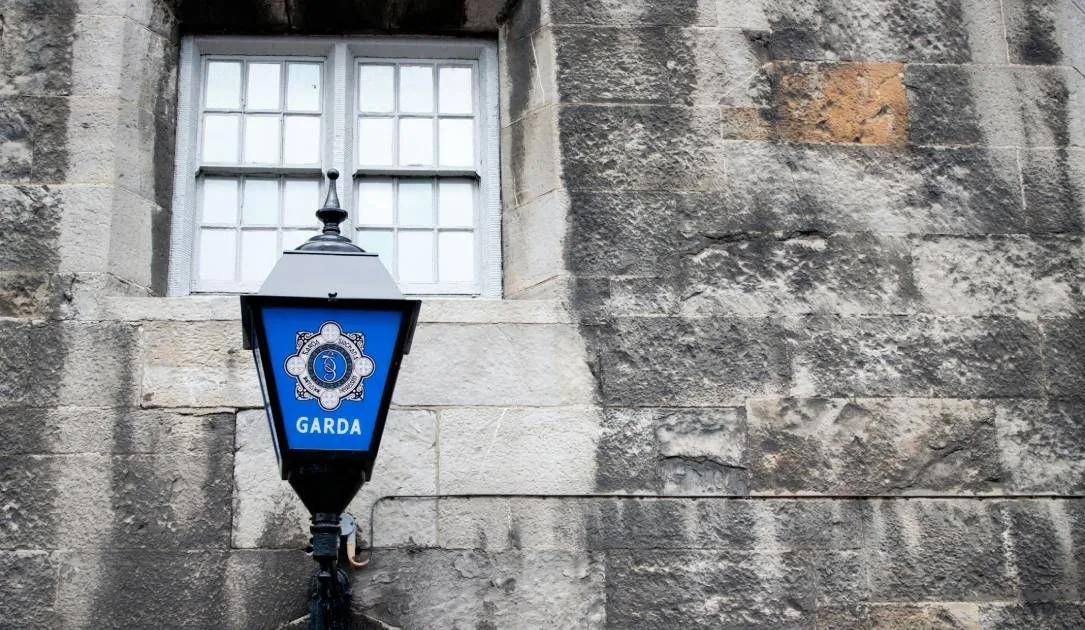
Ireland's police service, An Garda Síochána, similarly determined the threats were "not credible" and explicitly stated it was "not advising any educational establishment to evacuate."
Thursday morning brought another threat to Italian schools, this time originating from an address associated with the Philippines' Department of Education, which declined immediate comment.
Proofpoint identified threats targeting approximately 20 organizations the previous week, predominantly European targets including at least a dozen newsrooms and several airports. Mark Kelly, a threat researcher at Proofpoint, observed: "The messages did not contain malicious links or attachments, 'suggesting the objective was disruption or intimidation rather than malware delivery or credential theft.'"
The threatening communications claimed sender access to compromised systems. In one message distributed to newsrooms, the sender claimed leadership of the group behind earlier flight threats, stating the organization had "experimented with multithreading" to send emails and accessed compromised devices, servers and accounts across Europe and beyond.
Whether these threat waves constitute a unified campaign or represent copycat activity remains unclear. Some emails bore different signatures; several flight-related threats were attributed to "fighters of the Male State," a banned Russian anti-feminist movement whose founder has denied involvement. Additional messages to newsrooms and schools were signed "Mikhail Andropov," though neither signature provides evidentiary proof of authorship.
Irish Garda Commissioner Justin Kelly indicated police assessed the threats as originating internationally, intended to "sow discord" particularly surrounding Thursday's European Political Community summit in Dublin, which assembled dozens of European leaders under Ireland's most extensive security operation to date.
Northern Ireland's police service stated: "As part of this investigation, officers and detectives are carrying out extensive enquiries to establish the source of these mass-distributed emails and any potential links to previous emails. The working theory is that these hoax and malicious emails were sent from outside the UK, enquiries are continuing on other aspects of the investigation."