This investigation, originally published by The Continent with support from the Pulitzer Center, forms part of Big Tech's Invisible Hand, a multinational reporting effort coordinated by Agência Pública and the Centro Latinoamericano de Investigación Periodística (CLIP) alongside Tech Policy Press and other partners.
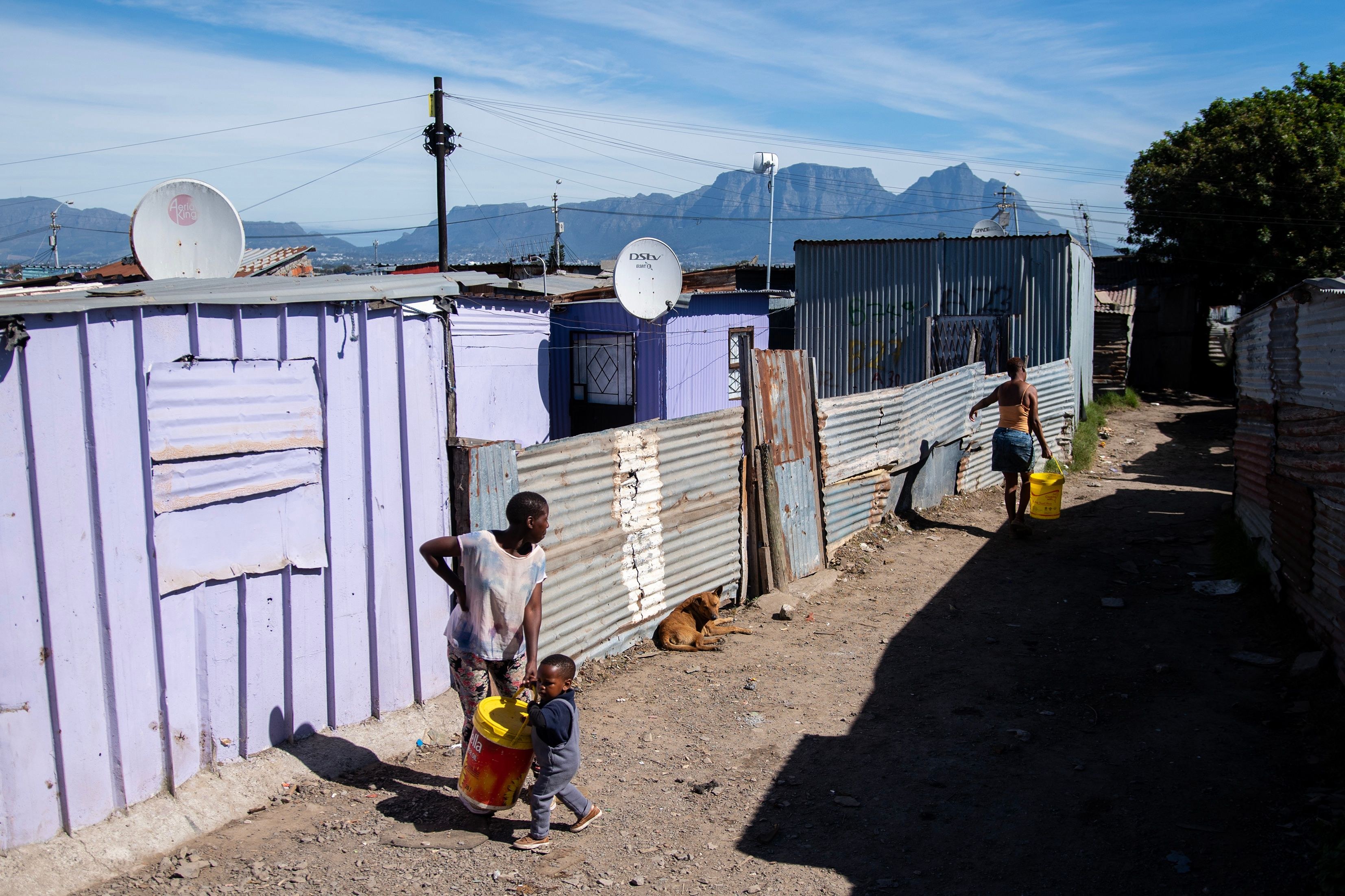
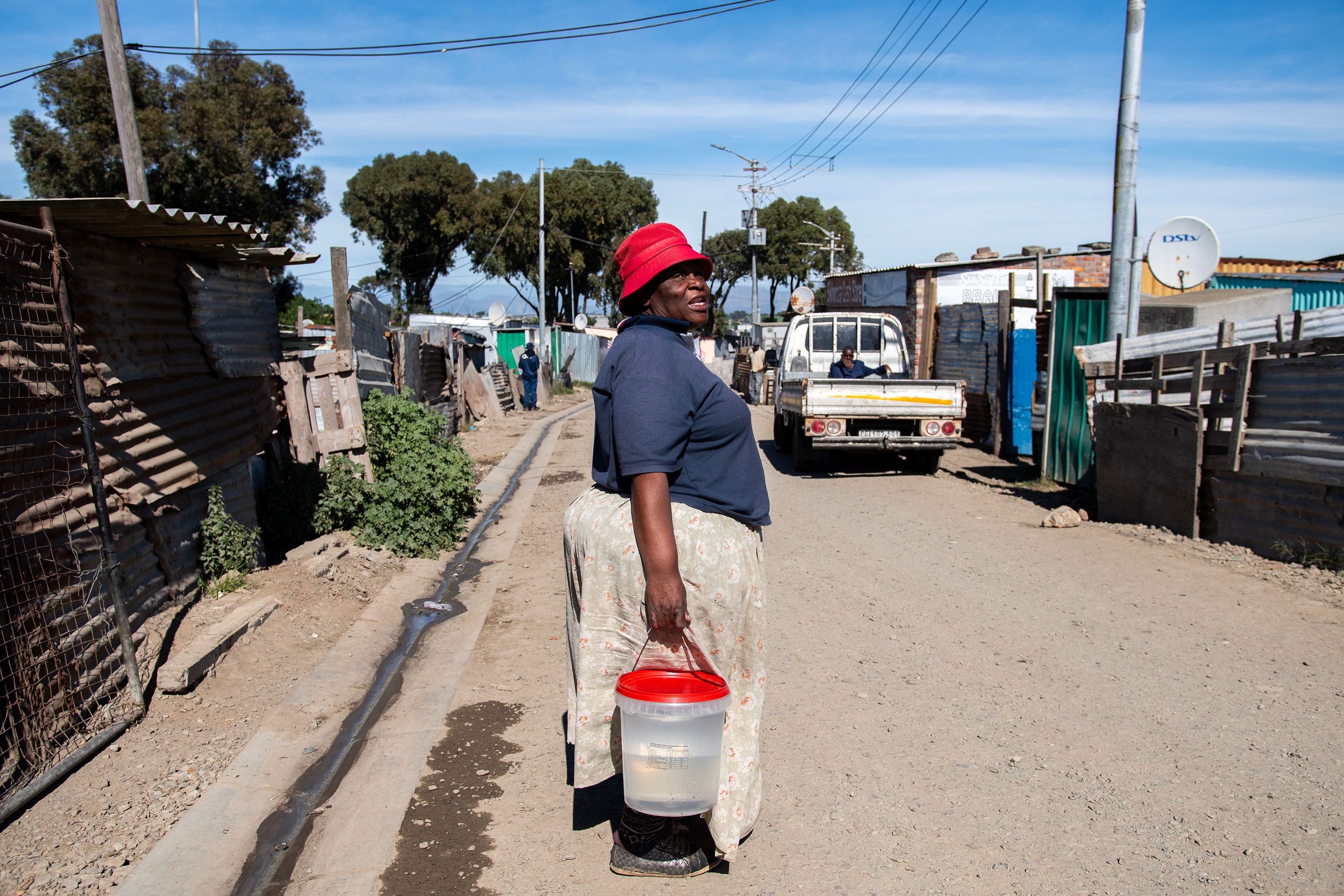
In Barcelona, an informal settlement within Gugulethu, Cape Town, Ncediwe Vanqa, 66, makes daily trips to a communal tap for water—sometimes as many as seven times per day. Her home occupies less than 200 square feet. She relies on a shared pit latrine and, when necessary, a bucket. To conserve power, she bakes bread on a paraffin heater and uses its warmth to heat her dwelling.
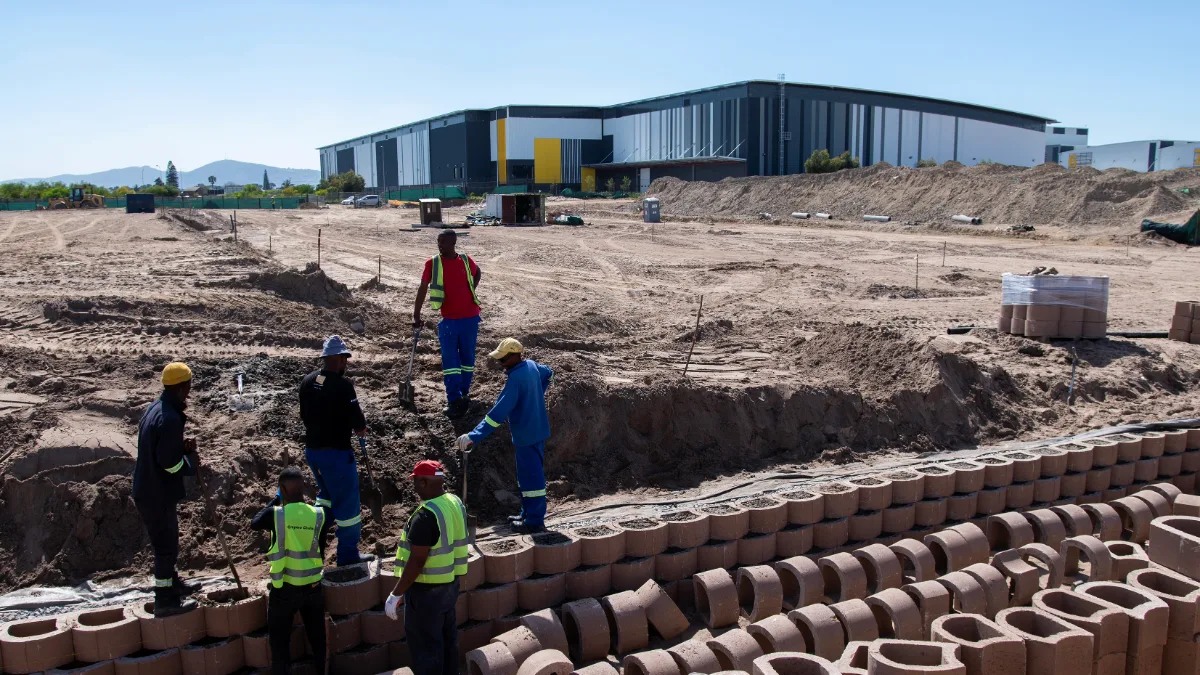
Separated by a freeway and less than a mile and a half away, Cape Town's planning machinery has begun welcoming a vastly different category of infrastructure. During July, the Municipal Planning Tribunal granted approval to King Air Industria, a sprawling industrial and logistics complex, for two data centers that internal documents link to Equinix, the American data-center giant.
Equinix ranks among the world's foremost data-center operators and supplies critical infrastructure to tech giants including Amazon, Microsoft and Google. The company, however, contests this characterization. It informed The Continent that it "has not submitted any planning or development applications for a data center in Cape Town" and that "there are currently no development applications under consideration for the site."
City records paint a different picture. Documents show Equinix engaged with municipal officials on at least three occasions to discuss its data-center strategy. Numerous planning papers connect the King Air application directly to Equinix's intended development.
The King Air dispute hinges on a fundamental question: how much water and electricity would the proposed Equinix hyperscale data centers demand? Globally, hyperscale data centers have earned notoriety for their voracious consumption of water and electricity required to maintain cooling systems.
The Legal Resources Center (LRC), a public-interest law firm, submitted calculations in its tribunal objection suggesting that conventional evaporative cooling could drive annual water consumption to roughly 1.2 billion gallons. This translates to approximately 3 million gallons daily—comparable to the combined daily water usage of 68,500 Cape Town residents based on municipal consumption averages. For a metropolis that came perilously close to "Day Zero" during the 2018 water shortage, such potential demand carries substantial weight.
Equinix declined to address inquiries about resource requirements for the proposed facility. King Air, however, informed the Tribunal that precise resource-consumption figures would emerge during the subsequent site development planning stage.
Data center growth in the United States confronts mounting community pushback. Data & Society, an independent research organization, reports that global data center electricity consumption expanded 12% over five years and could reach double its current level by 2030. Water demand is similarly climbing. The organization notes that consumption by Meta, Apple, Microsoft and Google has surged 60% since 2020. As data centers proliferate into populated areas, the organization contends that their location has transformed into an increasingly contested political matter, carrying ramifications for regional economies, public health, and water and energy infrastructure.
Tribunal documents indicate the proposed system might require approximately 157 megawatts. Dr. Chantelle van Staden, a senior lecturer at Stellenbosch University's Department of Electrical and Electronic Engineering, calculated that "if operated continuously near this level," throughout the year, the data centers could consume roughly 1.4 to 1.5 billion kilowatt hours annually. "This could amount to the annual electricity use of a quarter of a million average Cape Town households," van Staden explained.
The absence of concrete figures troubled at least one tribunal member during the July deliberations. "Most of us here today actually do not know what is required in respect of water and electricity demand for a facility that we are asked to approve, as no details thereof have been made available," stated Wally Johnstone, a Municipal Planning Tribunal panelist, at a July 14 session. Among the five panel members, Johnstone alone opposed the land-use authorization for the data centers.
Cape Town contests the assertion that approval proceeded without sufficient examination, noting that its energy department had determined adequate supply would exist. Tribunal documentation also disclosed that Equinix had already remitted shared network charges for 144 megawatts of capacity totaling R33 million (approximately $1.9 million). The city indicated that additional technical assessments would occur at later stages.
The people on the other side of the grid
Shortly before the tribunal endorsed the King Air proposal, Public Protector Kholeka Gcaleka released conclusions regarding municipal service provision in the informal settlements of Langa and Khayelitsha, situated in close proximity to the planned Equinix facilities. Both are densely populated, predominantly low-income townships positioned less than 6.2 miles from the proposed site. Following a four-year inquiry completed in June, the public protector determined that Cape Town had neglected to furnish adequate fundamental services to township residents, encompassing water, sanitation and electricity. The shortcomings constituted "maladministration" and caused "prejudice."
Cape Town attributed the gaps to budgetary constraints, infrastructure deficits and competing service-delivery priorities that had prevented remediation. The public protector recognized these financial pressures but concluded they did not exempt the City from its constitutional duties, with persistent service-delivery breakdowns continuing despite marginal gains.
For residents and Housing Assembly members including Vanqa, the fundamental issue concerns allocation of finite resources. The LRC conveyed to the tribunal that their opposition stems from "a context of acute and overlapping resource constraints in the City of Cape Town where land, water and energy systems are already under significant pressure."
Hyperscale, not a warehouse
Data centers represent no novelty for South Africa. Data Center Map, an industry reference, documents approximately 64 operational data centers across the nation and an additional 10 in planning stages. Hyperscale installations, however, introduce infrastructure demands of an entirely distinct magnitude, with electricity needs potentially reaching hundreds of megawatts. Regulatory frameworks have not evolved accordingly. South Africa lacks a dedicated national data-center policy, while Cape Town maintains no distinct land-use classification for hyperscale operations. According to the city, data centers fall "typically grouped under commercial/industrial users," evaluated according to conventional industrial or warehousing standards.
Johnstone characterized this approach as "wholly inadequate," emphasizing that it was "simplistic to consider a data center as a warehouse that only stores computer systems." The LRC went further, labeling the categorization "patently incorrect and possibly misleading."
Grant Oosterwyk, a senior lecturer in information systems at the University of Cape Town who previously held a position at a smaller data center, observed that the current regulatory framework creates a significant oversight gap. "This allows these facilities to avoid the rigorous, baseline industrial impact assessments that a facility of this scale would normally trigger under a modern planning framework," Oosterwyk stated. "Treating a 100 megawatt facility with industrial-scale cooling, heavy diesel backup, and continuous heavy vehicle movement as a simple storage warehouse is a profound regulatory mismatch. The category has simply not caught up with the infrastructure being built inside it."
What Cape Town won't disclose about its data center pipeline
The Equinix proposal represents merely one hyperscale initiative under consideration in Cape Town. Brett Herron, a Western Cape Provincial Parliament member, informed The Continent that Cape Town is "courting" four hyperscale undertakings.
He identified Equinix's proposed King Air installations, Teraco's planned 60 megawatt expansion and Cavaleros Group's announced 360 megawatt Cosmas Data Cities initiative. Herron estimates their combined potential demand at approximately 580 megawatts. According to publicly obtainable data, if all projects reached their stated capacities, their aggregate demand would represent roughly 35% of Cape Town's current peak electricity consumption.
Deputy mayor Alderman Eddie Andrews indicated Cape Town has greenlit five data centers with two additional proposals under evaluation. The city declined to identify the entities involved, invoking the Privacy of Personal Information Act (POPIA). It offered no clarification regarding which legislative provisions prevented disclosure of electricity-load data or why project-specific demand figures could not be released.
Lance Greyling, the City's Director of Economic Development and Investment, confirmed meeting with Equinix on three occasions between July 2025 and June 2026, all initiated by the company. At the initial July 2025 meeting, Greyling reported, Equinix communicated "their intention to invest in data centers in Cape Town." Four months later, Greyling, mayoral committee member James Vos, municipal officials and Western Cape government representatives convened with the company following its acquisition of King Air Industria land. Greyling noted Equinix discussed "their intentions in relation to the way forward for the proposed business." A third June gathering provided another update on the company's data-center investment scheme.
Greyling stated, "I have met Equinix before at their request but have at no stage held discussions on statutory approvals." No agendas or records were maintained. He characterized his function as engaging prospective investors and positioning Cape Town as an attractive economic destination, contingent on compliance with applicable legal standards.
Within South Africa, interactions between government representatives and corporate investors typically remain undisclosed and unregulated. No evidence suggests Equinix shaped the statutory authorization process, yet the company maintained repeated contact with Cape Town's investment-promotion office as its data-center strategy progressed. The absence of documented minutes means no comprehensive public account exists of the discussions.
The Continent spoke with two city councillors who reported that data center expansion implications had received limited deliberation within city council chambers. Khalid Sayed, the ANC's Western Cape representative, told The Continent that data centers, encompassing their water and electricity demands, have scarcely surfaced in political discussions. He attributed this partly to insufficient comprehension and regulatory oversight deficiencies.
Not just Cape Town
Cape Town operates in isolation. eThekwini Municipality acknowledged that its planning framework contains no specific designation for hyperscale or AI data centers and indicated it remained evaluating regulatory approaches to their infrastructure demands.
Yet in April, the municipality announced that its full council had sanctioned the city to negotiate an agreement with the Korean South Power Consortium regarding a proposed AI data center on municipal property in southern Durban. Council records project the initiative could carry a price tag between $3 billion and $10 billion, with the municipality supplying land and required infrastructure. The municipality stated that the project's water and electricity specifications remain undetermined.
Mandla Nsele, marketing and communications director, remarked that concerns surrounding data center demands "are the subject of internal discussions," preventing the municipality from furnishing comprehensive information.
Andre Beetge, a council member opposing the initiative, contended that the council report "does not adequately address the energy demand trajectory associated with AI data centers—projected to escalate dramatically over the next few years."

Big Tech's Invisible Hand represents a multinational collaborative investigation directed by Agência Pública and the Centro Latinoamericano de Investigación Periodística (CLIP), partnering with Business Day (South Africa), Crikey (Australia), Cuestión Pública (Colombia), El Diario AR (Argentina), El Surti (Paraguay), Factum (El Salvador), ICL (Brazil), Investigative Journalism Foundation - IJF (Canada), LaBot (Chile), LightHouse Reports (International), N+Focus (Mexico), Núcleo (Brazil), Primicias (Ecuador), Tech Policy Press (USA), The Continent (Pan-Africa), and Tempo (Indonesia). Reporters Without Borders and the legal team El Veinte furnished support, while La Fábrica Memética created the visual identity.
Source: Tech Policy Press