Brazil faces mounting pressure to control how social media platforms handle election disinformation ahead of its October 4 presidential vote, which will affect more than 150 million eligible voters. In August, Amnesty International ran an experiment submitting 15 test advertisements to Facebook to assess Meta's ability to detect false election content. Eight of the 14 ads containing disinformation were approved; the seven rejected ads were blocked not for spreading falsehoods, but because they touched on electoral or social matters and required identity verification.
Brazil has positioned itself as a leader in overhauling how platforms bear responsibility for their content. The country's regulatory approach rests on digital sovereignty and constitutional principles, establishing new requirements around duty of care, protections for minors, and timelines for content removal. Global observers are closely monitoring these developments.
Understanding Brazil's strategy matters beyond its borders. The nation's efforts have concentrated on limiting damage caused by commercial platforms—a legitimate concern, yet incomplete. Removing false claims differs fundamentally from building reliable information systems. Reactive content deletion alone cannot substitute for transparent, accessible knowledge infrastructure. Volunteer-run, advertising-free platforms such as Portuguese Wikipedia and Wikidata function as essential public infrastructure, safeguarding open knowledge as a collective resource.
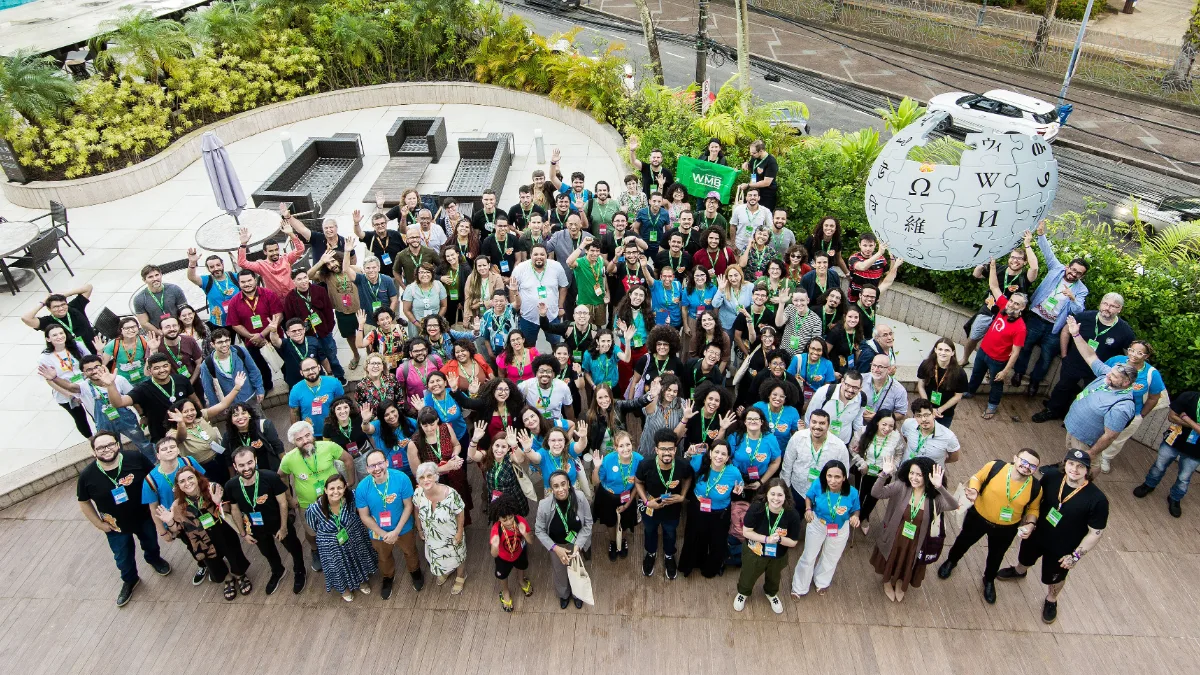
Wikimedia Brasil operates as an independent branch of the global Wikimedia movement, a volunteer-driven initiative for free and open knowledge. Working alongside the US-based Wikimedia Foundation, which operates Wikimedia projects and supports contributors, the organization has learned a hard lesson over six years: hastily written rules targeting ad-supported social networks risk damaging the knowledge commons as a public asset. Wikimedia and comparable public-benefit initiatives deserve recognition and support as vital components of a healthy information landscape, not regulatory afterthoughts.
Wikimedia Brasil: From volunteers to advocates
Brazil's regulatory push followed years of documented platform-related damage. The 2013 protests that preceded Dilma Rousseff's impeachment were amplified by social media. In 2018, journalist Patrícia Campos Mello exposed coordinated WhatsApp campaigns financed to support Jair Bolsonaro's candidacy. Subsequent elections have brought fresh waves of polarization, foreign interference, and AI-generated deepfakes. These electoral crises spurred Brazil to become one of the first major democracies in the Global South to pursue sweeping platform regulation.
Before 2020, Wikimedia Brasil operated without a dedicated policy advocacy function. The organization focused on partnerships with galleries, libraries, archives, and museums (GLAM), teaching initiatives, and encyclopedia development—activities that had never triggered legislative scrutiny. This changed in April 2020 when Bill 2630, quickly dubbed the "Fake News Bill," advanced through Congress. The legislation imposed tracking requirements, content moderation obligations, and a liability structure that made no distinction between profit-driven platforms and nonprofit initiatives. For Wikimedia, compliance would have been impossible given its community-based governance and limited budget.
Wikimedia Brasil confronted a difficult choice. Speaking out against the Fake News Bill risked appearing self-serving and undermining legitimate demands for platform accountability. Staying silent would threaten Wikimedia's ability to operate in Brazil and undermine its mission to provide independent, critical knowledge. The organization chose to collaborate with civil society partners including the Coalizão Direitos na Rede (Digital Rights Coalition) to draft and propose a specific carve-out for Wikipedia. The revised bill incorporated this exception.
Working to dispel the myth of a single internet
Though Bill 2630 never became law, the debate it sparked exposed a persistent flaw in technology policymaking: treating the entire digital ecosystem as one undifferentiated space. Lawmakers worried about ad-driven social media harms often lump encrypted messaging services, open-source code repositories, and nonprofit collaborative platforms into the same regulatory bucket.
This flawed premise and the blanket regulatory approach it produces generate two distinct structural problems.
The first concerns how platforms are governed. Wikipedia's credibility depends on hundreds of thousands of volunteers who write, verify, and maintain content through transparent discussion and collective agreement. Rules demanding centralized or machine-driven moderation ignore how the encyclopedia actually functions. Such mandates substitute top-down control for community participation, eroding what makes open knowledge platforms distinctive as information spaces.
The second involves money. Platforms serving the public interest deliberately reject advertising to deliver an ad-free educational experience. They cannot afford the compliance, auditing, and legal expenses designed for the world's largest tech firms. Funds needed to maintain systems and support volunteers get diverted entirely to regulatory compliance.
Brazil's regulatory history illustrates both the promise of thoughtful frameworks and the peril of one-size-fits-all rules. The Marco Civil da Internet (Law No. 12,965/2014) historically shielded platforms from liability for user-generated content unless they ignored court orders to delete it. This protection allowed volunteer platforms like Wikipedia to operate without constant legal jeopardy. In 2025, Brazil's Supreme Federal Court ruled part of Article 19 unconstitutional, and Decree No. 12,975/2026 implemented that decision by imposing a duty of care enforced by the National Data Protection Agency (ANPD)—a major shift toward stricter legal obligations.
The Wikimedia Foundation filed an amicus brief arguing that platforms with minimal editorial involvement should retain their previous protections and that nonprofit organizations should face flexible local-representation rules. The decree retained some of this flexibility, allowing compliance standards to vary based on platform type, the degree to which a provider interferes with content distribution, and its financial scale. This gives the ANPD room to recognize that different platforms operate under different models and warrant different rules.
The Digital Statute for Children and Adolescents (ECA Digital, Law No. 15,211/2025) presents a more rigid obstacle. Its sweeping age-verification rules could force public-interest platforms to either gather sensitive personal data or block access to educational material. As implementing rules took shape, the Wikimedia Foundation urged policymakers to match requirements to the actual danger each platform creates and to exempt digital public goods from age checks entirely, preserving free expression and access to trustworthy information.
Poorly crafted rules risk unfairly burdening nonprofit digital public goods. To shift lawmaker thinking, Wikimedia Brasil launched initiatives such as "Conhecimento é Direito" ("Knowledge Is a Right") alongside civil society groups. The campaign's core message: most legislators wrongly assume technology rules affect only commercial firms. Changing that assumption demands sustained advocacy work and resources that nonprofits often lack.
Shielding people from online harm does not require dismantling digital public goods that enable free education, preserve cultural memory, and support democratic conversation. Brazil's experience offers three key lessons for policymakers worldwide who want to regulate large tech platforms while safeguarding nonprofit knowledge projects.
1. Create a legal category for digital public goods
Most regulations tie obligations to monthly active users, market dominance, or overall size. These yardsticks equate a widely used nonprofit platform such as Wikipedia with a commercial social network. A separate legal classification should examine how a service actually operates: nonprofit status, absence of ads, open-source code, free content, transparent decision-making, and volunteer governance. Establishing this category upfront protects public infrastructure from the start, eliminating the need for carve-outs later.
2. Scale obligations to actual systemic risk
Rules should reflect the genuine risk that a platform's business structure and design pose. Strict oversight belongs on services built around extensive data harvesting, user tracking, and hidden algorithmic ranking designed to boost engagement and revenue. Platforms where humans openly review content without algorithmic amplification for profit warrant proportionally lighter compliance requirements.
3. Protect community governance and pseudonymity
Mandates for automated moderation push platforms toward tools that lack contextual judgment—they cannot grasp historical significance, teaching value, scientific complexity, or humor. On Wikipedia, this strips away the very material readers seek. Age verification and activity logging are expensive. Requiring platforms to confirm ages or track who made edits contradicts the data minimization standard embedded in privacy law globally and creates databases of personal information that attackers might target. Removing anonymity exposes volunteers documenting politically delicate or disputed topics to threats and harm. These safeguards are fundamental to how open-knowledge projects survive.
In the end, risk-calibrated rules can hold the largest platforms answerable while preserving the collaborative spaces that make the internet a source of dependable public knowledge. Policies that protect and advance the digital commons from the beginning demonstrate sophisticated grasp of how online information systems support civic life and democratic engagement.
Brazil's approaching election is already producing fresh proof that commercial platforms cannot be trusted to protect electoral discourse. This reinforces the case for Brazil—and other nations following its lead—to strengthen the parts of the internet that work while curbing the parts that continue to fail.