Daniel Castro serves as vice president at the Information Technology and Innovation Foundation (ITIF) and heads the organization's Center for Data Innovation. ITIF operates as a nonprofit, nonpartisan research body supported by corporations, charitable foundations, and individual donors.
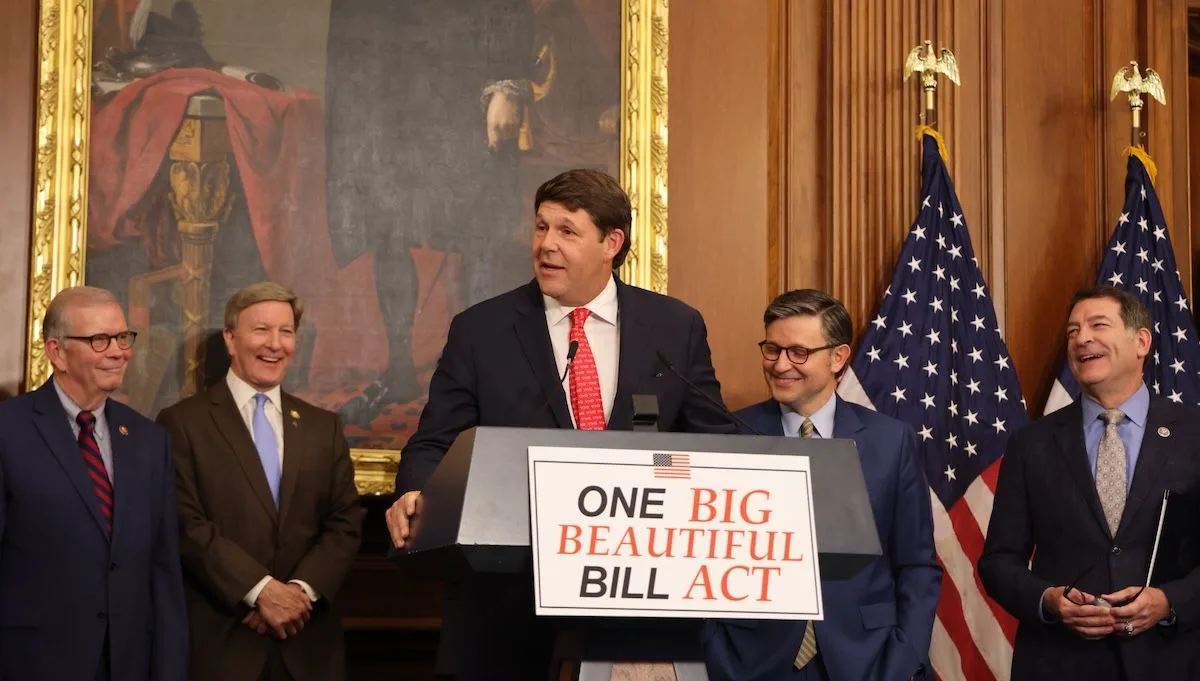
The House has recently advanced a budget reconciliation package that would impose a 10-year moratorium on state and local AI enforcement. The timing matters significantly: as states push forward with hundreds of divergent AI regulatory proposals, this fragmentation threatens to impede technological progress, raise compliance expenses, and obstruct the federal government's modernization agenda. A temporary freeze on state enforcement would allow federal lawmakers to establish a unified national regulatory structure that encourages innovation while enabling federal agencies to leverage leading commercial AI solutions.
Across the country, states are developing numerous AI regulations that vary substantially in their requirements and reach. This splintered regulatory environment creates challenges not only for emerging companies and established technology firms but also represents a growing impediment to federal IT modernization efforts. The multiplication of conflicting state mandates jeopardizes America's competitive standing in the worldwide AI sector. Federal agencies depend significantly on private sector innovations to power their operations and accomplish essential functions. The Federal Acquisition Streamlining Act (FASA) explicitly instructs federal agencies to favor commercial off-the-shelf (COTS) products adaptable to government use rather than purpose-built alternatives.
In April, President Donald Trump signed an executive order reinforcing his administration's intention to acquire commercially available goods and services "to the maximum extent practicable" as a cost-reduction measure. Yet this strategy hinges on the existence of a robust, expandable, and dynamic commercial marketplace, particularly for cutting-edge sectors such as AI. When states impose conflicting regulatory standards, they distort market dynamics, constrain what companies can develop at scale, and consequently diminish the range and caliber of solutions accessible to federal agencies.
The Department of Veterans Affairs exemplifies this problem. Operating as one of the federal government's most significant AI adopters, the VA deploys commercial AI systems for cancer detection enhancement, chronic disease management, and patient care optimization. Numerous such tools originate from firms headquartered in California and Colorado—jurisdictions pursuing stringent AI regulatory approaches. As state regulations diverge and accumulate, vendors must allocate growing resources to regulatory compliance at the expense of development work. Companies frequently face a difficult choice: either modify their offerings to meet the most demanding regulatory standards or exit particular markets. Both scenarios complicate and increase the cost of federal procurement and implementation of modernization technologies.
The challenge intensifies for AI systems designed to operate across multiple states. Facial recognition illustrates this concern. The Department of Homeland Security employs facial recognition technology to verify traveler identities at airports throughout the nation. Engineers have refined these systems to achieve minimal error rates across demographic groups and enable precise identification using older photographs, including those from soon-to-expire passports. These identical technologies function in commercial contexts as well, including medical facilities, residential buildings, and financial services. Had developers encountered a fragmented legal framework from inception—with distinct requirements across each state—they would have encountered substantial obstacles in advancing performance, attracting capital, or achieving the necessary scale for federal applications. Instead, a cohesive market environment enabled rapid and responsible technological advancement that ultimately served federal requirements.
The implications transcend improved government service delivery. Organizations including the Department of Defense and Department of Energy depend on sophisticated AI capabilities for national defense, scientific advancement, and international competitiveness. When states enact broad or inconsistent AI requirements, they disrupt not merely vendor compliance processes but the supply chains upon which the federal government relies for innovation scaling. Such regulations can advantage organizations with substantial compliance infrastructure over those developing the most dependable, precise, or operationally suitable systems. The outcome weakens the infrastructure supporting government AI adoption and diminishes progress in domains where American technological leadership remains essential.
Congress possesses an opportunity to address this expanding problem. The House-approved budget reconciliation package incorporates a provision establishing a 10-year moratorium on state and local enforcement of AI regulations. Though not constituting permanent federal preemption, the moratorium would furnish a vital respite—permitting federal lawmakers to examine the technology, establish suitable safeguards, and construct a consistent regulatory framework advancing innovation. The legislation additionally allocates $500 million through the Department of Commerce for federal IT modernization utilizing commercial AI and automation. These components function interdependently. Without a coherent national regulatory structure for AI, federal agencies will source AI tools from a substantially diminished marketplace.
Certain members of Congress have raised questions regarding whether the moratorium satisfies the Byrd Rule, which establishes parameters for budget reconciliation provisions. However, this measure directly facilitates federal IT modernization. When regulations constrain the geographic scope of markets for technologies exhibiting high initial costs and minimal incremental expenses—such as AI platforms—they elevate per-user expenses by constraining market size. This dynamic produces higher costs, restricted availability, and diminished innovation incentives. The moratorium represents not an ancillary measure but rather a fundamental component ensuring that state and local regulations do not undermine the performance and cost-effectiveness of the AI systems Congress intends to finance.
Realizing AI's governmental potential requires policymakers to guarantee that federal agencies can access the highest-quality tools available from the commercial sector. This objective demands a coordinated national regulatory approach to AI. A splintered marketplace governed by numerous state-level regulatory schemes will not furnish the innovation, safeguards, or operational gains that federal agencies require. Incorporating the moratorium would forestall this scenario and establish the groundwork for sustained American leadership in governmental AI applications.