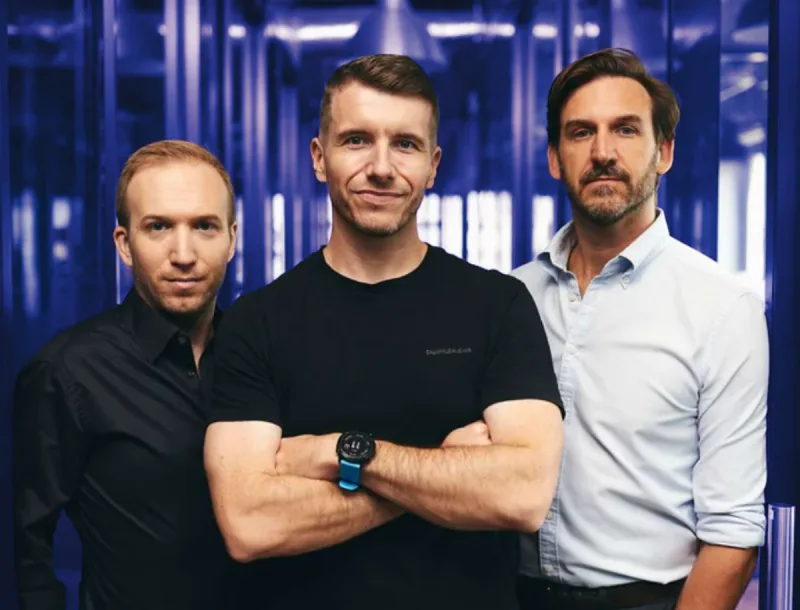
On 9 October 2026, Lucas Eustache successfully completed his doctoral studies at the Governance & Regulation Chair of Université Paris Dauphine-PSL, receiving a Doctor in Management degree for his work titled "Governing Data Sharing". The three-year research project benefited from backing by the Gaia-X Institute.
Why Data Sharing Remains an Organisational Problem
Despite holding substantial data reserves, organisations struggle to exchange information across their boundaries. Eustache's dissertation investigates these structural obstacles and explores the circumstances under which data can move and find new uses beyond its original context. The work draws on multiple theoretical frameworks and focuses on three dimensions: how data markets function in real-world settings; the coordination mechanisms within data-sharing ecosystems, including rule-setting and orchestration; and the involvement of government bodies.
The research advances knowledge about what facilitates or hinders data movement through systems and how economic value emerges from these processes.
Finishing this PhD means being able to offer an answer to why data sharing remains a challenge, and what enables it. The Gaia-X Institute gave me three years of support and a unique link to practice. The Economic Theatre in Vienna is the natural next step: taking the questions of the dissertation to the people who are building data spaces.
Lucas Eustache, PhD, Paris Dauphine-PSL University
The Gaia-X Institute operates as an independent research organisation focused on strategic investigation into data exchange and the broader data economy from a European and international lens. Under the leadership of Hubert Tardieu, the institute maintains partnerships with the Governance & Regulation Chair at Université Paris Dauphine-PSL and the Lamarr Institute for Machine Learning and Artificial Intelligence. Its work spans multiple disciplines: digital technologies and infrastructure, economic analysis and business models, legal and regulatory frameworks, and questions of civic participation and human rights. The institute aspires to establish itself as Europe's primary authority on data-sharing economics and to foster viable, long-term business models for data spaces.
Understanding the economics of data sharing is central to the Institute's mission. Lucas's dissertation addresses a question that data space projects face every day: under what conditions can data circulate across organisations, and how is value created when it does? We are proud to have supported this work over the past three years, and we look forward to seeing it feed the discussions of the Economic Theatre in Vienna.
Hubert Tardieu, Independent Gaia-X BoD; Head of the Gaia-X Institute
Eustache's research developed in parallel with the Economic Theatre, an annual forum the Gaia-X Institute has hosted since 2024 as part of the Gaia-X Summit. The inaugural session convened in Helsinki, Finland in November 2024, followed by a second gathering in Porto, Portugal in November 2025, with the third edition scheduled for Vienna, Austria on 19-20 November 2026. Across these three years, the Economic Theatre has evolved into a venue where theoretical questions about data-sharing economics encounter the practical realities of operational data space initiatives: how value gets generated and allocated, cost distribution, and the respective responsibilities of orchestrators, participants and state actors.
These same questions form the core of Eustache's dissertation. In Vienna, he will collaborate with Joëlle Toledano, Professor Emeritus at Paris Dauphine-PSL University, to examine the economic models put forward by data space initiatives and public authorities. The assessment identifies sound approaches, highlights potential problems and contributes an economic lens to the discussion. The evaluation applies a framework created by the Governance & Regulation Chair at Paris Dauphine-PSL that clarifies the distinct roles of participants and orchestrators within data-sharing systems.
For Eustache, the Economic Theatre represents the convergence of his three years of academic investigation with the evolving landscape of European data spaces.