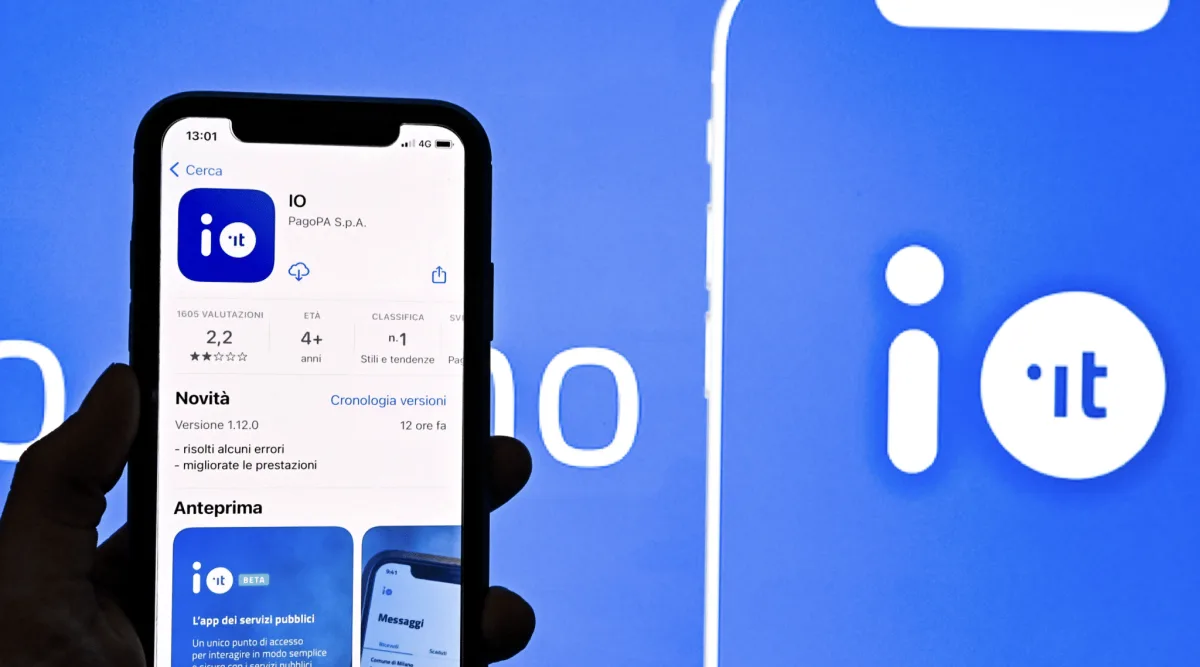
Starting November 23, Italy made its IT-Wallet available to all citizens and residents, granting access to legally binding digital documents via the IO public services application. The system moved beyond its beta phase, which had involved a limited group of IO app users, and arrived ahead of schedule by roughly one month.
Italian residents holding a biometric electronic identity card (CIE) and using the IO app can now voluntarily join the early rollout. Those who activate IT-Wallet gain the ability to carry a mobile driver's license (mDL) alongside digital copies of their European Health Insurance Card, European Disability Charter, residence certificate, educational records, and academic qualifications.
The mDL functions as valid proof of driving entitlements during law enforcement inspections and serves as an official identification document. Verification of these documents occurs through Valida Documenti, a public verification application available on the App Store and Google Play. All stored digital documents hold the same legal standing as their paper equivalents.
The government intends to progressively integrate an "Enter with IT-Wallet" option into online services joining the ecosystem.
Private sector companies gained entry to a national testing environment for IT-Wallet in May, preceding the government's formal approval of the wallet framework in July.
Alessio Butti, undersecretary to the Presidency of the Council overseeing technological innovation, characterized the IO app as a stepping stone toward broader digital wallet adoption. "Today, with IT-Wallet, we take a leap forward: we expand the possibilities offered by digital identity and introduce greater security guarantees, more documents and new features, in line with European objectives," Butti says.
Among European Digital Identity (EUDI) Wallets currently operational, only Denmark's AltID and France's France Titres are live, with a December 24 deadline approaching for broader implementation.
Documents were incorporated into the IO app during 2024 and will remain accessible in the current app version through July 2027. According to Butti, 13 million Italians have already activated Documents on IO.
PagoPA S.p.A. manages the IO app and provides the publicly issued IT-Wallet, though private-sector EUDI Wallets are expected to integrate into the ecosystem eventually.
Italy's data protection regulator gave approval to the IT-Wallet's technical specifications and architecture in October.
Social media restrictions proposed
Italy's expanding digital wallet infrastructure could find new application in age verification for social platforms. A proposed amendment to the Security Decree would mandate that social media platforms employ age verification mechanisms compatible with European digital identity wallets.
Center-right lawmakers have put forward an amendment to the Security Decree currently under legislative consideration. The proposal would prohibit Italians younger than 13 from accessing social media and video-sharing platforms, while requiring those aged 13 to 15 to link their accounts to parental accounts.
The amendment grants enforcement authority to media regulator AGCOM. No particular age verification method is mandated by the proposal, though accounts existing for eight years or longer would be exempt from age verification requirements.
The EU Data Protection Supervisor (EDPS) recently addressed age assurance mechanisms within the EU KIDS Act, explicitly opposing the use of facial age estimation technology.