Demand for computing muscle among Czech research institutions has reached new heights, according to results from the 37th Open Access Grant Competition run by IT4Innovations. The call drew a record-breaking 91 project submissions, of which 32 secured allocation on LUMI, Europe's flagship supercomputer. The winning initiatives span multiple disciplines, with particular emphasis on research that weaves together high-performance computing, artificial intelligence and quantum technologies.
Four research directions emerging from the competition
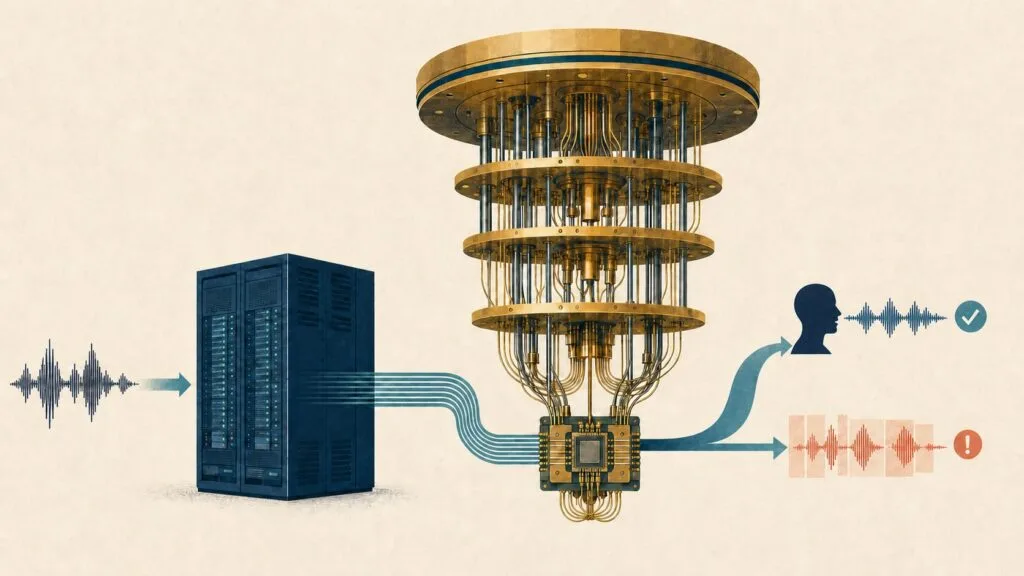
Brno University of Technology researcher Anton Firc is leveraging LUMI in tandem with the VLQ quantum computer to build detection systems for audio deepfakes. His work centres on hybrid AI architectures that marry classical and quantum processing to strengthen the identification of artificially synthesised speech.
At IT4Innovations and the Czech Academy of Sciences, Maximilian Lamanec is pairing LUMI with VLQ to refine computational approaches for Auger spectroscopy. The effort integrates intensive molecular simulation with quantum-classical hybrid techniques to deepen understanding of how electrons behave in molecules and to sharpen the reading of experimental results.
Charles University's Przemysław Grenda is harnessing LUMI and VLQ to construct machine-learning force fields tailored to drug development. The initiative aims to replicate the precision of quantum-mechanical calculations while cutting computational overhead, thereby accelerating the modelling of how pharmaceutical compounds interact with cytochrome P450 enzymes.
Van Binh Henri Vu, also based at IT4Innovations, is investigating quantum-boosted reservoir computing to combat money laundering. The project will pit hybrid quantum-classical systems against conventional AI techniques in the hunt for anomalous patterns within financial transaction flows, with an eye toward raising detection accuracy and trimming false positives.
Broader implications for European research infrastructure
The four examples showcase the expanding palette of applications Czech researchers are pursuing by combining LUMI with VLQ, stretching from synthetic voice analysis and molecular science through to drug simulation and financial fraud screening.
For IT4Innovations, LUMI access augments the supercomputing resources already housed at the centre, furnishing researchers with a gateway to one of Europe's most capable machines and opening pathways to explore integrated workflows that span HPC, AI and quantum domains. The surge in applications—hitting a record high—underscores the rising centrality of shared European supercomputing capacity to the research ecosystem across the Czech Republic and further afield.