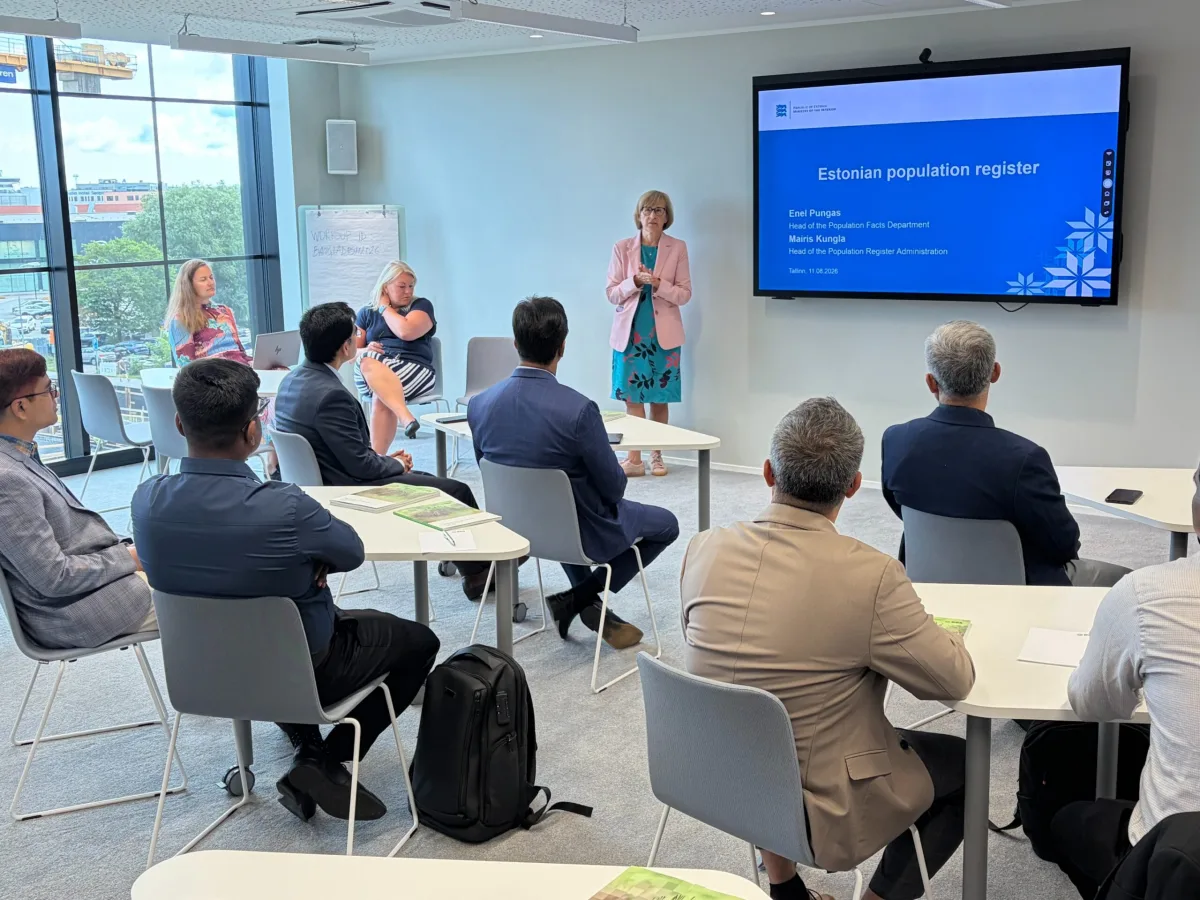
A delegation from Bangladesh spent 10–13 August 2026 in Estonia examining how to build a single trusted identity system and improve interoperability across government services. The visit centred on practical approaches to identity management and the One-ID principle as Bangladesh works to establish stronger foundations for more integrated and citizen-centred digital public services.
Participants came from three Bangladeshi institutions: the Ministry of Posts, Telecommunications and Information Technology, the Bangladesh Election Commission Secretariat, and the Local Government Division. They studied Estonia's real-world experience and assessed which elements could be applied within Bangladesh's own governance context.
Learning from digital frontrunners is valuable for Bangladesh as we modernise public administration and aim to deliver better services for citizens. Combining a trusted national single identity with secure data exchange and interoperability can be a major step towards making public services more accessible, efficient, and secure.
Mr Md Mamunur Rashid Bhuiyan, Secretary of the ICT Division, Ministry of Posts, Telecommunications and Information Technology
The programme examined the complete identity management process, spanning birth and death registration, unique identification, electronic identity credentials, data governance, interoperability frameworks, and data protection safeguards. Discussions also covered how reliable data quality and transparent data ownership structures enable stronger identification systems and support better policy decisions.
The Bangladeshi officials met with specialists from Estonia's Ministry of the Interior, Statistics Estonia and the Data Protection Inspectorate. They also engaged with e-Governance Academy experts who are assisting Bangladesh's ICT Division with deploying the National Responsible Data Exchange (NRDEX), a secure data-sharing mechanism, and strengthening interoperability through an EU-backed initiative.
The e-Governance Academy organised the visit in partnership with Bangladesh's Cabinet Division and ICT Division under the European Union's Global Gateway-backed "E-ffective e-Governance" project. This initiative helps Bangladesh's government modernise its public administration by embedding digital workflows, building institutional capabilities, and raising the standard and reach of public services.