Telecom operators worldwide confront intensifying pressure to fund network upgrades, unlock fresh revenue streams and retain customers amid competition from digital services. Yet no universal solution exists for these challenges.
A mature European operator's playbook differs sharply from what African markets demand, where expansion of access, affordability and financial inclusion take precedence. The Gulf region charts its own course entirely, with operators pivoting rapidly toward digital services, artificial intelligence and enterprise solutions.
Monty Mobile, which operates across all three regions, offers a vantage point on how operator priorities shift and where growth opportunities emerge. The company's perspective reveals that regional context fundamentally shapes strategic choices.
Three markets, three priorities
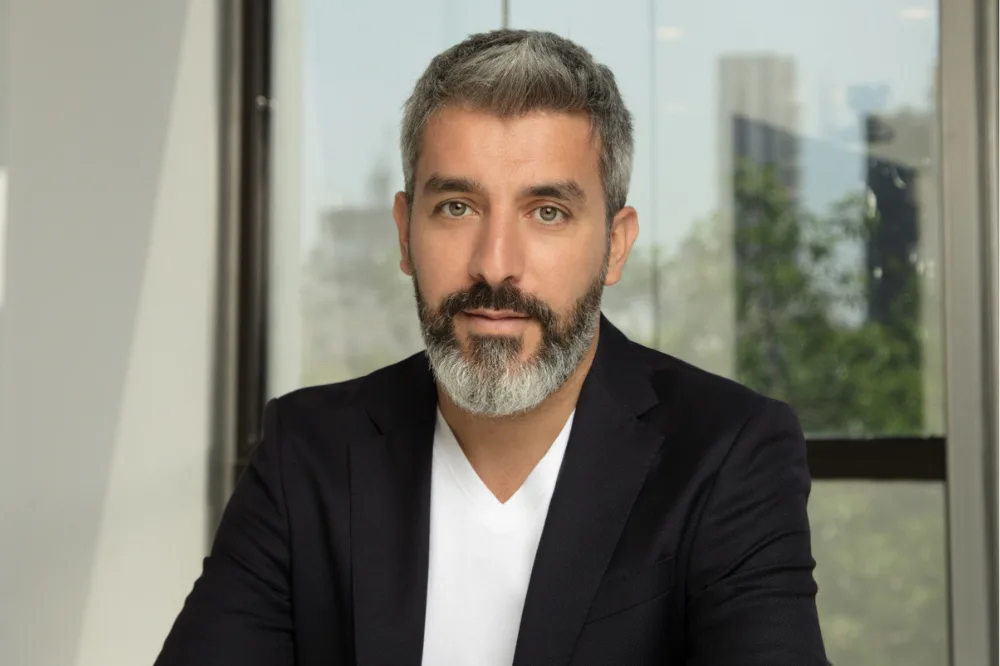
Hassan Mansour, CEO of Monty Mobile, explains the regional divergence: "Europe is seen as a 'step ahead' on average. But that's not the full picture either, Africa has its own leaders of change, and the Gulf is a separate story entirely. The Gulf, for example, is far more advanced than most of Europe."
In Europe, operators concentrate on extracting maximum value from established networks and infrastructure investments already in place. Mansour notes that when speaking with European operators, "the real question they're sitting with is how to get more out of what they've already built."
African markets present an entirely different puzzle. Many operators there still prioritize expanding network reach while simultaneously developing new digital offerings. "In Africa, the conversation is about capturing growth that's already happening and building the right products around it, especially in financial inclusion," Mansour explains. "Turning a connectivity relationship into a financial one, a wallet, a credit history, sometimes someone's first real financial identity. It's about upgrading from older networks to modern ones in an affordable and sustainable way."
The Gulf operates on a distinct trajectory. Operators there invest heavily in digital infrastructure and enterprise capabilities while incorporating artificial intelligence into broader national digital transformation agendas.
Mansour summarizes the distinction: "Europe is optimising mature networks. The Gulf is building out digital infrastructure and services. And most of Africa is focused on growing affordable data usage and financial inclusion and closing the basic access gap."
Europe isn't necessarily the benchmark
A widespread misunderstanding treats Middle East and Africa markets as lagging versions of Europe. Mansour cautions against this assumption: "The biggest misconception is that MEA is just Europe, a few years behind. People assume the opportunity is to take the same products and the same business models and export them. It doesn't work that way."
The Gulf has cultivated distinct strengths in enterprise digital transformation, while African operators have diversified far beyond connectivity alone. Each region faces its own structural constraints. Europe's core challenge stems from insufficient revenue growth to sustain necessary investment levels. "Europe's biggest barrier is that the revenue growth it generates isn't enough to fund the investment it needs. Operators are trying to work around that, but the problem doesn't go away, it's structural to a mature market. Compare that to the GCC, and that obstacle simply doesn't exist there in the same way," Mansour observes.
African operators encounter the inverse difficulty. Demand exists at scale, but converting that demand into sustainable revenue proves challenging while managing fraud losses and capital deployment costs. "MEA operators have the opposite problem, the demand is there and it's massive, but the fight is turning that demand into money efficiently, keeping fraud from eating into it, and managing what capital costs to deploy."
Moving beyond the network
Monty Mobile's vision for the industry's trajectory centers on operators leveraging their distinctive assets beyond mere connectivity provision. Mansour articulates this shift: "Operators own extraordinary infrastructure, reach, data and customer trust. But the next chapter can't just be about carrying more traffic. It must be about turning the network into a more intelligent, secure and commercially powerful backbone."
This transition involves deploying artificial intelligence, automation and real-time analytics to enhance operator capabilities. "We're moving from connectivity into intelligence, using AI, automation and real-time analytics to help operators understand what's happening across their networks, protect revenues, optimise traffic and make better commercial decisions faster," he explains.
Technology still requires trust
Despite industry preoccupation with technological advancement—5G, artificial intelligence, eSIM, digital infrastructure—a more fundamental factor ultimately determines investment success. Mansour identifies this overlooked element: "This industry gets talked about mostly in terms of technology, 5G, AI, eSIM, infrastructure etc. But in every conversation, I've had, whether it's Europe, the Gulf, or Africa, it always comes back to trust."
Trust operates across multiple dimensions: between operators and their customer bases, between operators and their partners, and in network reliability during critical moments. "The regions differ, the challenges differ, the technology keeps changing. But honesty and trust are what hold all of it together," Mansour concludes.