Telecommunications vendor Ericsson has successfully deployed a tactical 5G network to interconnect counter-drone and air-defence capabilities during Atlas 26, Spain's principal combined military exercise.
In a first for the Spanish Armed Forces, counter-drone (C-UAS) systems operated exclusively over a tactical 5G network, eliminating the need for fixed wired infrastructure. This wireless approach enables rapid deployment and relocation of defence equipment without the constraints of traditional cabling.
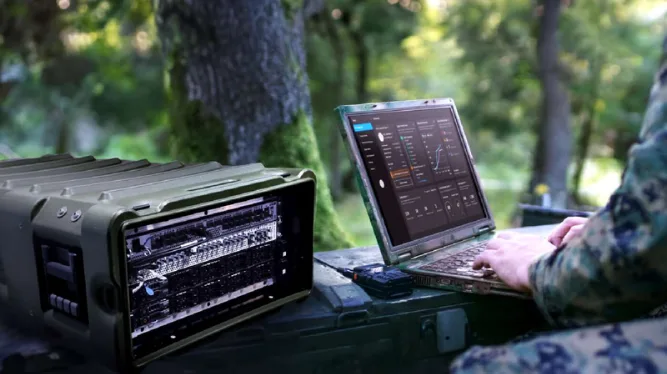
The demonstration centred on Ericsson Ultra Compact Core, a portable 5G platform engineered specifically for military applications. The system integrates Ericsson's 5G Core software, its Container-as-a-Service platform and the necessary hardware components to establish an operational network.
The 5G Spanish Cyber Defence Centre, operating under the Joint Cyberspace Command (Mando Conjunto del Ciberespacio), managed the network operations throughout the exercise.
Ericsson's infrastructure operated on military-designated radio frequencies, establishing an isolated connection pathway independent of commercial network infrastructure. This isolation mitigates interference risks and prevents network saturation.
The 5G deployment enabled near-instantaneous data exchange among connected systems, facilitating coordinated action between counter-drone and air-defence platforms and enhancing responsiveness to emerging threats.
This exercise has shown how commercial 5G innovation, hardened for defense, can give armed forces a decisive operational edge. A sovereign, deployable 5G network puts resilient, high-capacity connectivity exactly where it is needed, with no dependence on fixed infrastructure. By linking sensors to effectors in real time, we help defense forces coordinate their systems more effectively and operate with greater flexibility on the ground.
Juan Olivera, County Manager, Ericsson Spain