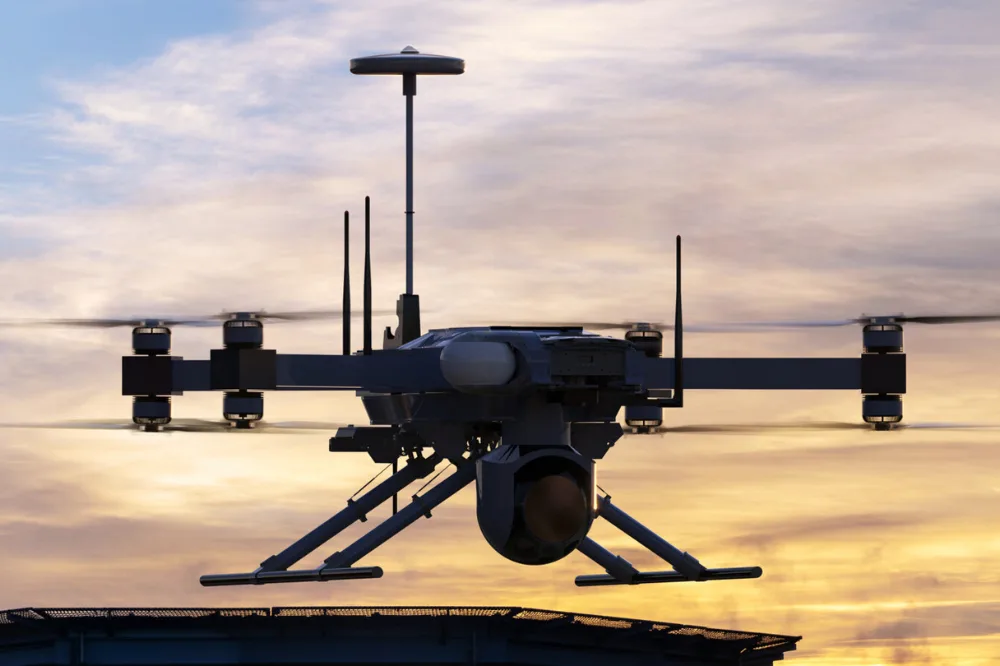
Equipment maker Ericsson and Finnish mobile operator Erillisverkot have demonstrated how 5G infrastructure could serve as a detection system for unauthorised drones, enabling authorities to spot, pinpoint and monitor aircraft in real time across wide areas.
The trial, held in Helsinki, deployed Integrated Sensing and Communication (ISAC) technology that leverages existing mobile-network sites to sense activity in the airspace above ports, borders and other critical locations. The approach addresses a persistent challenge: small, low-altitude drones that pose risks to national security, public safety and essential infrastructure are often hard to track, particularly when they operate without network connectivity or radio transmissions.
ISAC works by gathering sensing data from multiple network sites simultaneously, creating a composite picture of activity across a region rather than relying on single-point detection. During the Helsinki test, several network sites collected and shared sensing information at the same time.
Patrik Wikberg, Ericsson's Head of Solution Area Public Safety, said: "Reliable situational awareness is essential to protect critical infrastructure and support public safety operations. This ISAC drone demonstration with Erillisverkot gives Finnish authorities an opportunity to explore how mobile-network-based sensing could complement existing capabilities and contribute to more scalable awareness in complex environments."
Timo Lehtimäki, chief executive of Erillisverkot, noted: "Mission-critical networks must perform when they are needed most. This demonstration shows how connectivity can extend into sensing, helping authorities keep people and critical infrastructure safe. Together with Ericsson, we are exploring how this capability can be developed responsibly to meet Finland's security and preparedness needs."