
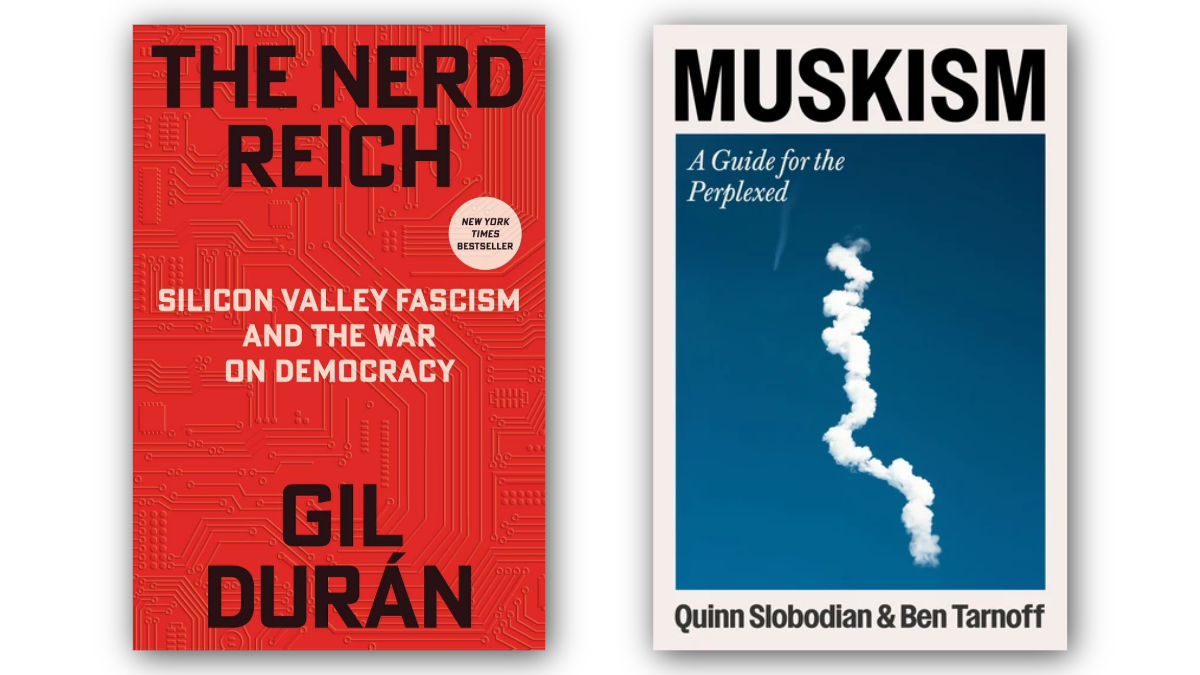
Two recently published works examine the ideologies driving some of America's most powerful technology entrepreneurs. The Nerd Reich: Silicon Valley Fascism and the War on Democracy by journalist and former Democratic political adviser Gil Durán, and Muskism: A Guide for the Perplexed by historian Quinn Slobodian and tech writer Ben Tarnoff, provide accessible analyses of how these figures think and operate.
The question of whether we need additional scrutiny of Elon Musk, Peter Thiel, and their peers might seem reasonable. Their philosophies have already received extensive coverage across books, magazine features, and digital platforms. Thiel's hostility toward democracy, Musk's simultaneous appeals to technological sovereignty and nationalist fervor—these are documented facts. Yet their influence over American institutions has become so substantial that continued examination remains essential.
The financial and political reach of these figures is staggering. Musk channeled at least $291 million to Donald Trump and MAGA-aligned candidates during the 2024 election cycle, with plans to invest another $100 million in midterm efforts. Thiel's backing transformed J.D. Vance into a political force now positioned as a potential Republican successor to Trump in 2028. Their corporate empires are equally consequential: SpaceX and its StarLink division manage much of America's space and satellite infrastructure, while Palantir—co-founded by Thiel—conducts surveillance and data operations for government and corporate clients across the United States, Israel, and beyond.
Authoritarianism and Escapism
Durán's The Nerd Reich concentrates primarily on Thiel, tracing his attraction to authoritarian systems and his increasingly erratic engagement with apocalyptic theology. The book documents Thiel's intellectual debts to Curtis Yarvin, the reactionary blogger known as Mencius Moldbug, who champions replacing democracy with corporate rule. Durán also reveals Thiel's serious engagement with The Sovereign Individual: How to Survive and Thrive During the Collapse of the Welfare State, a doomsday investment newsletter that advocates for radical withdrawal from society.
A central theme emerges: Thiel's contempt for democratic pluralism and his fantasy of escape. Durán highlights what he calls Thiel's brittle rejection of "politics in all its forms" and his adolescent desire to flee—whether to the internet, outer space, or autonomous ocean communities reminiscent of Jules Verne's 1895 novel Propeller Island, which depicted wealthy industrialists abandoning civilization aboard a massive Pacific vessel. The irony, Durán notes, is that Thiel has hardly abandoned political engagement, continuing to bankroll efforts to block California's proposed billionaire tax and preserve Republican congressional control.
Muskism as a New Social Contract
Slobodian and Tarnoff's Muskism offers a tighter examination of the ideological system surrounding its subject. Their most illuminating contribution draws a parallel to Fordism, the modernization framework Henry Ford constructed in the early 20th century. Though Ford was an virulent antisemite and conspiracy theorist admired by Hitler, he also, in Slobodian and Tarnoff's words, "rewrote the social contract with a promise of rising living standards for all: cars in every garage, fridges in every kitchen, wages climbing with productivity."
Muskism, by contrast, proposes a fundamentally different bargain for the 21st century. According to the authors, it suggests that "in an increasingly unstable world, both states and individuals can fortify their self-reliance by plugging into [Musk's] infrastructures." The Pentagon and NASA now depend heavily on SpaceX. Military forces rely on Starlink connectivity. X and Grok shape political reality for MAGA constituencies. Yet unlike Fordism's promise of broad prosperity, Muskism concentrates benefits among the chosen while excluding migrants, those deemed dependent on diversity initiatives, and what Musk terms the "woke mind virus" of progressive advocates.
Where Ford harbored obsessive hatred of Jewish people, Musk directs his animus toward those outside his vision of a culturally purified, genetically European, technology-mediated community. "If tolerance means the end of Western Civilization," Musk posted to his 225 million X followers in August 2025, "then we cannot be tolerant."
From Analysis to Action
These ideological frameworks are not abstract exercises. Musk, Thiel, and their allies are actively working to implement their vision through political proxies like Trump and Vance. They are not unique in their conviction that wealth confers the right to reshape society. In a single week last month, both the New York Times and Washington Post reported on how billionaire venture capitalist Joe Lonsdale, a Palantir co-founder alongside Thiel, has influenced Trump-era policies criminalizing homelessness and street sleeping at both federal and state levels.
The technology sector's alignment with MAGA forces extends across the industry. While some leaders maintain greater distance than others, the ranks of Trump enablers include executives from Oracle, Microsoft, Google, Facebook, Amazon, Salesforce, and OpenAI. This alliance warrants sustained examination. Yet after engaging with works like Muskism and The Nerd Reich, readers may recognize that the moment has arrived to move beyond ideological diagnosis toward concrete resistance.
During Trump's first term, major technology platforms showed ambivalence and occasional revulsion—Facebook and pre-Musk Twitter suspended Trump following the January 6 insurrection. By Trump 2.0, the industry capitulated wholesale, even before his return to office. The technology sector is now actively enabling the authoritarian movement tightening its grip on American democracy.
Emerging Resistance
Encouragingly, grassroots pushback is emerging. Communities across red and blue states are mobilizing against resource-intensive AI data center projects. School administrators are restricting student smartphone use to protect mental health and academic focus. A recent Meta settlement resulting from state litigation, though imperfect, may further shield younger users by constraining scrolling duration and frequency.
Such incremental resistance is unlikely to prompt genuine self-examination or voluntary restraint within Silicon Valley, nor will it derail MAGA's authoritarian agenda. Countering Trump and his tech industry backers demands massive voter participation, resilience against intimidation, overhaul of campaign finance rules, immigration system reform, and comprehensive efforts to restore democratic institutions and norms.
Technology is not the sole driver of America's current crisis, but it constitutes a substantial dimension. Comprehending how industry leaders have contributed to this predicament remains necessary, though insufficient on its own—a reality the authors of these important books would certainly acknowledge.