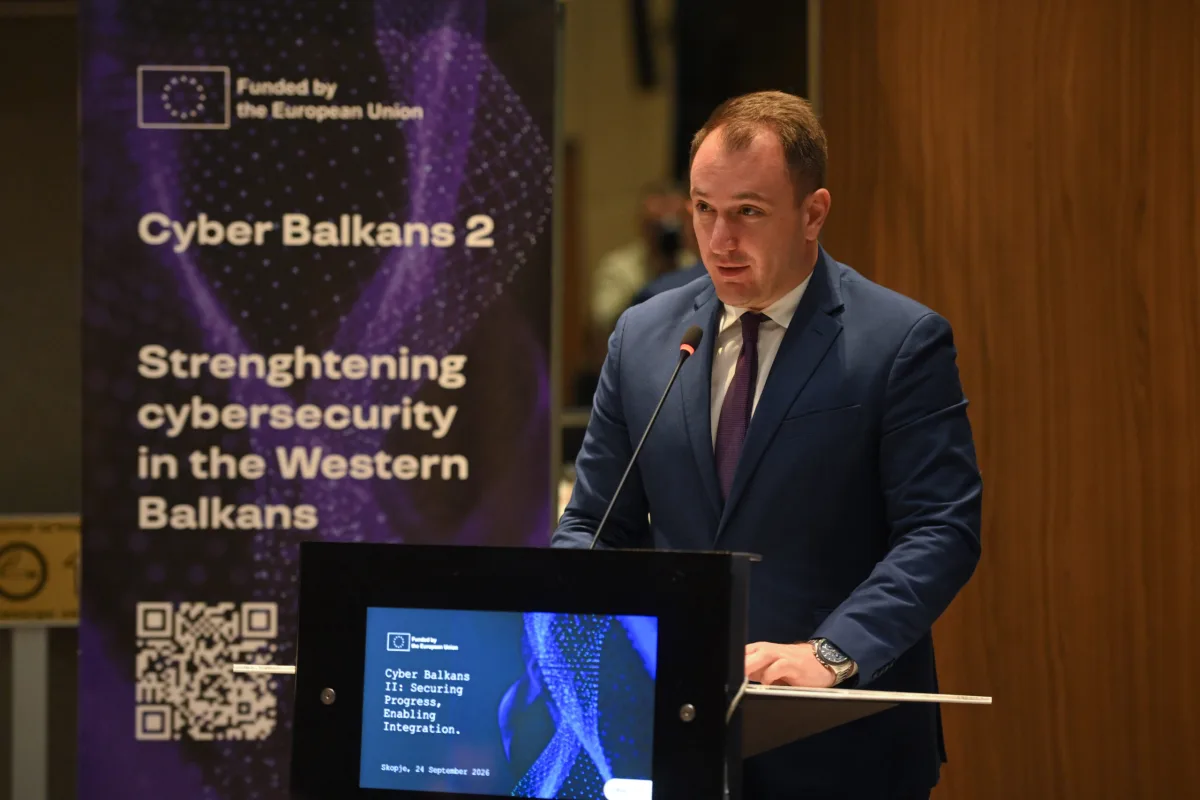
The Cyber Balkans 2 initiative has commenced operations, representing the next stage of European Union backing aimed at bolstering cyber resilience throughout six Western Balkan nations. A launch conference held in Skopje on 24 September 2026 assembled cybersecurity leaders, EU officials and participating institutions from across the region to mark the project's beginning.
Financed by the European Union and carried out by eGA alongside HAUS Finnish Institute of Public Management, Cyber Balkans 2 seeks to enhance national-level cybersecurity capabilities, foster cross-border collaboration and facilitate harmonisation with European Union cybersecurity norms across Albania, Bosnia and Herzegovina, Kosovo, Montenegro, North Macedonia and Serbia.
Cybersecurity as a foundation for digital transformation
As the Western Balkans region pursues digitalisation of government services and moves toward EU membership, cybersecurity has become a critical priority. Public administrations, operators of essential infrastructure and commercial enterprises increasingly rely on digital platforms, making their capacity to detect, manage and recover from cyber attacks fundamental to national security.
North Macedonia has set a clear ambition to build a modern, connected and inclusive digital society. Cybersecurity is fundamental to achieving that ambition – citizens and businesses can only benefit fully from digital services when the infrastructure and systems behind them are secure and resilient. Through Cyber Balkans 2, we can strengthen this foundation while working with our partners across the Western Balkans, sharing expertise and advancing together towards a secure and competitive European digital future.
Stefan Andonovski, Minister of Digital Transformation of North Macedonia
Cyber resilience is essential for protecting our economies, democratic governance and citizens' trust. Through Cyber Balkans II, the EU will continue supporting North Macedonia and the Western Balkans in strengthening their institutions, preparedness and cybersecurity capacities. Because greater cyber resilience here also contributes to a more resilient Europe
Ben Nupnau, Deputy Head of the EU Delegation in Skopje
Cybersecurity resilience cannot be built by institutions working in isolation. It depends on strong institutions, skilled people and cooperation across governments, sectors and borders. Cyber Balkans 2 gives us an opportunity to build on the progress already achieved in the region and turn it into a stronger, sustainable cybersecurity capacity.
Milan Sekuloski, Senior Expert at eGA
Four pillars of the initiative
The project concentrates on four strategic areas to advance cyber resilience across the region.
Cybersecurity frameworks and governance
The initiative will reinforce institutional cybersecurity frameworks by supporting legal reforms, bringing national legislation into line with EU requirements and enhancing governance structures.
Cooperation and awareness-raising
The project will convene governments, industry, research institutions and civil society organisations to strengthen cybersecurity awareness and foster collaborative approaches across the region.
Incident response capabilities
Cyber Balkans 2 will develop technical response competencies by organising cyber exercises, delivering accredited training programmes, facilitating professional connections and delivering focused technical assistance.
Workforce development
Under HAUS leadership, this component will encourage cybersecurity as a career path for younger professionals, facilitate internship opportunities and employer connections, and help organisations build sustainable approaches to staff development and retention.
Collectively, these workstreams aim to establish more robust cybersecurity institutions across the region, expand the pool of qualified cybersecurity specialists and create a more secure Western Balkans as it progresses toward fuller European integration.